
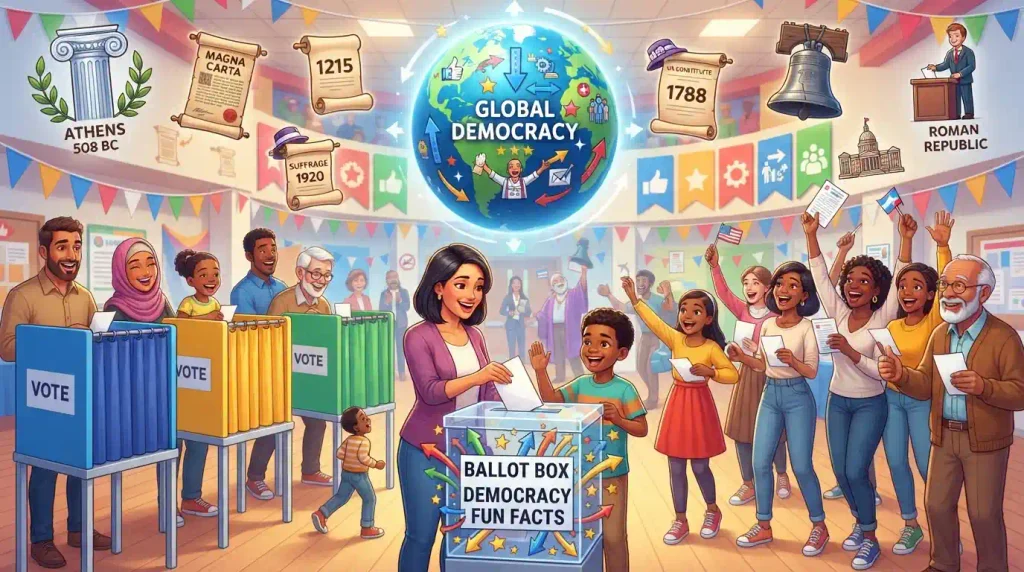
Exploring democracy fun facts reveals how self-governance evolved from ancient pottery ballots and randomized lotteries to modern digital voting systems. These surprising historical details show that voting traditions across different cultures are far more creative, unusual, and entertaining than most people ever realize.
Did you know that ancient voters used broken pieces of clay pottery instead of paper ballots to kick unpopular politicians out of town? Learning incredible democracy fun facts shows us that choosing leaders has always been filled with surprising twists and creative ideas.
When you explore these quirky democracy fun facts, history suddenly feels like a lively story rather than a boring textbook lesson. From randomized lotteries in old Venice to animals winning actual town elections, self-governance is full of surprises.
Let us jump into these fascinating historical discoveries and discover how communities around the world have shaped the power of the vote.
Strange Voting Methods Throughout Ancient History
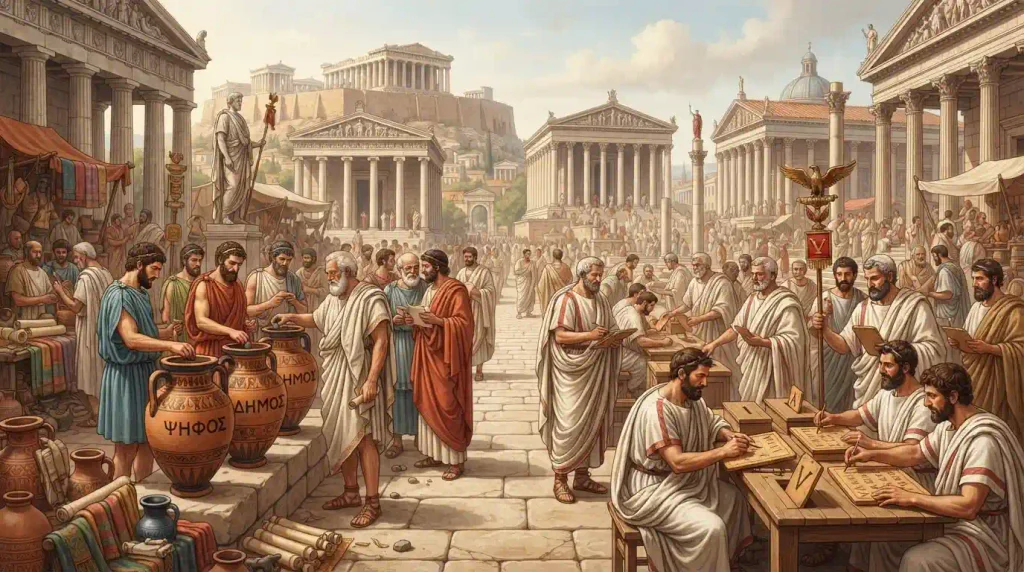
Long before modern paper ballots or electronic voting machines existed, ancient civilizations came up with wild ways to count votes. They used whatever materials were lying around, leading to some truly unforgettable traditions.
Broken Pottery and Exiling Unpopular Leaders
In ancient Athens, citizens practiced a unique tradition called ostracism to protect their young government from dictators. Once a year, voters gathered in the public square to write the name of a dangerous or greedy politician on a piece of broken pottery called an ostrakon.
If a politician received enough votes, the city banished them for ten whole years! Imagine if we could vote to send annoying public figures on a mandatory decade-long vacation today.
Black and White Beans in Ancient Greece
When Athenians needed to select everyday council members, they did not hold lengthy speeches or campaign rallies. Instead, they relied on a special machine called a kleroterion, which used black and white beans to pick citizens completely at random.
White beans meant you got selected for public office, while black beans meant you went home. Ancient Greeks believed this randomized lottery was fairer than elections because money and fame could not buy a win.
Colored Balls in Venetian Elections
During the Middle Ages, the city of Venice invented one of the most complicated voting systems in human history to elect their chief leader, the Doge. The process involved multiple rounds of drawing random gilded balls out of an urn and holding secret votes.
This elaborate method prevented wealthy merchant families from bribing voters or rigging the outcome. It worked so well that the Venetian Republic remained stable for over eight hundred years.
Unexpected Animals and Oddities in Local Politics
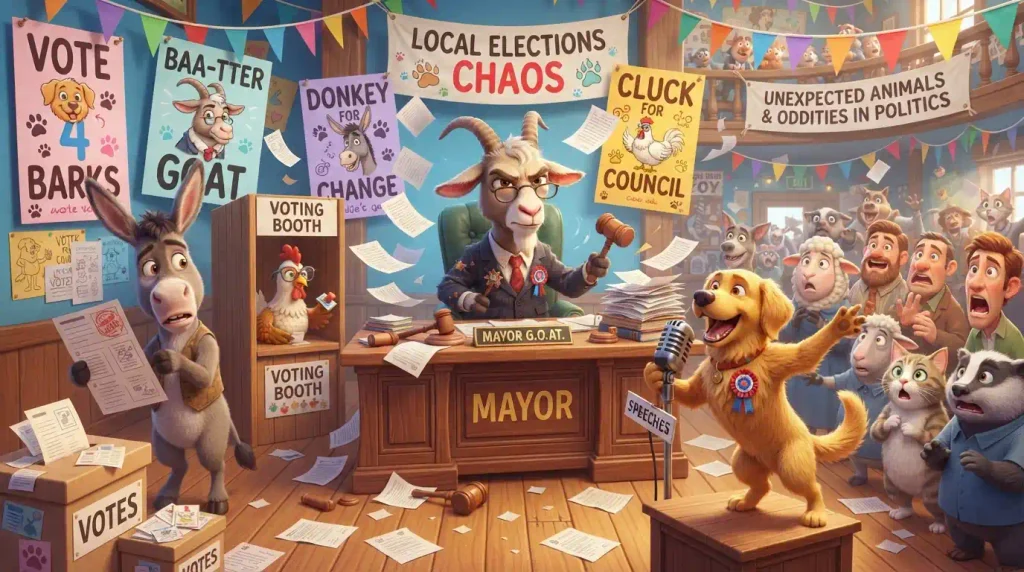
Now and then, voters get so frustrated with human candidates that they decide to cast their ballots for four-legged friends instead. Local elections around the world have seen some truly hilarious non-human victories.
Stubbs the Cat: Mayor of Talkeetna
In 1997, residents of a small Alaskan town named Talkeetna were unimpressed with the human candidates running for mayor. As a joke, a majority of locals wrote in the name of a stubby-tailed kitten named Stubbs.
Stubbs won the honorary election and held his position as mayor for twenty years until he passed away in 2017. He spent his mayoral days sipping water out of a wine glass laced with catnip at the local general store.
Mayor Bosco the Dog in California
Talkeetna is not the only town to choose a furry leader. In 1981, the town of Sunol, California, elected a Black Labrador and Rottweiler mix named Bosco to be their official mayor.
Bosco defeated two human candidates and served faithfully for thirteen years. A bronze statue of Mayor Bosco still stands proudly in front of the town post office today.
The Foot Powder Candidate in Ecuador
In 1967, a foot powder company ran a clever marketing campaign in the small town of Picoazá, Ecuador. They printed fake political flyers promoting their product, Pulvapies, with the slogan: “Vote for any candidate, but to provide health and hygiene, vote for Pulvapies!”
When the official election results came in, the write-in votes for Pulvapies completely crushed all the real human politicians! The company technically won the mayoral race, creating one of the funniest moments in political advertising history.
Milestones in the Journey Toward Universal Voting
The freedom to step into a voting booth and choose your own leaders was not built overnight. It required centuries of brave struggles, surprising laws, and pioneering nations leading the charge.
New Zealand Leads the Way for Women’s Suffrage
In 1893, New Zealand made global history by becoming the very first self-governing country to grant all women the right to vote in parliamentary elections. A passionate activist named Kate Sheppard led nationwide petitions that gathered thousands of signatures on massive paper scrolls.
Her relentless work paid off, inspiring women’s rights movements across the globe to fight for equal representation.
The Pitcairn Islands Pioneer Early Equality
Even before New Zealand, a tiny, isolated island in the South Pacific quietly wrote women’s voting rights into its local laws. In 1838, the remote Pitcairn Islands granted equal voting rights to all adult inhabitants living in their small community.
Because the population was so small, every single adult had to participate to keep island life running smoothly.
The Secret Ballot Revolution in Australia
Before the mid-1800s, voting in many Western nations was done out loud or by a public show of hands. This meant employers, landlords, and neighborhood bullies could easily intimidate people into voting a certain way.
In 1856, the Australian colony of Victoria introduced paper ballots marked in private curtains. This secret voting method proved so effective that it was adopted worldwide and is still called the “Australian Ballot” today.
Comparison of Historical Voting Innovations
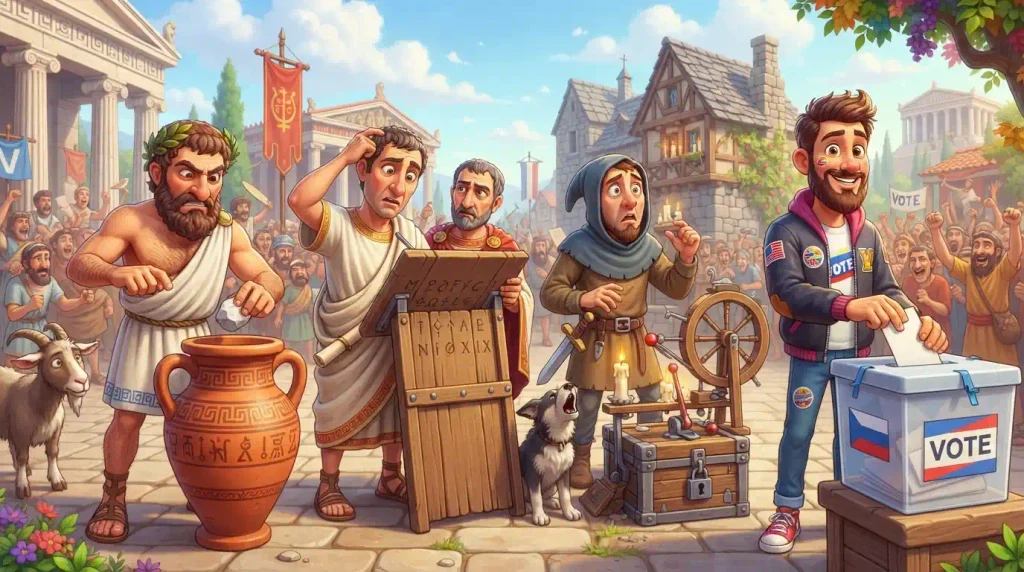
Historical voting innovations reflect humanity’s continuous effort to balance accessibility, security, and integrity in democratic processes. From ancient token-based casting to modern electronic systems, each evolutionary step in voting methodology was designed to solve specific vulnerabilities of its era, such as fraud, intimidation, or logistical delay. Comparing these milestones reveals a clear progression from simple physical counters to complex technological frameworks aimed at making civic participation both secret and reliable.
Ancient Secret Ballots vs. Voice Voting
Early democratic systems relied either on public voice voting or physical tokens, such as pebbles, broken pottery pieces, or marked wooden tiles. While viva voce (voice voting) ensured transparency, it exposed voters to extreme public pressure, bribery, and coercion. The shift to physical tokens, such as the bean-based casting in ancient Athens or the secret wax-tablet ballots of the Roman Republic, represented the earliest effort to protect individual autonomy by hiding a citizen’s vote from community inspection.
Paper Ballots and the Australian System
For centuries, written paper ballots remained the standard, but early paper systems allowed political parties to print custom ticket sheets, making a voter’s choice obvious from a distance. The introduction of the Australian Ballot in the mid-nineteenth century introduced uniform, state-printed paper ballots containing all candidate names, cast within private voting booths. This structural innovation set the global standard for election secrecy and dramatically reduced open voter intimidation in Western democracies.
Mechanical Lever Machines to Electronic Systems
The late nineteenth and twentieth centuries introduced mechanical lever machines and paper punch-cards, which automated vote counting and minimized manual tallying errors. Modern electoral systems have further evolved into Direct Recording Electronic (DRE) machines and optical scan technology. While digital platforms drastically speed up result reporting and increase accessibility for disabled voters, they also introduce modern challenges around cybersecurity, software audits, and the essential requirement of a verifiable paper trail.
Bizarre and Fascinating Rules in Modern Voting
Even today, different countries enforce unique rules when election day rolls around. Some of these legal requirements might surprise you.
Mandatory Voting with Small Fines
In Australia, voting is not just a civic right; it is a legal requirement for all adult citizens! If an Australian fails to vote without a valid medical or travel excuse, they receive a fine in the mail.
Because of this law, voter turnout in Australian national elections routinely tops 90 percent. Local community groups even fire up grills at polling stations to sell “Democracy Sausages” to hungry voters waiting in line.
Elections Held on Floating Islands and Glaciers
India holds the title of the world’s largest democratic exercise, with over nine hundred million eligible voters across vastly different terrains. To ensure everyone gets to cast a ballot, Indian election officials travel by elephants, boats, and helicopters.
Indian law states that no voter should have to travel more than two kilometers to reach a polling booth. Officials once set up a special voting booth deep inside a forest just for a single resident living there!
Voting with Marbles in West Africa
In the West African nation of The Gambia, election officials came up with a brilliant solution for voters who cannot read or write text. Instead of paper ballots, citizens drop a glass marble into a painted metal drum representing their favorite candidate.
When the marble hits a bell inside the drum, it makes a clear ringing sound that lets officials know a vote was successfully cast. If the bell rings twice, election monitors know someone tried to cheat by dropping two marbles!
How Food and Festivities Fuel Election Day Spirit
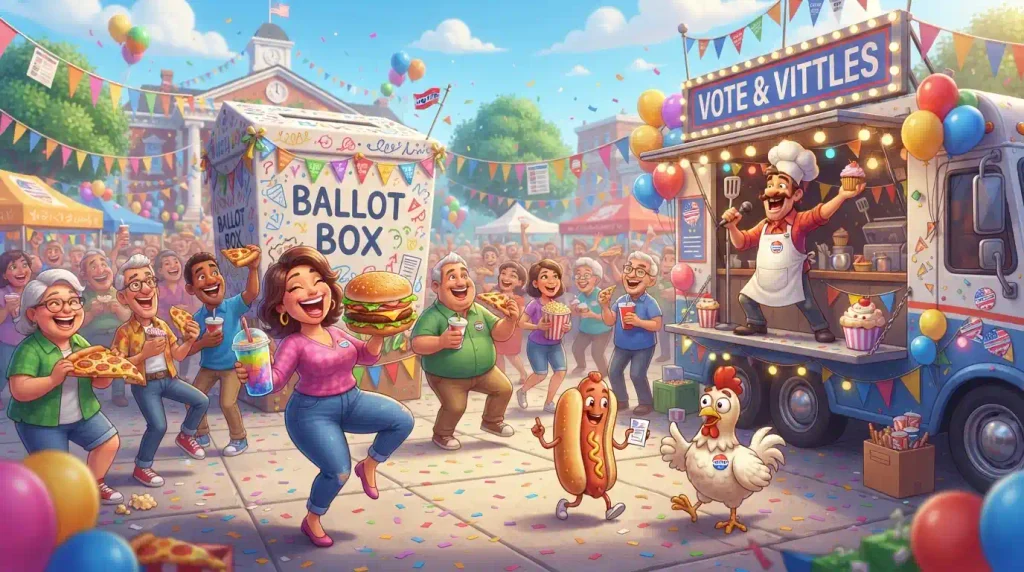
Voting does not have to feel like a boring chore. Throughout history, communities have used delicious food, drinks, and festivals to make election days feel like major celebrations.
Cake and Whiskey in Early American Elections
In colonial America, election day was one of the biggest social gatherings of the entire year. Town leaders frequently baked massive batches of “Election Cake,” a rich, spiced fruitcake to feed citizens who traveled long distances to vote.
Candidates like George Washington even served free cider, punch, and snacks to voters near the polling sites to encourage high turnout.
The Famous Aussie Democracy Sausage
As mentioned earlier, Australians turned voting into a beloved culinary tradition. Primary schools and community centers that host polling places set up sizzle stands serving grilled sausages on sliced white bread.
This tradition is so popular that social media maps help citizens track down polling locations with the best food options before casting their ballots!
Election Holiday Parties in South Korea
In South Korea, national election days are designated as official paid public holidays. Instead of rushing to vote before or after a long work shift, citizens take their time heading to the polls with family.
Many citizens treat election day as a fun afternoon outing, enjoying local parks, museums, and restaurants after submitting their official votes.
Practical Steps to Organize a Fun Mock Election
Hosting a playful voting activity at school, home, or work is a fantastic way to teach group decision-making while keeping everyone entertained. Follow these simple steps to set up your own mock election.
- Choose a fun, lighthearted topic for voters to decide, such as picking the official office snack or selecting Friday night’s movie.
- Design simple paper ballots with clear choices, or set up two colored jars where voters can drop glass marbles or coins.
- Build a cardboard voting booth that allows participants to mark their ballots in total privacy without anyone watching.
- Count the votes together out loud, announce the winning candidate or choice, and celebrate the results with shared treats!
Creating these interactive moments brings the core spirit of self-governance to life for people of all ages.
Overcoming Obstacles to Keep Self-Rule Strong

While studying lighthearted history is fun, maintaining fair self-governance requires constant care, honesty, and community effort. Every generation faces unique challenges in keeping elections open and trustworthy.
Fighting Misinformation in the Digital Age
With modern social media networks spreading information instantly, fake news can quickly confuse voters before an important decision.
- Always double-check news stories against reliable, independent factual sources.
- Avoid sharing dramatic headlines before reading the full story carefully.
- Support local news outlets that report on community leaders and policies accurately.
Taking these thoughtful steps protects public conversations from harmful rumors and deliberate lies.
Ensuring Equal Access for Every Citizen
Fair elections rely on making sure every eligible citizen can easily register and cast their vote without facing unfair barriers.
Smart communities invest in accessible polling places for alternative or disabled citizens, offer clear translated materials, and provide early mail-in options.
Protecting Election Infrastructure
Modern voting security involves a blend of smart digital technology and dependable physical paper records. Most election experts agree that keeping a paper record for every digital vote is the best way to double-check results during a recount.
Combining modern digital speed with physical paper checks keeps public trust strong and secure against tampering.
Practice Exercise
Test your knowledge on historical voting facts, strange laws, and global traditions with this quick practice quiz.
Questions 1–5
- What material did ancient Athenians use to banish unpopular politicians?
A. Wooden blocks
B. Broken pottery pieces
C. Animal bones
D. Metal coins - Which nation was the first self-governing country to grant all women the right to vote in 1893?
A. United States
B. Great Britain
C. New Zealand
D. Canada - What type of animal was elected mayor of Sunol, California, in 1981?
A. A cat named Stubbs
B. A dog named Bosco
C. A goat named Billy
D. A parrot named Charlie - What voting method invented in Australia in 1856 allowed citizens to vote without fear of intimidation?
A. Digital voting
B. The secret ballot
C. Open hand counting
D. Voice voting - In The Gambia, what item do voters drop into metal drums to register their choice?
A. Paper slips
B. Glass marbles
C. Wooden tokens
D. Plastic cards
Questions 6–10
- What food item became a famous political tradition in early American elections?
A. Apple pie
B. Election cake
C. Pumpkin bread
D. Chocolate chip cookies - What happens in Australia if an eligible adult fails to vote without a valid excuse?
A. They are banished for ten years
B. They receive a monetary fine
C. They must perform community service
D. Nothing happens - What ancient machine used black and white beans to pick council members randomly?
A. Kleroterion
B. Ostrakon
C. Parthenon
D. Agora - Which commercial product accidentally won an Ecuadorian mayoral election in 1967?
A. A brand of laundry soap
B. A brand of foot powder
C. A brand of toothpaste
D. A brand of canned soup - What popular snack is sold at Australian polling places on election day?
A. Democracy Sausages
B. Freedom Fries
C. Liberty Pretzels
D. Voting Donuts
Answer Key
1. B | 2. C | 3. A | 4. D | 5. B | 6. C | 7. A | 8. D | 9. B | 10. C
FAQs
What are democracy fun facts that surprise most people?
Some of the most surprising facts include ancient Greeks choosing leaders using randomized bean lotteries, animals winning municipal mayoral races, and voters using glass marbles hitting metal drums to cast their ballots silently.
Why did ancient Athenians banish people using broken pottery?
Athenians used pottery shards, called ostraka, to exile overly powerful or corrupt leaders for ten years. This process prevented wealthy individuals from building private armies and overthrowing their young democratic government.
Is voting mandatory in any modern countries?
Yes, roughly twenty countries around the world enforce compulsory voting laws, including Australia, Belgium, and Luxembourg. Citizens who fail to vote without a valid medical or personal excuse receive small administrative fines.
Which country has the largest number of voters in the world?
India holds the world’s largest democratic elections, with over nine hundred million registered voters. Election workers travel across mountains, rivers, and dense jungles to set up accessible polling booths for every citizen.
Where did the concept of the secret ballot come from?
The modern secret ballot was developed in Victoria, Australia, in 1856 to protect voters from bribery and public intimidation. Today, private paper voting is standard practice across free nations worldwide.
What is the origin of the Australian Democracy Sausage?
The Democracy Sausage grew out of community fundraising efforts held at polling stations during national elections. Local schools and charity groups set up sizzle stands to feed voters waiting in line to fulfill their legal voting duties.
Conclusion
Exploring these fascinating democracy fun facts reminds us that choosing our leaders is a dynamic, ever-changing human story. From ancient pottery votes to modern sausage sizzles, communities have continually found creative ways to make their collective voices heard.
Understanding these historic shifts helps us appreciate the freedom and privilege of having a say in our shared future. Every vote cast today builds on centuries of innovation, courage, and community participation.
The next time Election Day rolls around, remember these amazing democracy fun facts as you cast your ballot. Take pride in participating in one of humanity’s greatest and most creative political traditions!

Ghzala Rani is the creator and writer behind Funzonest.com, a website dedicated to making everyday topics more enjoyable, interesting, and easy to understand. With a passion for engaging content, Ghzala focuses on creating helpful articles that inform, entertain, and provide readers with useful ideas and insights.
Through Funzonest.com, Ghzala Rani aims to build a friendly online space where readers can discover fresh content and explore topics presented in a simple and enjoyable way. Her writing style focuses on clarity, originality, and reader value. She is committed to publishing well-researched and engaging content that keeps visitors informed while making their time on the website enjoyable.