
A fun acronym is a word or abbreviation formed from the initial letters of a phrase, crafted specifically to entertain, simplify complex ideas, or create catchy memory aids. Unlike formal corporate jargon, these playful letter combinations bring humor, creativity, and personality to everyday conversations, team names, and group projects.
Have you ever stumbled across a word that made you laugh, only to realize each letter stood for something even funnier? Creating or sharing a fun acronym is one of the easiest ways to inject humor and personality into everyday communication.
Whether you are looking to spice up group chats, boost workplace morale, or memorize complex study notes, using a fun acronym keeps conversations light and memorable.
You will quickly see how a well-crafted fun acronym turns plain words into memorable micro-jokes and clever team slogans!
What Is a Fun Acronym and How Does It Work?
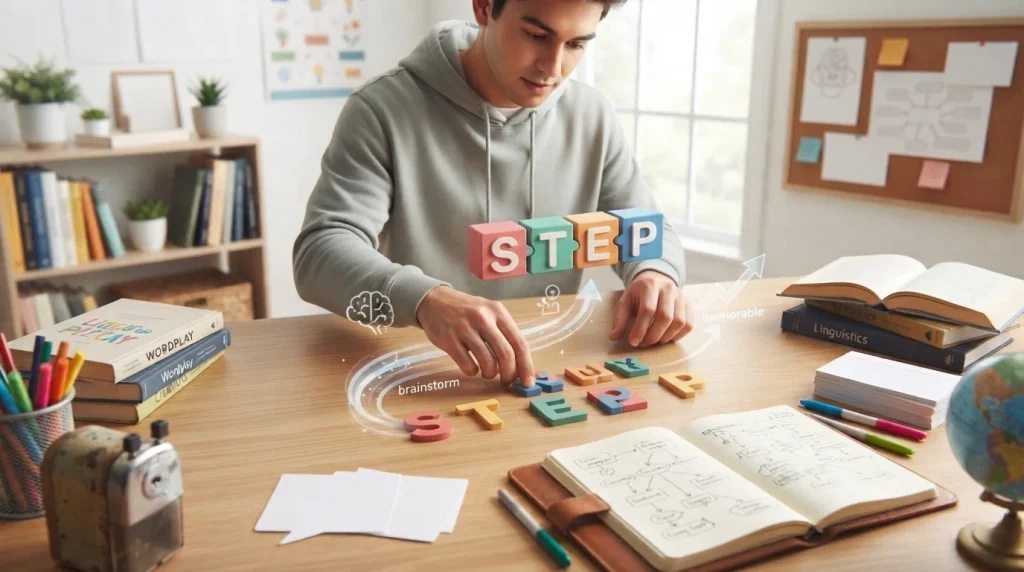
To understand why these word games are so popular, it helps to look at how abbreviations function in our language. An acronym takes the first letter of every word in a phrase and combines them into a brand-new, pronounceable word.
When you add a humorous twist, you turn an ordinary linguistic tool into a delightful social icebreaker.
Acronyms vs. Initialisms: What Is the Difference?
People often confuse these two terms, but there is a simple trick to tell them apart instantly.
- Acronyms: Pronounced as an actual single word (for example, NASA, LASER, or RADAR).
- Initialisms: Spoken out loud letter by letter (such as FBI, DIY, or FAQ).
A playful abbreviation usually works best when it forms an actual word you can pronounce out loud in casual conversation.
The Rise of Backronyms in Popular Culture
Sometimes people take an existing everyday word and invent a hilarious new phrase to fit those letters after the fact. Linguists call this process a “backronym.”
For example, turning the word “BED” into “Brain Energy Depleted” or “FRIDAY” into “Finally Relief Is Directly Approaching You” takes a normal word and gives it an unexpected, relatable spin.
Popular Categories of Creative and Humorous Acronyms

Wordplay comes in many different flavors depending on where and how you plan to use it.
Exploring different styles helps you choose the perfect tone for your friends, coworkers, or online audience.
Everyday Life and Social Media Slang
Internet culture thrives on short, punchy phrases that express shared feelings in seconds.
- FOMO: Fear Of Missing Out (that nervous feeling when your friends gather without you).
- JOMO: Joy Of Missing Out (the pure bliss of staying home in cozy pajamas instead of going to a party).
- YOLO: You Only Live Once (the ultimate excuse for ordering an extra dessert).
Office and Workplace Humor
Corporate environments are often filled with dry, serious jargon. Injecting lighthearted abbreviations into casual Slack channels or team meetings reduces stress and builds camaraderie.
- TGIF: Thank Goodness It’s Friday (the universal anthem of office workers everywhere).
- CRAFT: Can’t Remember A Freaking Thing (for those Monday mornings when coffee hasn’t kicked in yet).
- PEBKAC: Problem Exists Between Keyboard And Chair (a classic IT support joke for simple user mistakes).
How to Create Your Own Custom Fun Acronym Step-by-Step
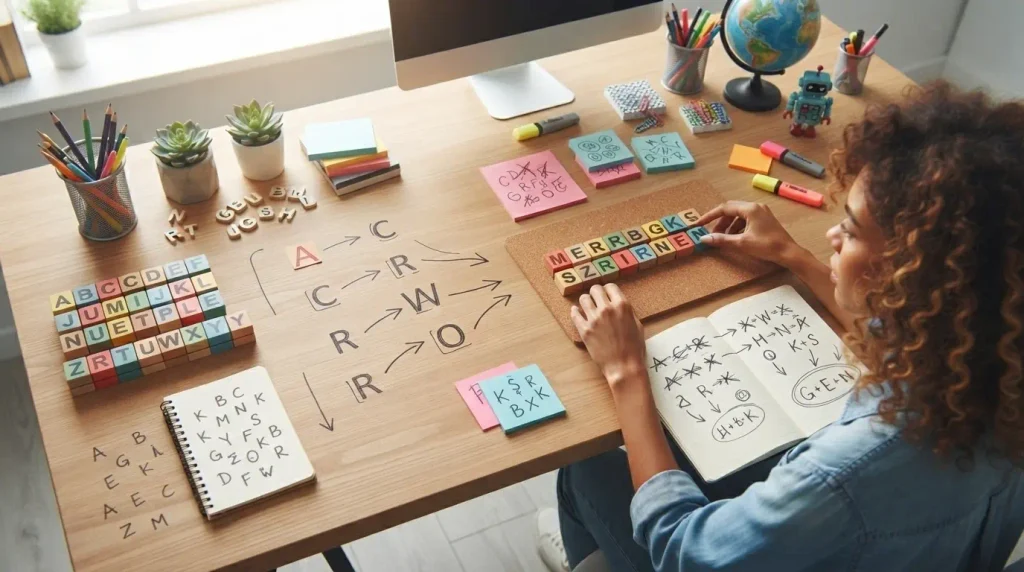
Designing a custom abbreviation from scratch is a fantastic exercise for brainstorming sessions, party games, or brand naming workshops.
Following a clear process ensures your creation turns out catchy, clear, and genuinely entertaining.
Step 1: Identify Your Core Message or Theme
Start by deciding what emotion or message you want to convey to your audience. Are you trying to make people laugh, motivate a sports team, or create a quick study guide for an exam?
Write down a list of key ideas, feelings, and action words associated with your primary goal.
Step 2: Choose a Memorable Anchor Word
Work backward from a simple, familiar base word that fits your overarching theme.
- Select short words with three to five letters (like SUN, CAT, TEAM, or HERO).
- Ensure the anchor word is easy to spell and pronounce for everyone in your group.
- Avoid overly long or obscure terms that confuse your readers.
Step 3: Match the Letters with Playful Words
Now comes the creative puzzle phase! Line up the individual letters of your anchor word vertically and brainstorm fitting terms for each slot.
inexplicable. Keep experimenting with synonyms until the full phrase flows naturally when read aloud.
The Benefits of Using Playful Wordplay in Communication

Using humor and clever linguistic tricks is not just about having a quick laugh during lunch breaks.
It actually provides noticeable psychological and cognitive benefits for learning, stress relief, and group bonding.
Memory Retention and Mnemonic Devices
Our brains are hardwired to remember stories, patterns, and surprising information much better than dry lists of facts.
Teachers and medical professionals routinely use playful letter combinations to help students remember complex steps, formulas, and anatomical structures during stressful exams.
Team Building and Group Identity
When a project group or sports team adopts a unique, internal abbreviation, it creates an immediate sense of belonging.
It functions like an inside joke that brings members closer together, boosts morale, and transforms routine tasks into shared adventures.
Overview of Common Acronym Styles
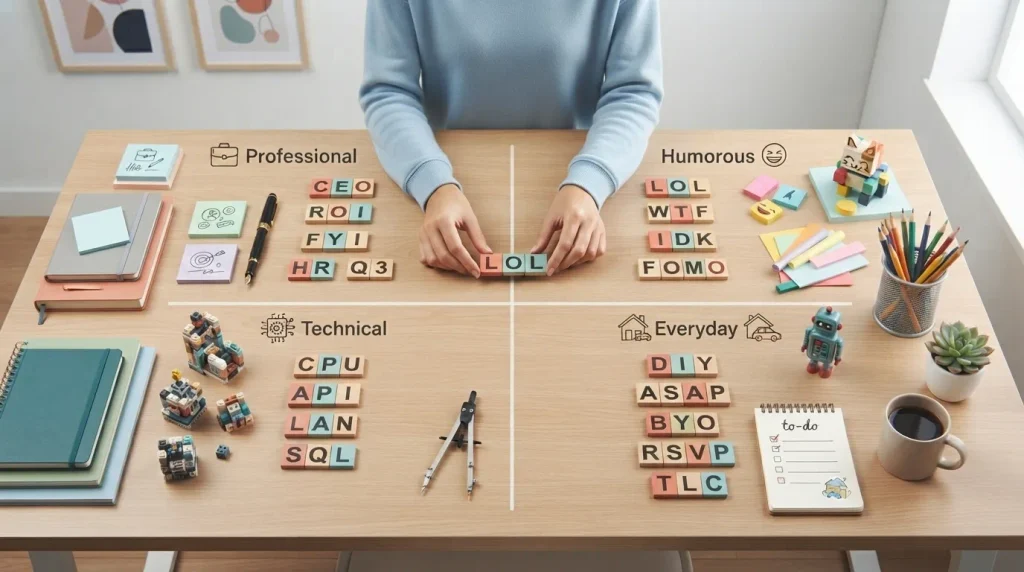
Acronyms and abbreviations are essential tools in modern communication, used to streamline language and simplify complex terms across various industries. They allow writers and speakers to convey detailed information quickly without disrupting the flow of a sentence. Depending on the context—whether technical, military, professional, or digital acronyms are constructed and styled in distinct ways to serve specific linguistic purposes. Understanding these different styles helps ensure clarity, accurate context, and effective audience engagement in both formal and informal writing.
Pronounced Acronyms
This style consists of initialisms that are pronounced as continuous, single words rather than individual letters. Common examples like NASA, NATO, and radar blend seamlessly into spoken language, allowing multi-word phrases to function as simple nouns in everyday conversation.
Alphabetisms or Letter-by-Letter Acronyms
Unlike spoken acronyms, alphabetisms require each individual letter to be pronounced separately. Frequently used in business, technology, and government, such as FBI, HTML, or CEO, this style maintains strict distinction between each component term to preserve formal accuracy.
Colloquial and Digital Acronyms
Popularized by modern digital communication, text messaging, and internet culture, this casual style simplifies multi-word expressions into brief shorthand. Widely recognized examples such as ASAP, DIY, or FYI serve to speed up informal exchanges while maintaining instant comprehension.
Real-World Examples from Pop Culture and History

History and media are packed with instances where organizations and writers deliberately chose clever names to create catchy abbreviations.
These examples prove that even serious industries appreciate the power of a great name.
Famous Entertainment Examples
Comic books and action movies love using stylized organization titles that spell out cool words.
Think of fictional intelligence agencies in spy movies or superhero groups where the full title was clearly engineered to spell out words like “SHIELD” or “SPECTRE.”
Real-World Historical Oddities
Even scientific research groups and government programs occasionally use creative naming strategies to capture public interest and secure funding.
Astronomers, for instance, frequently name massive telescope projects and space missions so that their short forms spell out legendary mythological figures or inspiring verbs.
Mistakes to Avoid When Designing Playful Abbreviations

While wordplay is meant to be casual and enjoyable, a few common design pitfalls can ruin an otherwise great joke.
Keeping your design simple and user-friendly ensures your message hits the mark every time.
Avoid Overly Complex or Forced Phrases
If you have to bend grammar rules backwards or use bizarre dictionary words just to fit a letter, your creation will feel forced.
If the final phrase does not make logical sense or feels awkward to say out loud, toss it out and try a different anchor word.
Keep Cultural Context and Sensitivity in Mind
Always consider who will be reading your content before sharing it broadly.
- Ensure the letters do not accidentally spell out offensive or inappropriate terms.
- Double-check that your phrase does not carry negative meanings in other cultures or languages.
- Keep workplace creations clean and professional enough for all colleagues.
Practice Exercise
Test your knowledge on acronym mechanics, backronyms, and creative wordplay!
- What is the key difference between an acronym and an initialism?
A. Initialisms are always longer than ten letters
B. Acronyms are pronounced as single words, while initialisms are spoken letter by letter
C. Initialisms are only used in computer programming
D. Acronyms cannot contain vowel letters - What term describes taking an existing word like “BED” and inventing a new phrase to fit its letters?
A. Synonym
B. Homonym
C. Backronym
D. Antonym - What does the popular social media abbreviation “JOMO” stand for?
A. Joy Of Missing Out
B. Journey Of Many Obstacles
C. Jump On My Order
D. Join Our Music Organization - Which of the following is a classic example of an acronym pronounced as a single word?
A. FBI
B. NASA
C. USA
D. BBC - Why are playful abbreviations effective as learning tools in classrooms?
A. They make textbooks heavier
B.They force students to write slower
C. They replace the need for studying entirely
D. They act as mnemonic devices that improve memory retention - What is the recommended first step when creating a custom letter combination?
A. Buying expensive design software
B. Identifying your core message, emotion, or theme
C. Memorizing the entire English dictionary
D. Asking a computer to generate random letters - Which setting is best suited for lighthearted workplace abbreviations like “TGIF”?
A. Formal legal contracts
B. Annual financial audit reports
C. Casual breakroom conversations and informal team chats
D. Official government press releases - Why should you avoid using overly forced or obscure words in your designs?
A. It makes the phrase awkward, confusing, and hard to remember
B. It makes the text print too fast
C. It changes the font style automatically
D. It violates international trademark laws
Answer Key
1. B | 2. C | 3. A | 4. B | 5. D | 6. B | 7. C | 8. A
FAQs
Can a fun acronym be used in professional business settings?
Yes, absolutely! While you should keep formal client proposals professional, using playful abbreviations in internal team chats, casual presentations, and training workshops breaks the ice, builds team unity, and makes dry information far more engaging for your coworkers.
What is the origin of the word backronym?
The word “backronym” is a blend of “back” and “acronym.” It was coined in the late 20th century to describe the clever practice of creating a brand-new descriptive phrase to fit an already existing, familiar word after its original creation.
How do I make sure my custom acronym is easy to remember?
To make your creation stick, pick a short anchor word (three to five letters) that people already use daily. Ensure the expanded phrase paints a vivid mental picture, uses simple vocabulary, and rolls off the tongue naturally when spoken aloud.
What is a recursive acronym?
A recursive acronym is a humorous technical abbreviation that refers to itself within its own expansion. For example, the software term “VISA” officially stands for “VISA International Service Association,” creating an amusing endless loop that programmers and tech enthusiasts love.
Are all short abbreviations considered true acronyms?
No, they are not! Abbreviations are only true acronyms if you pronounce the combined letters together as a single word (like RADAR or SCUBA). If you say each letter individually (like DVD or TV), it is technically classified as an initialism.
Conclusion
Mastering the art of the fun acronym is a brilliant, low-stress way to bring humor, creativity, and clarity to your daily interactions. From social media slang and memorable study tricks to hilarious office backronyms, these clever linguistic games prove that language is meant to be played with and enjoyed.
When you take the time to craft a custom fun acronym for your team or project, you build instant connections and make everyday communication far more exciting. It turns standard messages into memorable moments that put a genuine smile on everyone’s face.
So grab a notepad, pick your favorite short anchor word, and start designing your very own fun acronym to share with friends and colleagues today!

Ghzala Rani is the creator and writer behind Funzonest.com, a website dedicated to making everyday topics more enjoyable, interesting, and easy to understand. With a passion for engaging content, Ghzala focuses on creating helpful articles that inform, entertain, and provide readers with useful ideas and insights.
Through Funzonest.com, Ghzala Rani aims to build a friendly online space where readers can discover fresh content and explore topics presented in a simple and enjoyable way. Her writing style focuses on clarity, originality, and reader value. She is committed to publishing well-researched and engaging content that keeps visitors informed while making their time on the website enjoyable.