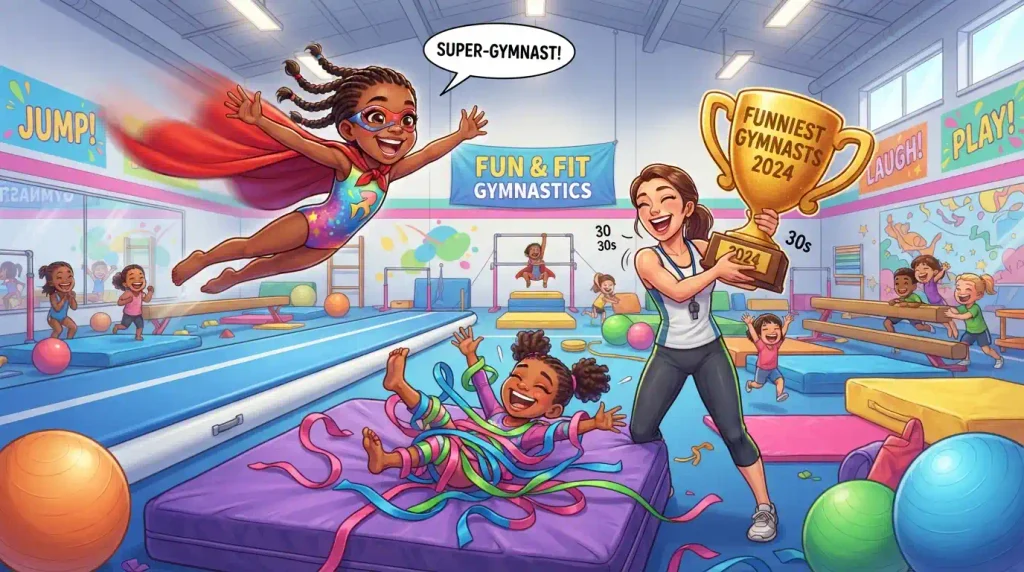
Enrolling in a fun & fit gymnastics program offers children and beginners an engaging, non-competitive way to build strength, flexibility, balance, and self-confidence. By focusing on recreational movement, foam pits, and obstacle courses rather than strict scoring, participants develop lifelong motor skills and healthy exercise habits in a safe, encouraging environment.
Have you ever watched a toddler turn a living room couch into an improvised obstacle course? Enrolling them in a fun & fit gymnastics class channels that natural urge to climb, jump, and tumble into structured, safe play.
Joining a fun & fit gymnastics program turns fundamental physical movement into an exciting weekly adventure. Children build real body awareness while having so much fun they forget they are actually working out.
Whether your child is taking their very first steps or looking for a stress-free way to stay active, fun & fit gymnastics provides the perfect foundation. Let us explore how recreational tumbling builds healthy bodies and bright futures.
Why Playful Gymnastics Beats Rigid Competition
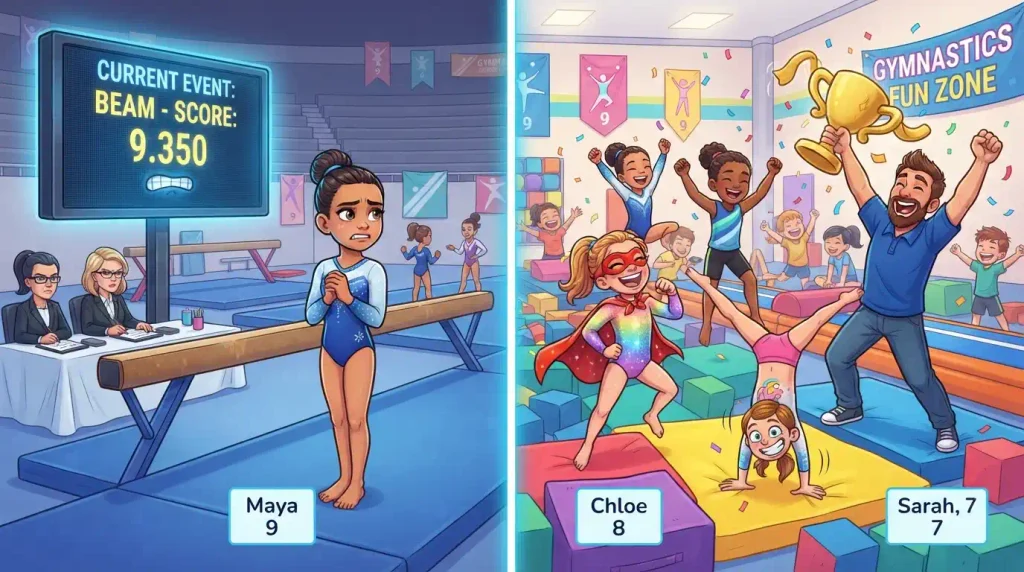
Traditional competitive gymnastics can sometimes feel intensely focused on perfection, strict scoring, and long training hours. Recreational programs flip that script by prioritizing personal growth, social connection, and sheer enjoyment above all else.
When children move without the fear of making mistakes, their brains form positive associations with exercise. They learn to view physical movement as a fun reward rather than a demanding obligation.
Building Confidence Without Pressure
In a recreational setting, celebration happens after every small attempt, not just a flawless routine. Trying a forward roll and landing on your side still earns a high five, which teaches resilience and keeps motivation high.
Developing Body Awareness and Spatial Sense
Knowing where your body is in space, what scientists call proprioception, is a superpower learned on mats and trampolines. Children learn how to fall safely, balance on narrow surfaces, and control their landings with ease.
Key Core Apparatuses in Recreational Gymnastics
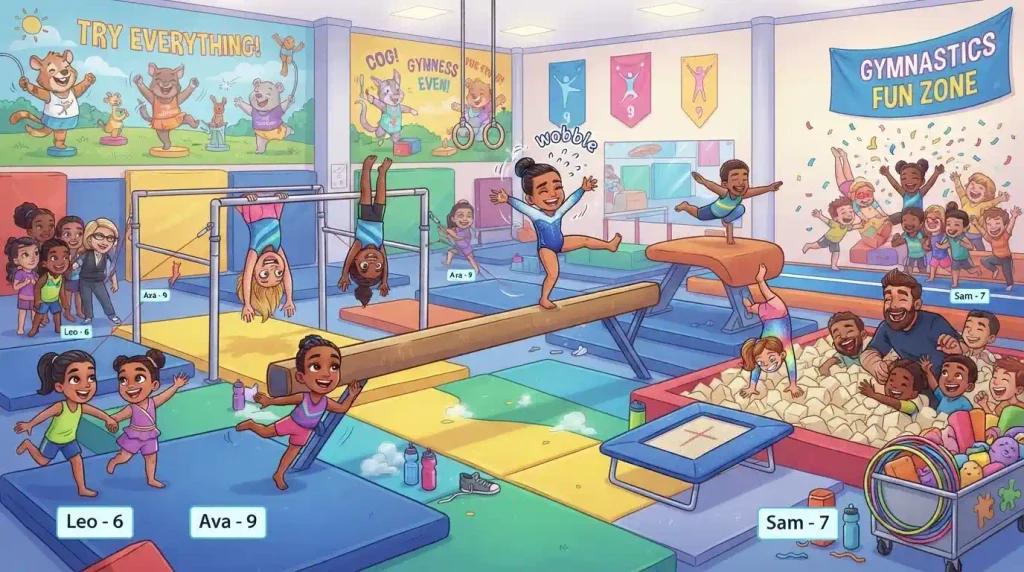
Walking into a gym for the first time reveals a colorful landscape of soft mats, high bars, and springy floors. Each piece of equipment offers unique physical benefits tailored for growing bodies.
The Spring Floor and Tumble Tracks
Spring floors absorb impact, making jumping and landing gentle on growing joints. Long inflatable tracks allow beginners to practice consecutive leaps and rolls with extra bounce and safety.
- Foam wedges help beginners master forward and backward rolls by letting gravity assist their movement.
- Octagon mats provide cushioned support while learning bridge kick-overs and back handspring entry shapes.
- Soft landings on thick crash pads remove the anxiety of slipping during new skill attempts.
Balance Beams and Low Bars
Low balance beams set just a few inches off the floor give kids a safe space to practice walking on tiptoes, hopping, and holding single-leg balances before moving to higher equipment.
The Ever-Popular Foam Pit
Deep foam pits filled with soft foam blocks are the ultimate playground staple. They allow gymnasts to attempt new jumps, flips, and vault entries without any fear of hard landings.
Physical and Mental Benefits of Movement
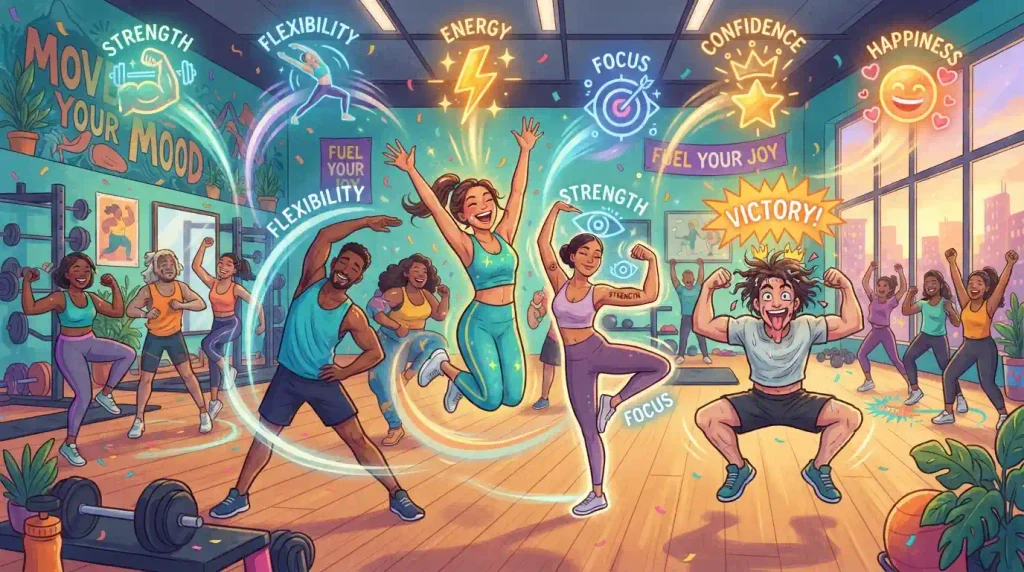
Gymnastics is often called the mother of all sports because it develops foundational athletic abilities that transfer directly to soccer, basketball, swimming, and daily play.
Strengthening Muscle Tone and Bone Density
Supporting your own body weight on bars or pushing off vaulting blocks builds dense bones and strong muscle groups. It develops core stability without needing heavy weights or gym equipment.
Boosting Spatial Coordination and Reflexes
Learning to balance on one foot while focusing on a target sharpens neural pathways. Kids who practice gymnastics regularly often display better balance and quicker reflexes in everyday play.
Choosing the Right Class for Every Age Group
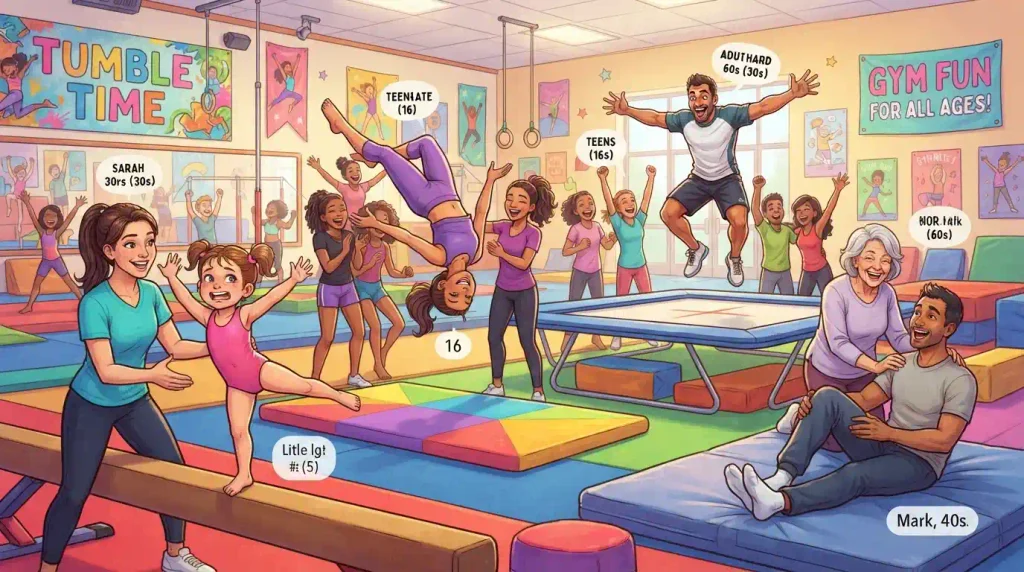
Finding the right gymnastics class is all about matching equipment and activities to your child’s natural stage of development. Younger kids thrive on open sensory exploration and basic play, while older children benefit from structured obstacle courses and skill-building stations. When you choose an age-appropriate class, your child stays engaged, feels safe, and builds confidence at a pace that feels completely natural to them.
Parent & Tot Classes (Ages 1 to 3)
These early sessions focus on parent-guided play, soft sensory mats, and gentle balance exercises. Toddlers get to explore low obstacles and foam pits while building basic spatial awareness and early motor skills alongside a trusted adult.
Preschool & Early Beginners (Ages 3 to 5)
Designed for independent movers, these classes introduce simple gymnastics shapes, low balance beams, and basic rolls. Kids learn how to follow multi-step instructions, take turns with peers, and try new physical challenges without needing a parent on the floor.
Youth & Teen Tumbling (Ages 6 and Up)
Older age groups focus on building real body control, strength, and coordination across standard apparatuses like bars, spring floors, and vaults. Beginners learn fundamental cartwheels and handstands, while returning students refine their technique in a relaxed, non-competitive space.
What to Expect During Your Child’s First Class
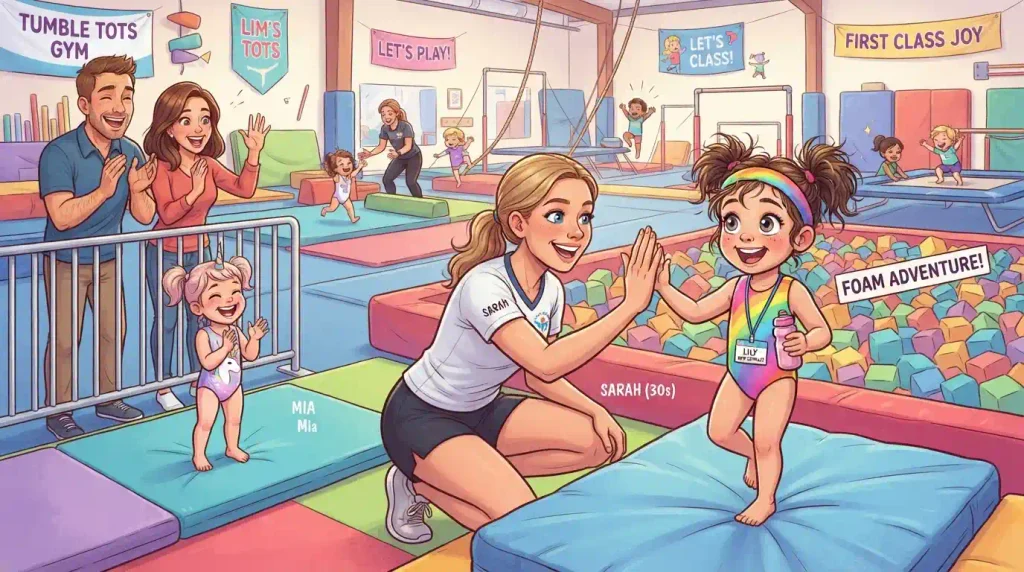
Nervous butterflies are completely normal before stepping onto the floor for the first time. Knowing the typical lesson plan helps kids and parents feel relaxed and ready for fun.
The Dynamic Warm-Up Session
Classes start with ten minutes of active movement set to upbeat music. Kids hop like frogs, walk like bears, and stretch like cats to warm up muscles and lubricate joints safely.
Rotations Across Equipment Stations
Instructors guide small groups through three or four equipment stations. Children take turns on the beam, practice bar hangs, jump into foam pits, and execute floor routines.
Important Safety Rules Every Gymnast Learns
- Wait for the coach’s clear signal before stepping onto any trampoline or track.
- Keep hands and feet to yourself while waiting in line at exercise stations.
- Always land on your feet or bottom in the foam pit, never head-first.
What to Wear: Comfortable Attire Basics
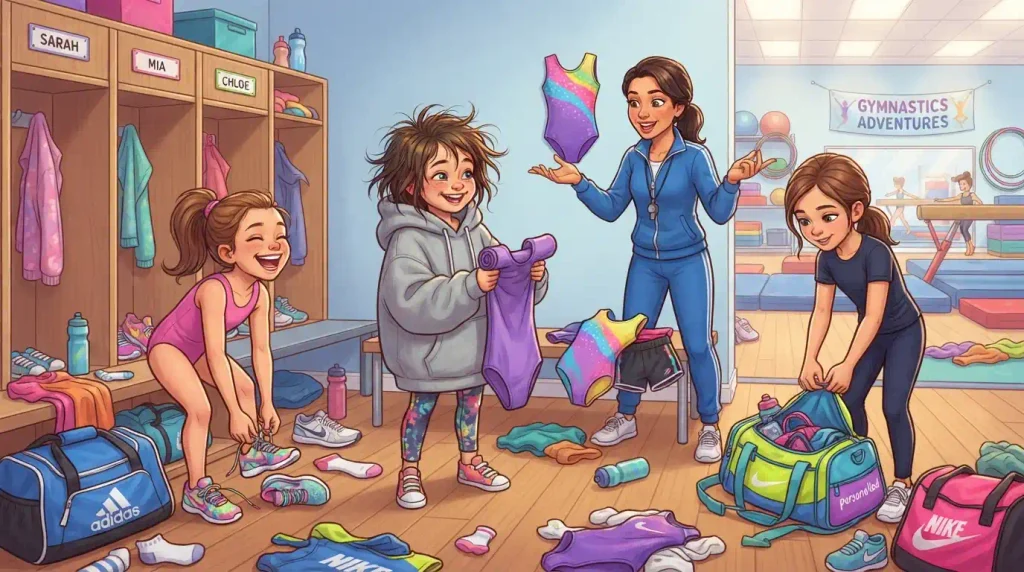
You do not need expensive specialized gear to start a recreational tumbling class. Comfortable, flexible clothing from home is usually all you need for safe play.
Leotards vs. Athletic Shorts and T-Shirts
A fitted leotard keeps clothing out of the way during upside-down moves. Alternatively, a snug-fitting T-shirt tucked into elastic-waist athletic shorts works just as well for beginners.
Bare Feet Are Always Best
Gymnasts practice in bare feet because grip on mats is essential. Socks cause slipping on smooth surfaces, while shoes are too heavy for bar and beam exercises.
- Tie long hair back securely into a ponytail or bun before entering the gym floor.
- Remove all jewelry, including necklaces, rings, and dangling earrings, to prevent snags.
- Leave zipper-heavy shorts at home, as metal teeth can scratch vinyl mats and equipment.
How Gymnastics Supports Academic and Social Success
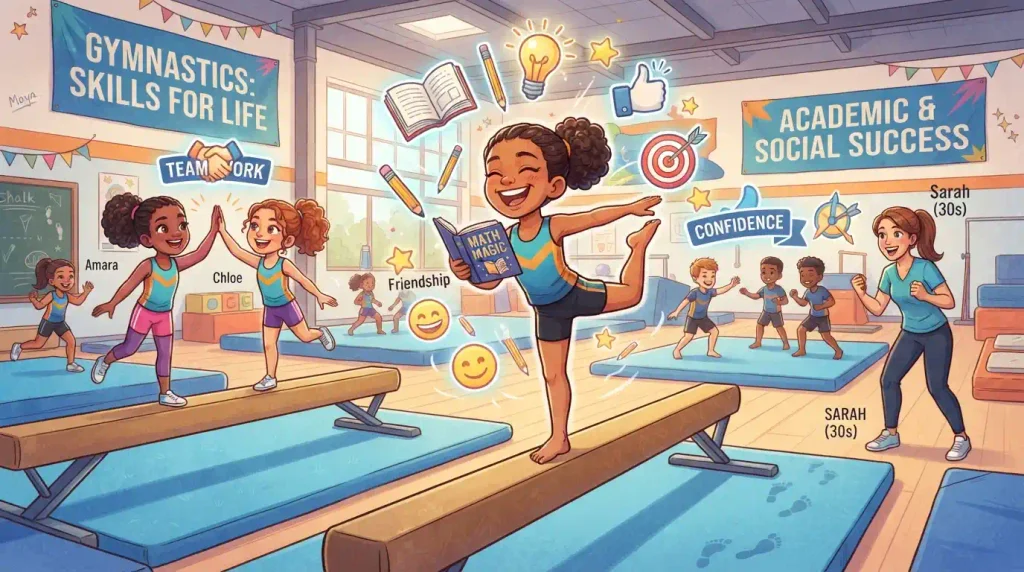
The physical coordination gained in gym classes spills over into classroom performance and social interactions in surprising, practical ways.
Enhancing Concentration and Focus
Following multi-step obstacle courses trains the brain to retain instructions, sequence tasks, and stay focused—skills that directly aid reading and math comprehension.
Learning Patience and Peer Encouragement
Waiting for your turn at the vault line teaches self-control. Cheering for a classmate who finally lands a cartwheel builds empathy, teamwork, and strong social connections.
Overcoming Common Beginner Challenges
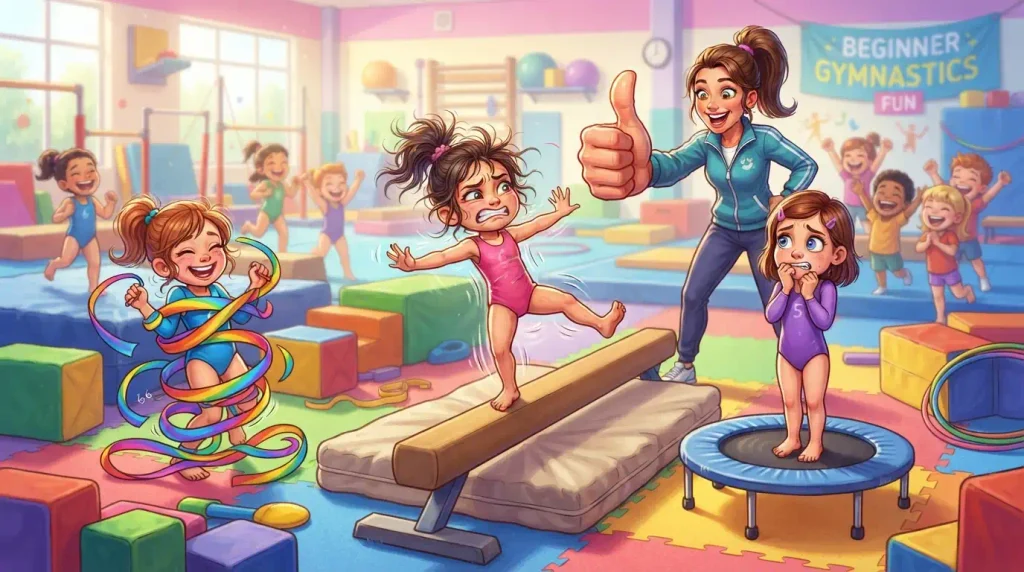
Every gymnast encounters moments where a skill feels intimidating. Gentle encouragement and smart coaching techniques help kids push past temporary sticking points.
Conquering the Fear of Being Upside Down
Going upside down during a handstand or flip can feel disorienting at first. Coaches use inclined mat wedges and steady hand spots to help kids feel completely secure as they invert.
Handling Sore Muscles After Class
Light muscle stiffness can happen after trying new movements. Encourage your child to drink plenty of water, take a warm bath, and do gentle leg stretches before bedtime.
Practice Exercise
Test your knowledge of recreational gymnastics, beginner safety, physical development, and the benefits of playful gymnastics activities!
Gymnastics Basics and Safety
1. What is the main philosophy of recreational gymnastics programs?
A. Winning gold medals at international competitions.
B. Building fitness, confidence, and joy through non-competitive play.
C. Training six hours a day, seven days a week.
D. Demanding mechanical perfection with no room for mistakes.
2. Which safety rule is critical when using a foam pit?
A. Always dive head-first from the top beam.
B. Land safely on your feet or bottom, never on your head.
C. Wear heavy winter boots while jumping inside.
D. Bring snacks into the pit to share with friends.
3. Why do gymnasts often practice in bare feet on floor mats?
A. Bare feet provide natural grip and help prevent slips.
B. Shoes are forbidden by federal law.
C. Socks cause the equipment to wear out quickly.
D. Bare feet keep the body cool during summer.
4. How do inclined wedge mats assist young beginners?
A. They make the floor look more colorful.
B. They use gravity to help children practice forward and backward rolls.
C. They prevent children from touching gymnastics bars.
D. They serve exclusively as chairs for parents.
5. Which skill is developed through balance beam exercises?
A. Fast underwater swimming techniques.
B. Spatial awareness, posture, and core balance.
C. Heavy weightlifting power.
D. Keyboard typing speed.
Learning, Preparation, and Early Development
6. What is the purpose of an initial dynamic warm-up in class?
A. To tire children out so they sit quietly.
B. To test who can run the fastest.
C. To warm up muscles and prepare joints for movement.
D. To grade students on athletic ability.
7. How can gymnastics training support classroom learning?
A. It eliminates the need for homework.
B. It can improve focus, balance, and the ability to follow multi-step instructions.
C. It teaches advanced college-level physics equations.
D. It guarantees straight-A report cards.
8. What type of clothing is best suited for beginner gymnastics?
A. Loose jeans with heavy metal belts.
B. Long dresses with trailing capes.
C. Thick winter jackets with metal zippers.
D. Comfortable, fitted athletic clothes or a well-fitting leotard.
9. Why should long hairstyles be tied back securely during class?
A. To match the coach’s hair color.
B. To make gymnasts run significantly faster.
C. To prevent hair from blocking vision or getting caught on equipment.
D. To satisfy photo dress code rules.
10. What is a key benefit of parent-and-tot tumble classes?
A. Supporting early sensory exploration and bonding in a safe environment.
B. Preparing toddlers for immediate competitive trials.
C. Teaching toddlers complex flips on high bars.
D. Allowing parents to sleep while children play.
Answer Key
1: B | 2: B | 3: A | 4: B | 5: B | 6: C | 7: B | 8: D | 9: C | 10: A
FAQs
At what age can my child start gymnastics classes?
Children can start as early as 18 months in parent-and-tot classes focused on motor skills and play. Independent classes usually begin around age three, once kids can follow simple directions from instructors.
Is gymnastics safe for energetic or clumsy children?
Yes, recreational gyms are designed specifically with padded mats, soft foam landing zones, and trained spotters. Clumsy kids actually benefit enormously, as structured tumbling builds the core strength and balance needed to prevent everyday falls.
How often should a beginner attend gymnastics class?
Attending class once or twice a week provides excellent physical benefits while keeping schedule demands light. Consistency helps children retain movement patterns and build confidence without feeling overwhelmed or exhausted.
Can boys participate in recreational gymnastics classes?
Absolutely, gymnastics provides foundational strength, agility, and power that benefits boys across all sports. Many facilities offer co-ed recreational classes or specialized boys’ ninja tumbling tracks designed for high-energy play.
Do parents need to stay during the entire class session?
Parent presence requirements depend on your child’s age group. Parent-and-tot classes require active floor participation, while preschool and youth levels allow parents to watch comfortably from designated spectator viewing areas.
Conclusion
Enrolling your child in a fun & fit gymnastics program can support physical activity, skill development, and confidence through age-appropriate movement. By swapping rigid competitive pressures for joyful exploration, kids can build movement, balance, and coordination skills in a supportive space.
Joining a fun & fit gymnastics facility can make staying active an exciting adventure every week. From bouncing on tumble tracks to practicing their first cartwheel, children can develop skills that support their progress both on the gym floor and beyond.
Leap into a fun & fit gymnastics class in your area today. Grab your athletic shorts, head to your local gym, and let your child discover the joy of movement!

Ghzala Rani is the creator and writer behind Funzonest.com, a website dedicated to making everyday topics more enjoyable, interesting, and easy to understand. With a passion for engaging content, Ghzala focuses on creating helpful articles that inform, entertain, and provide readers with useful ideas and insights.
Through Funzonest.com, Ghzala Rani aims to build a friendly online space where readers can discover fresh content and explore topics presented in a simple and enjoyable way. Her writing style focuses on clarity, originality, and reader value. She is committed to publishing well-researched and engaging content that keeps visitors informed while making their time on the website enjoyable.