
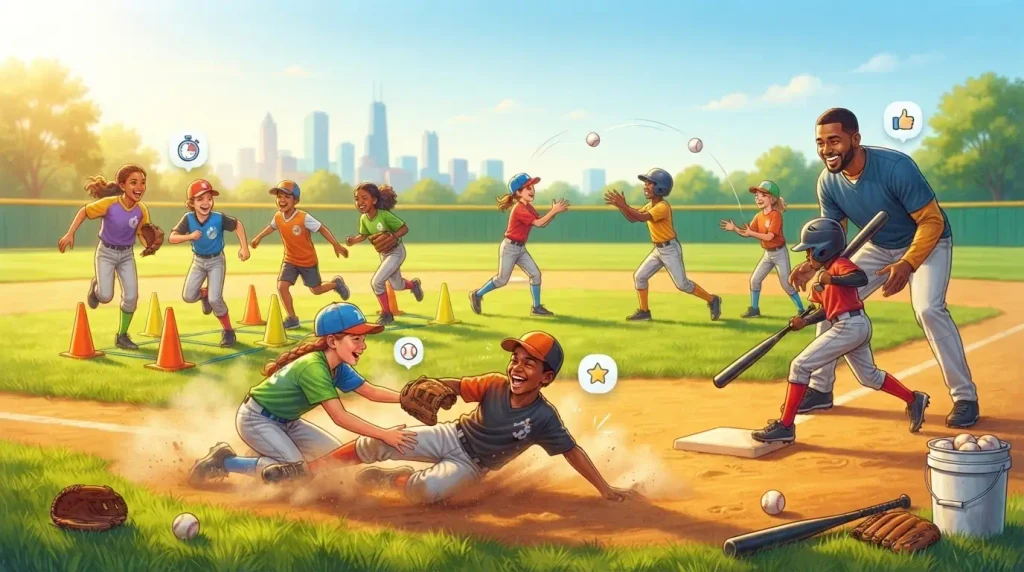
Incorporating high-energy fun baseball drills turns repetitive practice into competitive games that build core skills faster. By blending gamified fielding, target hitting challenges, and base-running relays, players develop muscle memory, field awareness, and team chemistry while staying fully engaged on the field.
Have you ever watched young ballplayers drag their feet toward the dugout midway through practice? It happens when traditional repetition turns America’s favorite pastime into a boring chore.
Mixing creative, fun baseball drills into every practice session instantly boosts energy and keeps young athletes eager to learn. When players enjoy the process, training with fun baseball drills naturally helps them absorb mechanical habits much faster.
You can easily transform basic skill work into memorable mini-games that players talk about all week long. Let us explore how gamifying your workouts with proven fun baseball drills will turn your team into a confident, high-performing squad.
Why Gamifying Practice Transforms Player Skill Development
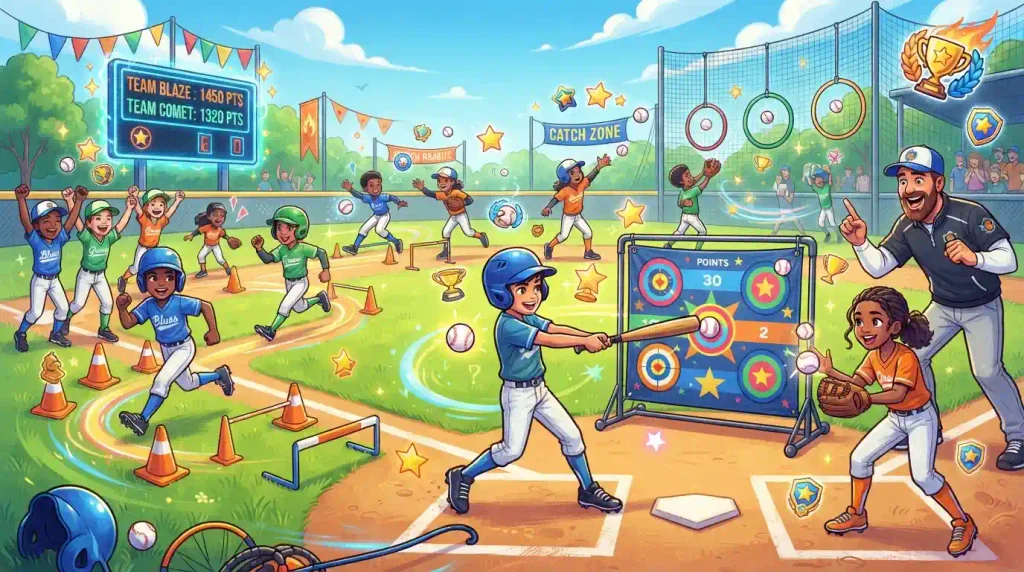
Traditional baseball practices often rely heavily on standing in long lines and waiting for a single ball to be hit. Kids learn far better through active play and friendly competition that mirrors real game pressure.
When you turn fundamental skills into mini-challenges, players focus on winning the game rather than worrying about mistakes.
The Psychology of Engagement in Youth Sports
Young brains thrive on instant feedback and achievable goals. If a drill feels like a game, players naturally increase their effort and concentration without needing constant reminders.
This active mindset builds quick reflexes, spatial awareness, and strong muscle memory much faster than slow-paced mechanical repetitions.
Eliminating Dugout Boredom and Line Standing
Long lines are the absolute enemy of progress on the ball diamond. If twelve players share one drill station, each child spends ninety percent of their time standing still.
Breaking your roster into small groups across multiple interactive stations keeps heart rates up and maximizes ball contacts for everyone.
Interactive Fielding Drills That Sharpen Reflexes
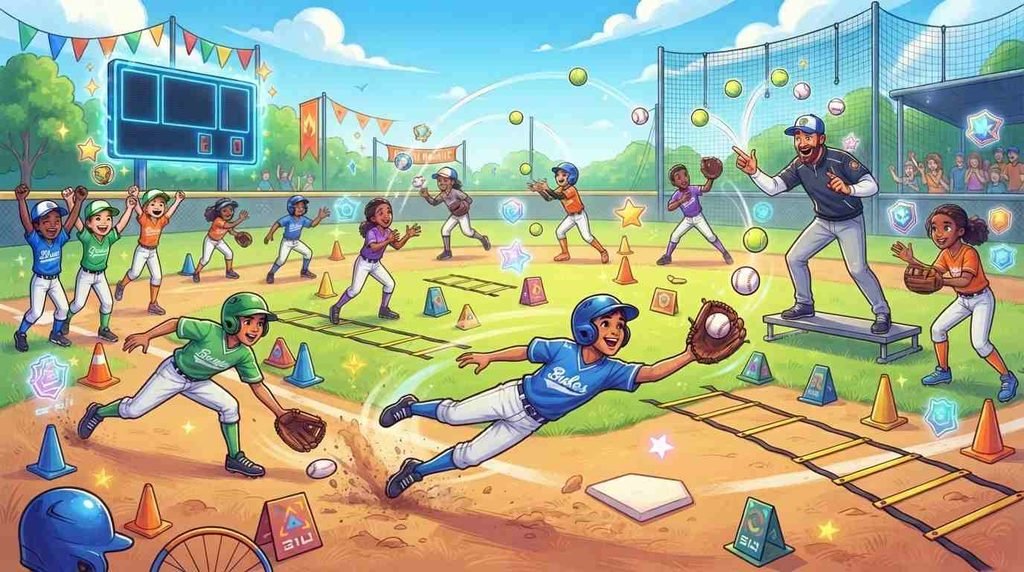
Fielding ground balls and catching pop-ups requires soft hands, quick feet, and fearless focus. These energetic games teach proper defensive mechanics while keeping everyone on their toes.
The Knockout Fielding Challenge
Set up three fielding positions on the infield dirt with players lined up behind each cone. Coach hits grounders rapidly, and any player who makes a clean field and target throw stays in the contest.
- If a player bobbles the ball or misses the target net, they complete five jumping jacks before rejoining the line.
- Introduce double-point rounds where clean backhand plays earn bonus points for their small group.
- The last remaining fielder earns the title of Infield King for that practice session.
Knock It Down Reaction Game
Position players short distances apart using soft foam training balls to encourage aggressive physical movement without fear of getting hurt.
One player throws rapid ground balls while the defender uses only a flat paddle glove to block and drop balls in front of them.
Star Wars Pop-Up Elimination
Coaches launch high pop-ups into the outfield grass using tennis rackets or light aluminum bats for safety and accuracy.
Players must call out the ball loudly three times while tracking high flies through varying sun conditions and light breezes.
Dynamic Hitting Games That Build Barrel Control
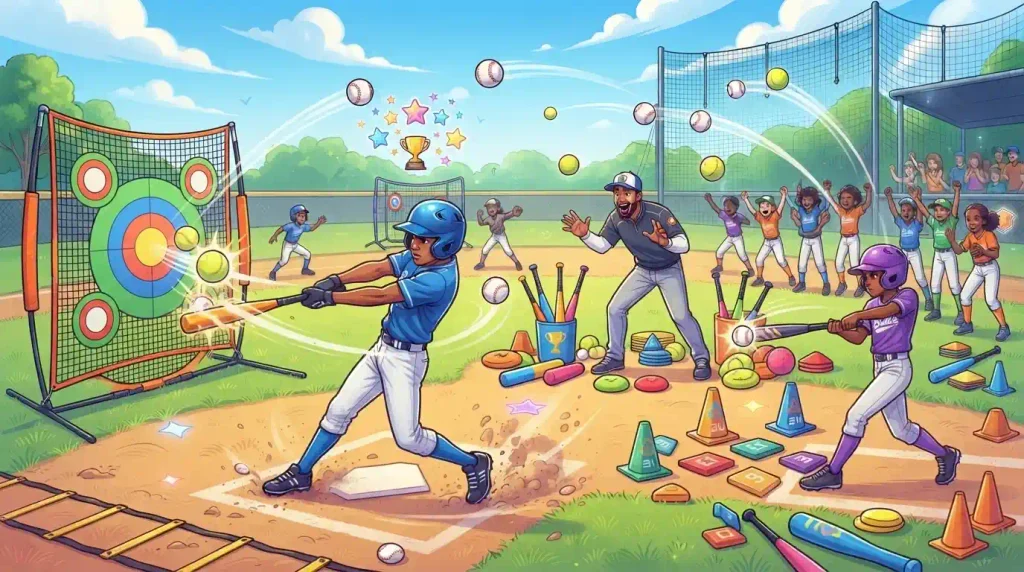
Hitting a round ball with a round bat remains one of the hardest tasks in sports. These creative batting challenges teach plate discipline and barrel control without feeling like stressful batting practice.
The Home Run Derby Target Challenge
Set up color-coded targets across the outfield fence or hitting cage nets using hanging hula hoops and pool noodles.
Each target rewards different points based on ball trajectory and exit speed off the tee or live toss.
- Lower targets reward line drives that clear the infield dirt cleanly.
- High center-field targets grant maximum points for deep drives.
- Pull-side pop-ups result in point deductions to discourage rolling over the wrists.
Colored Ball Rapid Reaction Drill
Color small foam golf balls or plastic practice balls with bright markers in red, blue, and green hues.
As the coach tosses the ball toward the plate, they call out a specific color that the hitter must instantly identify before swinging.
Bunt Battles for On-Base Percentage
Divide your hitters into two competing teams along the baselines for a strategic bunting showdown.
Lay out scoring zones using field cones along the third-base and first-base lines where soft bunts naturally beat infield defenders.
Base Running Relays and Speed Challenges
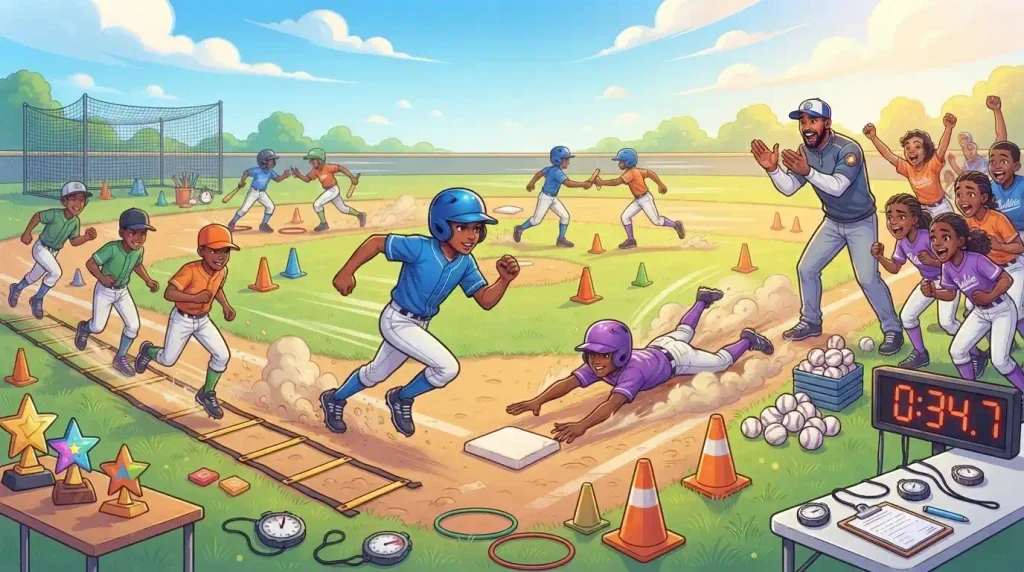
Base running is often treated as punishment at the end of practice, but it should be one of the most exciting skill segments.
Teaching proper turn angles and aggressive acceleration builds game-winning speed on the basepaths.
The Great Pickle Escape Game
Set up two bases forty feet apart with two fielders tossing a soft baseball back and forth.
A runner starts in the middle and attempts to reach either base safely by using clever fakes, sudden direction changes, and decisive slides.
- Fielders must tag the runner using proper two-handed ball control.
- Runners learn to read fielder body language and execute late sliding decisions under pressure.
- Set a fifteen-second timer to keep the action fast and physically demanding.
Four-Corner Base Running Sprint Relay
Place two equal teams at home plate and second base to run simultaneous base-running circuits around the diamond.
Runners carry a soft baton or baseball, handing it off to the next teammate after rounding every base with proper footwork.
Steal the Treasure Speed Test
Place a bucket full of baseballs on the pitcher’s mound and divide players into three outfield corner stations.
On the whistle, runners sprint to the mound, grab one ball, and execute a proper slide into their designated home base station.
Pitching and Throwing Target Games for Precision
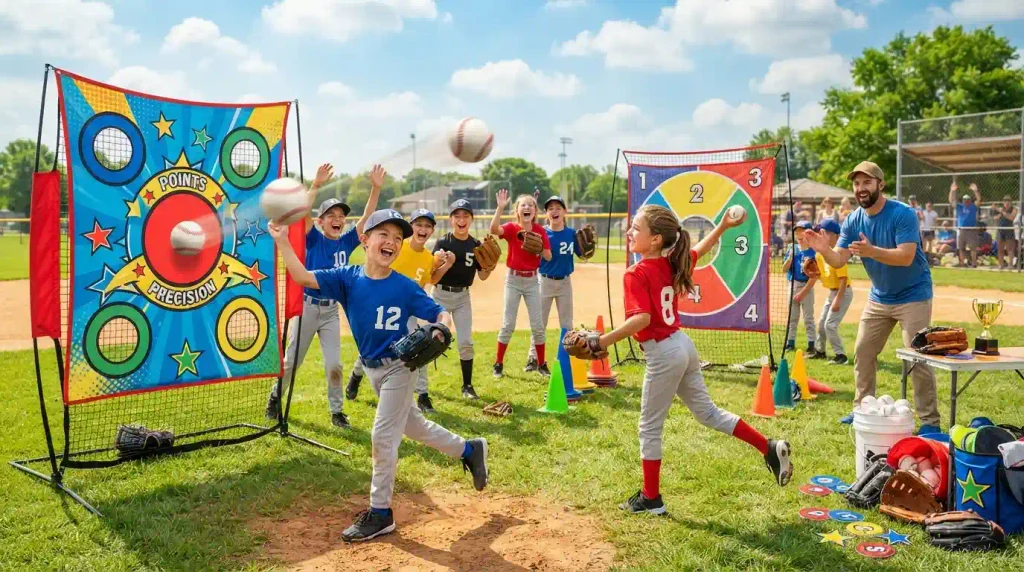
Throwing accuracy determines success at every level of baseball. Gamified throwing drills build arm strength while teaching young throwers how to control their releases accurately.
Battleship Target Knockdown
Stack light plastic buckets or tall cones on top of folding tables along the outfield fence line.
Players split into pairs and take turns throwing from set distances to knock down the target structures in as few throws as possible.
- Throwers earn one point for striking the table and three points for a direct target hit.
- Players must step toward their target with proper lead-foot alignment every single throw.
- Increase the distance by five feet after each successful hit to stretch arm strength safely.
Catch and Relay Lightning Circuit
Form two parallel lines stretching from the deep outfield grass all the way to home plate.
Players must catch, turn toward their target side, and execute a clean crow-hop throw to their relay partner in record time.
The Bullseye Command Challenge
Hang a heavy vinyl target featuring strike-zone grids behind home plate for pitchers to practice command.
Pitchers call out specific quadrants before delivering their pitch, earning bonus points for hitting the exact target spot.
Essential Coach Planning Guide for Fun Drills
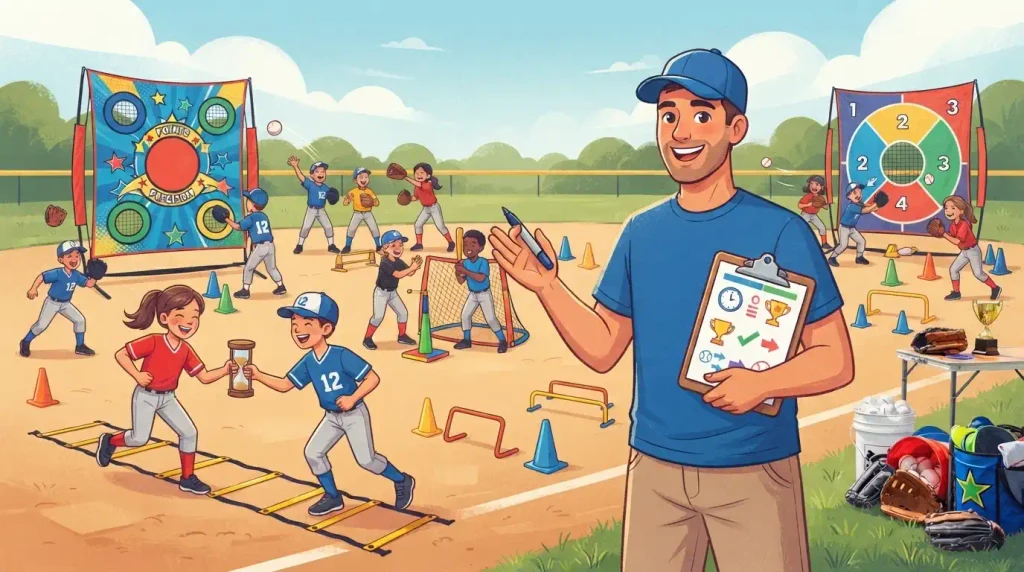
Designing an engaging youth practice requires balancing skill development with high-energy activity to keep young athletes focused and motivated. An effective practice plan structures drills into fast-paced rotations that maximize ball touches while eliminating long waiting lines. By transforming routine mechanics into competitive challenges and mini-games, coaches build core fundamentals such as throwing accuracy, base running speed, and fielding posture without letting players experience boredom or mental fatigue. Ultimately, thoughtful preparation ensures that every athlete stays active, improves key mechanics, and leaves the field eager for the next session.
Maximizing Active Repetitions and Rotations
Structuring practices into short, multi-station rotations ensures players remain constantly active and engaged while receiving focused skill repetitions.
Gamifying Fundamental Baseball Mechanics
Transforming basic fielding, hitting, and throwing routines into team challenges keeps competitive energy high while reinforcing proper physical technique.
Streamlining On-Field Communication and Setup
Keeping drill explanations under ninety seconds minimizes idle downtime, allowing young athletes to spend maximum time moving and playing on the field.
Practical Tips for Maintaining Energy and Focus
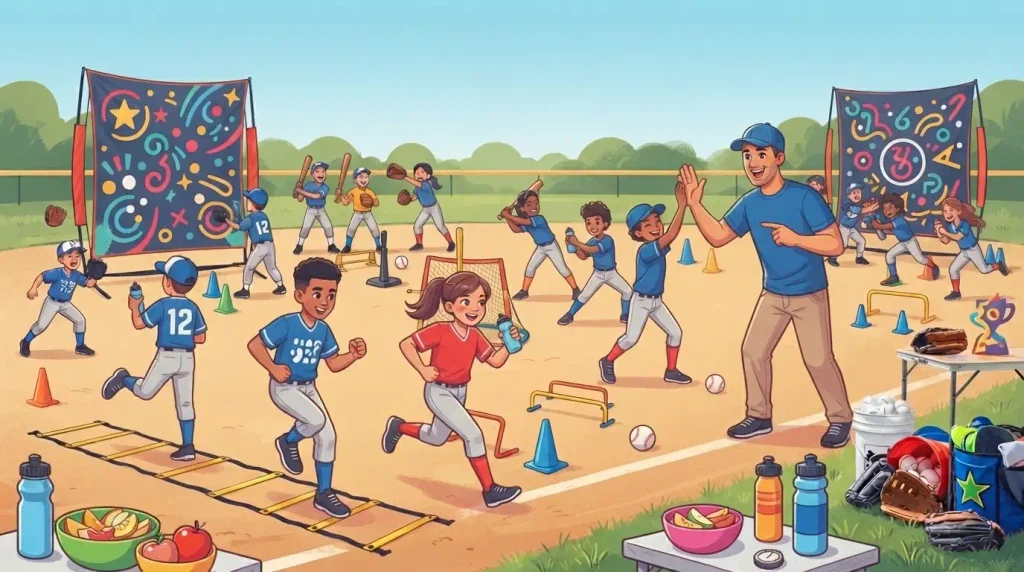
Organizing structured games requires clear rules and simple scoring systems to prevent confusion during practice.
Following these field-tested coaching strategies keeps your sessions organized, energetic, and productive.
Setting Up Multi-Station Workouts
Rotating small groups through different stations every fifteen minutes prevents mental fatigue and keeps enthusiasm high throughout the session.
- Group players by similar skill levels so competitions remain close and exciting for everyone.
- Use bright cones and visible markers so players instantly recognize drill boundaries and starting spots.
- Keep explanation times under ninety seconds so kids spend their time active on the field rather than listening to long speeches.
- Reward great effort and positive sportsmanship alongside raw athletic winning performances.
Using Equipment Creatively
Incorporate diverse training tools like tennis balls, hula hoops, flat buckets, and foam noodles to vary physical challenges.
Using lighter training balls allows younger players to practice aggressive fielding angles without fear of bad bounces hitting them.
Practice Exercise
Test your knowledge on implementing gamified practice routines, skill mechanics, and team training strategies!
1. What is the primary benefit of gamifying youth baseball practice drills?
A. It eliminates the need for coaches entirely
B. It increases player engagement and speeds up skill acquisition
C. It allows players to sit on the bench longer
D. It replaces physical movement with chalk talks
2. Why should long lines be avoided during practice sessions?
A. Lines make the field look crowded
B. Lines require too many coaches to manage
C. Standing in lines leads to boredom and reduces actual practice repetitions
D. Players prefer sitting on the grass
3. What fielding mechanic does the “Knock It Down Reaction Game” emphasize?
A. Keeping the body low and blocking balls in front
B. Throwing the ball over the outfield fence
C. Running away from grounders
D. Catching balls with one hand behind the back
4. Which drill targets barrel control and trajectory during batting practice?
A. Four-Corner Base Running Sprint Relay
B. Home Run Derby Target Challenge
C. The Great Pickle Escape Game
D. Battleship Target Knockdown
5. What skill is directly trained during the “Colored Ball Rapid Reaction Drill”?
A. Visual identification and quick decision-making at the plate
B. Base stealing timing
C. Outfield communication calls
D. Sliding technique on wet dirt
6. How does a relay race improve base-running mechanics?
A. It teaches players to slow down at every bag
B. It encourages players to skip bases
C. It reinforces proper footwork while rounding corners at full speed
D. It teaches players how to pitch from second base
Answer Key: 1. B C A D A C
FAQs
How do fun baseball drills improve team chemistry?
Gamified drills encourage teammates to cheer for one another, communicate during high-speed plays, and work toward shared group goals. Friendly competition naturally builds strong social bonds and supportive dugout culture across all age groups.
Can these drills be adapted for indoor gymnasium practices?
Yes, using soft foam balls, plastic bats, and rubber floor spots makes these games completely safe for indoor gyms. You can easily adjust target distances and running boundaries to fit smaller basketball court spaces.
What is the ideal age group for gamified baseball drills?
Gamified training works exceptionally well for players aged six to fourteen, but even high school teams benefit from competitive skill challenges. Adjusting the difficulty level keeps the games exciting for any age or experience level.
How do I stop players from becoming overly competitive during games?
Focus points on effort, proper technique, and teamwork rather than solely on winning final scores. Rotating team compositions frequently ensures every player experiences winning and losing alongside different teammates throughout the season.
How many coaches are needed to run multi-station drills?
Two to three coaches or parent volunteers can easily manage four active stations across the field. Providing simple written instruction cards at each station allows volunteers to run drills effectively without complex training.
How do fun drills help players overcome a fear of the ball?
Using softer training balls, flat foam gloves, and progressive target distances removes physical fear from fielding and hitting. When players feel safe, they build natural confidence and proper physical mechanics much faster.
Conclusion
Transforming your practice routine with high-energy fun baseball drills turns routine skill repetitions into an absolute highlight of your players’ week. By blending friendly competition, movement, and clear targets, young athletes build essential mechanical habits while falling deeper in love with the game.
When you replace long lines with interactive games, players develop confidence, quick reflexes, and strong team bonds naturally.
Pick a few new fun baseball drills to introduce at your next workout, watch the dugout energy soar, and enjoy watching your players grow into confident ballplayers!

Ghzala Rani is the creator and writer behind Funzonest.com, a website dedicated to making everyday topics more enjoyable, interesting, and easy to understand. With a passion for engaging content, Ghzala focuses on creating helpful articles that inform, entertain, and provide readers with useful ideas and insights.
Through Funzonest.com, Ghzala Rani aims to build a friendly online space where readers can discover fresh content and explore topics presented in a simple and enjoyable way. Her writing style focuses on clarity, originality, and reader value. She is committed to publishing well-researched and engaging content that keeps visitors informed while making their time on the website enjoyable.