
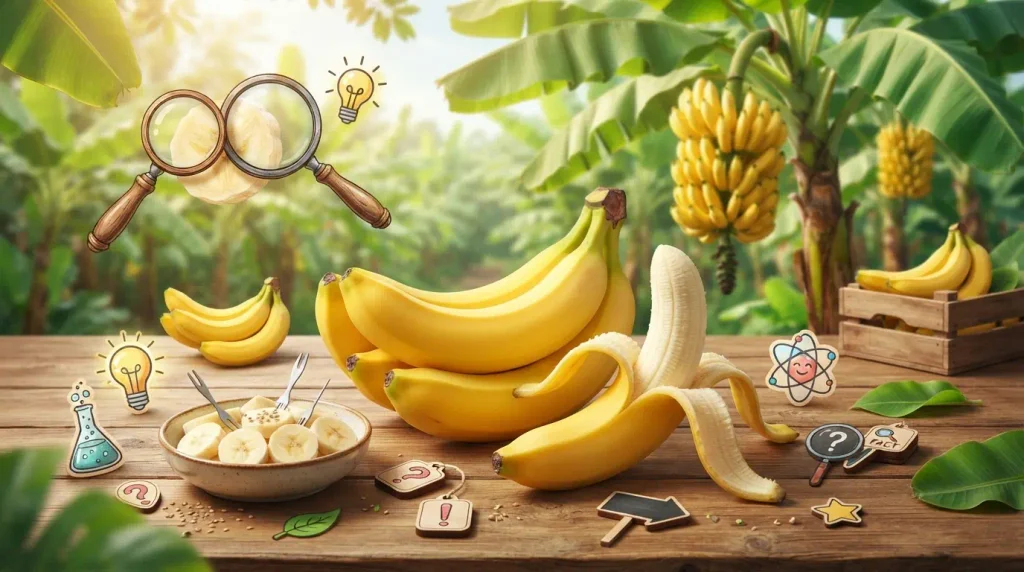
Exploring fun banana facts reveals that bananas are botanically classified as berries, grow on giant herbs rather than real trees, and are naturally slightly radioactive. Learning these fascinating details helps everyday readers appreciate the unique biology, rich history, and surprising kitchen science behind this iconic yellow fruit.
Have you ever looked at a simple yellow fruit sitting on your kitchen counter and wondered what strange secrets it might be hiding? You are definitely not alone.
Discovering fun banana facts gives curious food lovers and trivia fans an entertaining look into botany, science, and global history. Learning about fun banana facts reveals how this humble snack defies ordinary expectations in surprising ways.
You can easily impress your friends at your next gathering by sharing these delightful food secrets. Let us explore botanical anomalies, historic mysteries, and practical kitchen tips through this comprehensive guide filled with fun banana facts.
The Strange Botanical Reality of Bananas
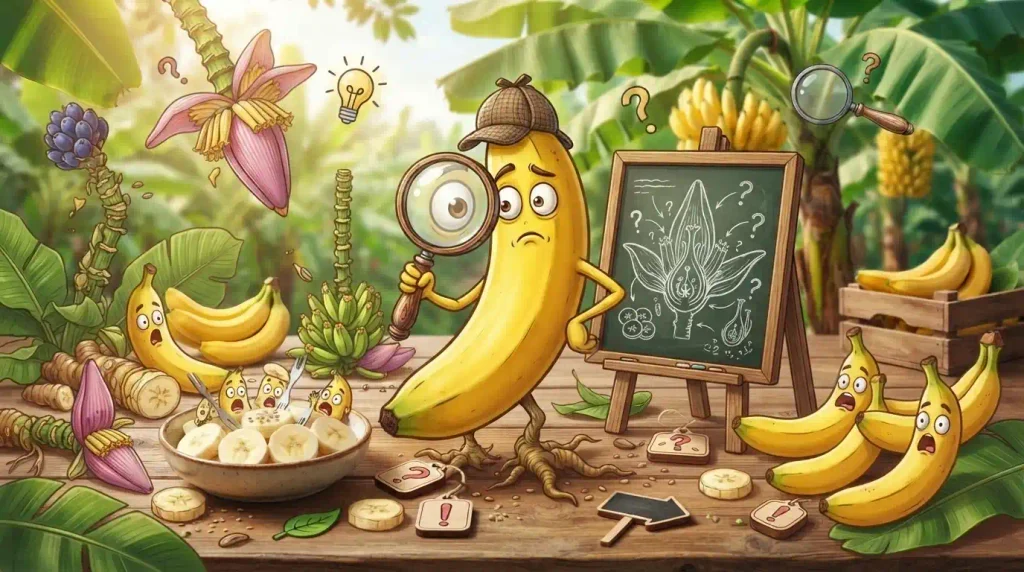
Most people walk through the produce section assuming they understand basic food categories. However, plant biology follows a completely different set of rules than culinary traditions.
Understanding how plants develop helps us see everyday groceries in an entirely new light.
Why the Banana Plant Is Actually a Giant Herb
When you picture a banana plantation, you probably imagine tall, tropical trees with sturdy wooden trunks. Surprisingly, those tall stems contain no actual wood fiber whatsoever.
The structure supporting the fruit is actually a false stem, or pseudostem, made entirely of tightly wrapped, overlapping leaf sheaths. Because it lacks true woody stem tissue, the banana plant is scientifically classified as the world’s largest perennial herb.
The Botanical Berry Shock
The scientific confusion does not end with the plant stem. Botanically speaking, a true berry must possess a soft outer skin, a fleshy middle layer, and interior seeds originating from a single flower ovary.
Because cultivated bananas meet all these strict biological criteria, they are officially classified as berries. Meanwhile, garden strawberries and raspberries fail these botanical tests because their seeds sit on the outside of an expanded stem base.
Mind-Blowing Scientific and Physical Characteristics

Beyond their botanical labels, bananas feature incredible physical and chemical properties that sound almost like science fiction.
The Natural Radioactivity Mystery
You might be surprised to hear that every single banana you eat is naturally radioactive. Bananas are naturally packed with potassium, an essential nutrient that helps regulate nerve signals and muscle contractions in your body.
A tiny percentage of that natural potassium occurs as the isotope Potassium-40, which undergoes radioactive decay. However, there is zero reason for alarm, as you would need to consume around ten million bananas in a single sitting to receive a dangerous radiation dose!
Growing Upward Against Gravity
Have you ever wondered why bananas have that distinct curved shape? It all comes down to a unique botanical process known as negative geotropism.
Instead of growing down toward the ground like most fruits, young bananas grow outward and then bend upward toward the sunlight. This upward reach helps the growing fruit compete for sunlight through dense tropical forest canopies.
History, Cloning, and the Threat of Extinction
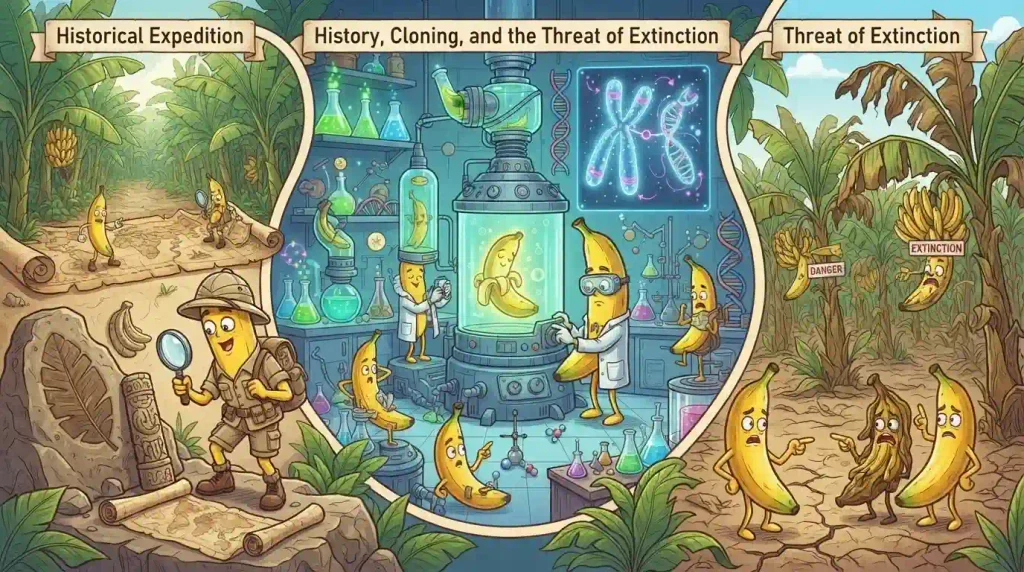
The yellow fruit you purchase at your local supermarket has a dramatic past that involves global trade, botanical cloning, and massive crop epidemics.
The Era of the Gros Michel
Before the 1950s, the world’s primary export banana was not the variety we eat today. Global markets relied on a variety called the Gros Michel, or “Big Mike,” which was sweeter, creamier, and possessed a thicker peel.
Unfortunately, a devastating soil fungus known as Panama Disease swept through global farms and nearly wiped out the entire Gros Michel crop.
Living in the Age of the Clone
To save the global banana industry, commercial growers switched to a disease-resistant alternative called the Cavendish. Because commercial bananas do not produce viable seeds, every single Cavendish plant is an exact genetic clone of its parent.
While cloning ensures uniform size and taste, it also leaves the entire global supply vulnerable to new fungal strains that target identical genetic weaknesses.
Banana Terminology and Overview
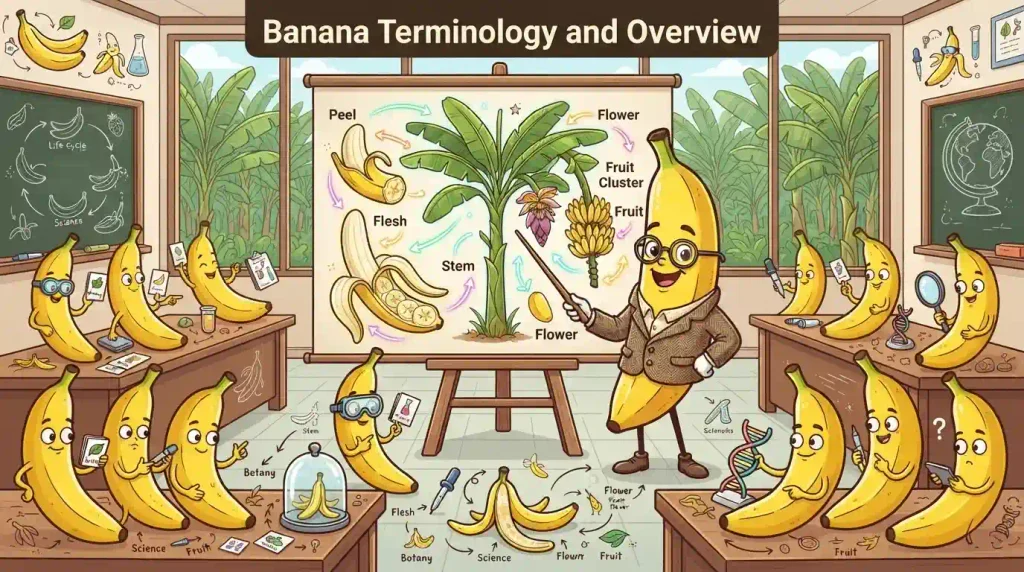
Bananas are globally recognized tropical fruits belonging to the genus Musa, known for their rich nutritional profile, distinct yellow peel, and sweet, creamy pulp. Scientifically categorized as large herbaceous flowering plants rather than true trees, banana plants produce fruit clusters called “hands” that grow along a central stalk known as a “bunch.” As a staple crop for millions of people, bananas play a vital role in global agriculture, food security, and international trade, serving as both a popular fresh snack and an essential dietary carbohydrate.
Key Botanical Terms
Understanding banana terminology requires familiarity with basic botanical concepts unique to the plant’s growth cycle:
- Pseudostem: The trunk-like structure composed of tightly packed leaf sheaths, which supports the heavy weight of the fruit bunch.
- Sucker (or Offshoot): A runner or shoot that sprouts from the underground rhizome (corm), used to propagate new banana plants vegetatively.
- Inflorescence: The large, purple-sheathed heart or flower bud that opens to reveal rows of female flowers that eventually develop into bananas.
Primary Varieties and Classifications
While hundreds of wild and cultivated banana varieties exist worldwide, cultivated bananas generally fall into two broad culinary categories:
- Dessert Bananas: Sweet, soft cultivars, most notably the Cavendish, that are consumed raw when fully ripe and golden.
- Plantains (Cooking Bananas): Starchier, firmer varieties with lower sugar content, typically cooked, fried, or boiled as a savory staple before consumption.
Culinary and Commercial Importance
Beyond their botanical traits, bananas hold immense value in modern food systems:
- Nutritional Profile: Rich in essential vitamins, dietary fiber, and minerals such as potassium and vitamin B6.
- Global Export Economy: One of the most traded fruits worldwide, driving agricultural infrastructure across tropical regions in Latin America, Asia, and Africa.
Surprising Practical Uses and Kitchen Science

Bananas offer much more than just a quick morning snack. Their natural chemical makeup makes them useful for surprising everyday tasks.
Natural Household Hacks
Before throwing away a spent peel, consider trying these clever home tricks:
Noms Magazine
- Rubbing the soft interior of a peel on leather shoes restores natural shine before buffing.
Fun Fact Co. - Placing a peel on an itchy bug bite or minor skin rash can help soothe irritation.
Fun Fact Co. - Soaking peels in water creates a potassium-rich liquid fertilizer for household plants and outdoor gardens.
The Banana Police
Ripening Hacks and Ethylene Gas
Bananas naturally produce a plant hormone called ethylene gas as they mature. This gas acts as an environmental signal that accelerates the conversion of starches into sugars.
Noms Magazine
If you place a hard avocado or unripe peach inside a closed paper bag with a banana, the trapped ethylene gas will ripen the neighboring fruit in record time!
Noms Magazine
Practice Exercise
Test your knowledge on banana biology, history, and kitchen science!
- What is the official botanical classification of a banana plant?
A. A giant perennial herb
B. A woody deciduous tree
C. A climbing evergreen vine
D. A low-growing desert succulent - Why is a banana botanically considered a berry while a strawberry is not?
A. Bananas have tough outer skins made of wood
B.Strawberries grow underground on roots
C. Bananas develop from a single ovary with soft fleshy pulp
D. Bananas only grow in Arctic climates - What process causes bananas to curve upward as they grow?
A. Positive hydrotropism
B. Negative geotropism
C. Thermal expansion
D. Wind movement - What natural element makes bananas slightly radioactive?
A. Calcium-40
B. Potassium-40
C. Sodium-22
D. Carbon-14 - How many bananas would a person need to eat in one sitting to suffer lethal radiation poisoning?
A. 10 bananas
B. 100 bananas
C. 10,000 bananas
D. 10,000,000 bananas - What banana variety dominated global export markets before the 1950s?
A. Cavendish
B. Blue Java
C. Gros Michel
D. Red Dacca - Why are commercial Cavendish banana crops particularly vulnerable to fungal diseases?
A. They are grown without sunlight
B. They are genetically identical clones lacking genetic diversity
C. They require excessive ocean water
D. They attract large insects
Answer Key
- A| 2. C | 3. B | 4. B | 5. D | 6. C | 7. B
FAQs
Are bananas really berries in botanical terms?
Yes, bananas are true botanical berries. They develop from a single flower with a fleshy middle layer and internal seed structures.
Why do banana plants die after producing fruit?
Each false stem fruits only once before naturally dying back. However, the underground rhizome remains alive and sends up new shoots to continue the plant’s growth cycle.
Can eating too many bananas give you radiation sickness?
No, the radiation levels in bananas are completely harmless to human health. You would need to eat millions of bananas at once to experience dangerous radiation effects.
Why do bananas make other fruits ripen faster?
Bananas naturally emit ethylene gas, a plant hormone that triggers ripening. Placing a banana near other unripe fruits concentrates this gas and speeds up their softening process.
Are commercial bananas grown from seeds?
No, commercial bananas are seedless and propagated through vegetative cuttings. Farmers take shoots from existing mother plants to create genetically identical clones.
YouTube
What is the difference between a hand and a finger?
In banana terminology, a whole cluster of fruit attached to the main stem is called a hand. Each banana within that hand is referred to as a finger.
Conclusion
Exploring the world of food trivia reminds us that nature is full of delightful surprises hidden in plain sight. Learning these fun banana facts gives you a brand-new appreciation for one of the world’s most popular kitchen snacks.
From giant herbs to botanical berries, these quirky scientific truths show how fascinating simple groceries can truly be. Staying curious about everyday items makes learning about nature an ongoing, enjoyable habit.
Share these fun banana facts with your friends, family, or co-workers during your next snack break, and keep exploring the amazing scientific secrets behind your favorite foods!

Ghzala Rani is the creator and writer behind Funzonest.com, a website dedicated to making everyday topics more enjoyable, interesting, and easy to understand. With a passion for engaging content, Ghzala focuses on creating helpful articles that inform, entertain, and provide readers with useful ideas and insights.
Through Funzonest.com, Ghzala Rani aims to build a friendly online space where readers can discover fresh content and explore topics presented in a simple and enjoyable way. Her writing style focuses on clarity, originality, and reader value. She is committed to publishing well-researched and engaging content that keeps visitors informed while making their time on the website enjoyable.