
Exploring egg facts fun reveals the fascinating science, culinary history, and surprising natural wonders hidden inside everyday eggs. From understanding shell strength and color origins to mastering kitchen freshness tests, learning these quirky details makes cooking and science engaging for everyone.
Have you ever cracked an egg into a skillet and wondered why some yolks shine bright orange while others stay pale yellow? Discovering these surprising egg facts turns an ordinary breakfast staple into an exciting kitchen adventure.
When you dive into egg facts fun, you realize that nature has packed a miniature engineering marvel inside a fragile calcium shell. From baffling shell strength to unexpected trivia, there is so much to learn about these oval powerhouses.
Exploring egg facts fun gives you clever kitchen hacks, scientific insights, and great conversation starters for your next family meal. Let us crack open the fascinating secrets behind nature’s most versatile ingredient!
The Amazing Architecture of an Eggshell
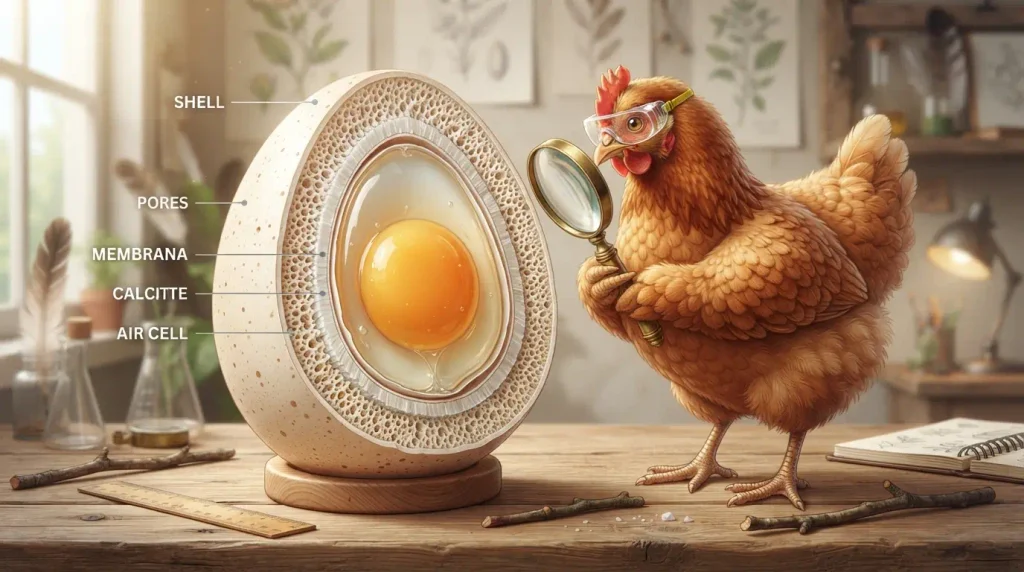
At first glance, an eggshell looks like a smooth, solid boundary designed to protect its fragile contents. In reality, it acts as a breathable suit of armor engineered with thousands of microscopic passageways.
This clever structure lets oxygen enter while releasing carbon dioxide and moisture. It balances strength and breathability so perfectly that engineers actively study it today.
Thousands of Microscopic Breathing Pores
A single hen egg contains between 7,000 and 17,000 tiny pores scattered across its surface. You cannot see them with the naked eye, but they are crucial for exchanging air.
These tiny pores explain why eggs easily absorb strong smells from your refrigerator, like cut onions or garlic. Storing your carton away from odorous foods keeps your breakfast tasting fresh and sweet.
The Dome Effect: Incredible Natural Strength
Despite being thin enough to crack against the rim of a bowl, an egg possesses impressive structural strength. Its curved dome shape distributes weight evenly across the entire surface when pressure is applied from top to bottom.
- Arch geometry prevents the shell from collapsing under the mother hen’s weight during incubation.
- You can carefully balance several heavy books on a set of standing eggs without breaking them.
- Pressure applied to a localized point cracks the shell easily, allowing chicks to hatch without trouble.
What Determines Eggshell Color?
Many people assume brown eggs are healthier or more natural than white ones. However, shell color depends purely on the genetics and breed of the laying hen.
Hens with white earlobes usually lay white eggs, while hens with red earlobes lay brown ones. Interestingly, all shells start white inside the hen before natural pigments coat the exterior late in the laying process.
Unlocking the Secrets of Yolks and Whites
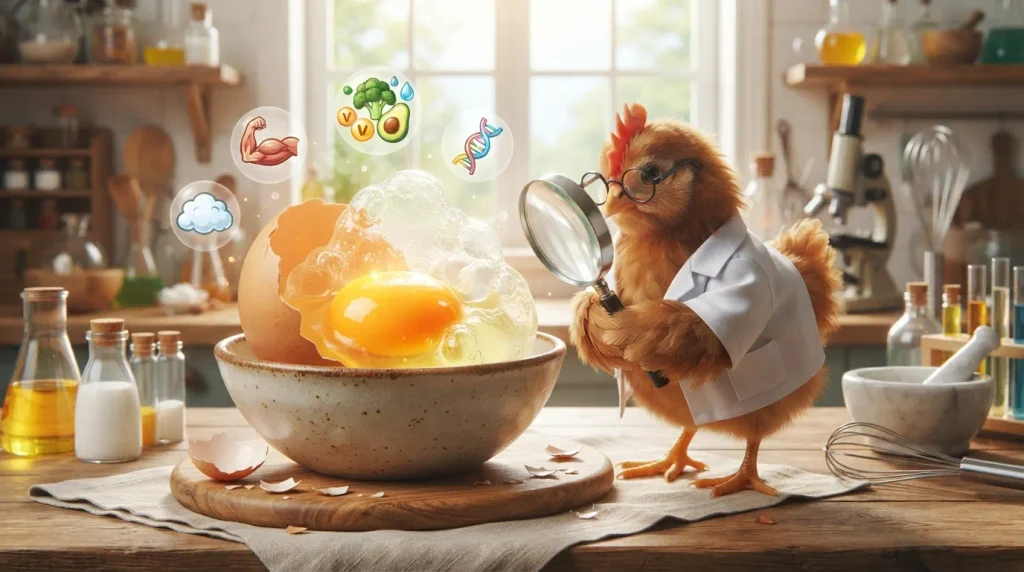
Step inside the shell, and you find a carefully organized system of protein and nutrient reserves. The yolk and white work together seamlessly to nourish a growing embryo or fuel your morning workout.
Understanding how these internal parts behave helps you become a far more confident cook.
Decoding the Color of the Yolk
Yolk color ranges from light canary yellow to deep reddish-orange depending on the hen’s diet. It has nothing to do with freshness or overall nutritional value.
Hens fed diets rich in yellow-orange pigments, such as marigold petals, yellow corn, or alfalfa, produce vibrant orange yolks. Free-range chickens eating greens and insects naturally lay darker, richer yolks.
What Are Those White Stringy Bits?
When you crack an egg, you often notice twisted white strands anchoring the yolk in the center of the egg white. These rope-like structures are called chalazae.
Chalazae act like tiny internal shock absorbers that keep the yolk safely suspended in the middle of the shell. Seeing prominent, thick chalazae is actually a sign of a very fresh egg.
The Science of Egg White Firmness
An egg white, or albumen, consists of two distinct layers: a thick inner layer and a runny outer layer. Fresh eggs have a high proportion of thick albumen that sits high and tight around the yolk.
As an egg ages, carbon dioxide escapes through the shell pores, causing the white to thin out. This thinned albumen spreads far across the pan during frying, making fresh eggs better for poached dishes.
Kitchen Science and Fun Freshness Tricks
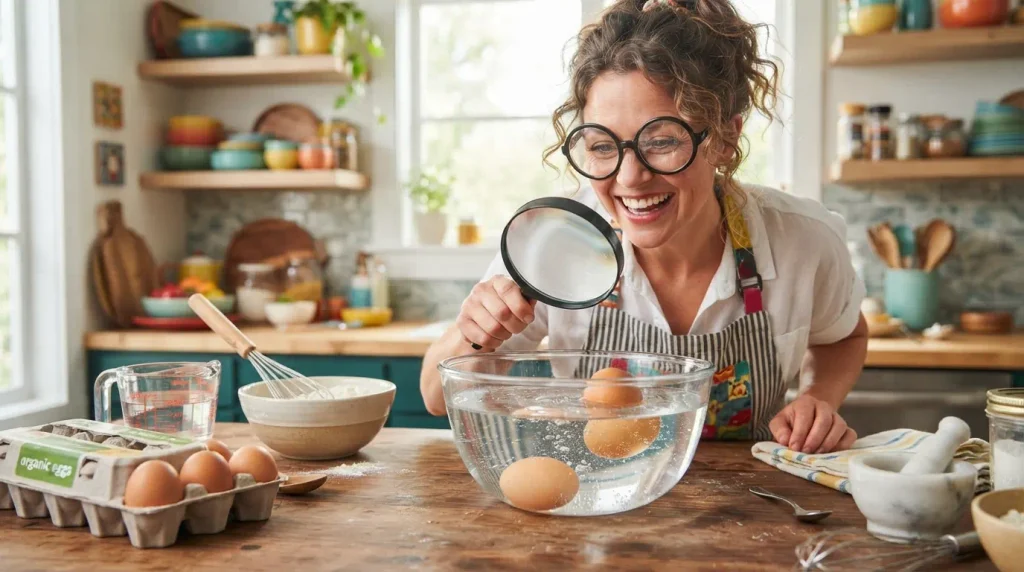
You do not need fancy laboratory equipment to test the quality or age of your ingredients. Simple kitchen science lets you perform quick, surprising experiments using items you already own.
These practical tricks keep your meals safe while teaching you basic physics principles.
The Famous Floating Egg Test
Testing an egg’s freshness takes less than ten seconds using a simple glass of cold water. Gently lower your raw egg into the glass and observe how it sits at the bottom.
- A very fresh egg sinks straight to the bottom and rests flat on its side.
- An older egg stands upright on one end at the bottom but remains safe to cook.
- An unsafe, expired egg floats right to the top surface and should be discarded immediately.
Why Do Older Eggs Float?
As an egg ages, moisture evaporates through the porous shell and gets replaced by outside air. This process causes the natural air pocket at the large end of the egg to expand over time.
Eventually, the air cell grows large enough to act like a miniature life jacket, causing the egg to float. That growing air pocket also makes older eggs significantly easier to peel after hard-boiling!
How to Tell Raw and Hard-Boiled Eggs Apart
If you mix up raw and hard-boiled eggs in your fridge, do not panic or crack them open randomly. Place the mystery egg on a flat countertop and give it a fast spin like a top.
A hard-boiled egg spins quickly and smoothly because its solid interior moves as a single unit. A raw egg wobbles sluggishly and stops quickly because its liquid interior sloshes around inside.
Comparing Egg Types and Kitchen Uses
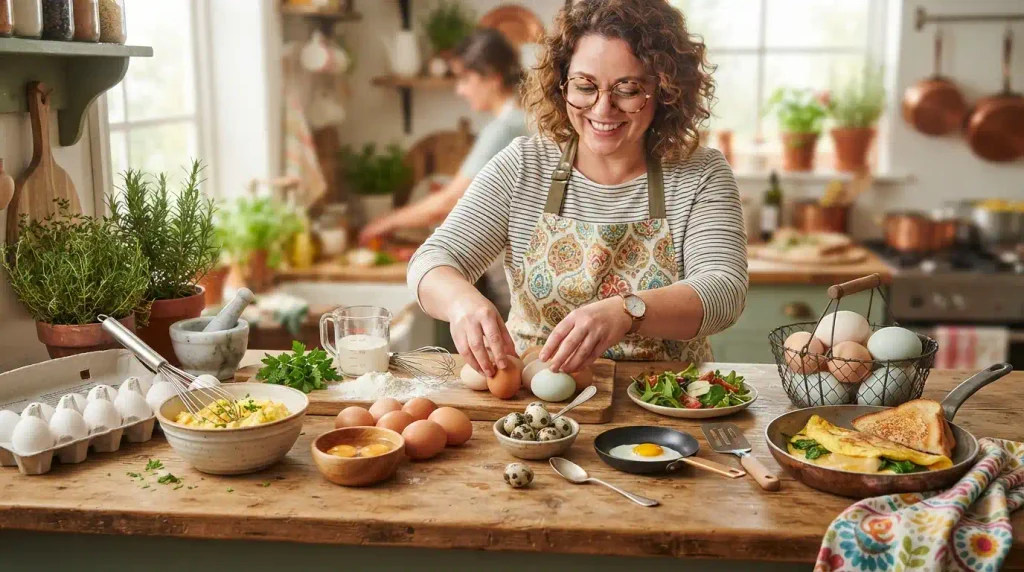
Understanding the unique characteristics of different egg types allows you to choose the perfect ingredient for every culinary creation. While standard chicken eggs serve as the reliable backbone for everyday cooking, varieties like duck, quail, and ostrich eggs bring distinct flavors, textures, and nutritional profiles to the table. Learning how these eggs behave in the kitchen helps you elevate your recipes, optimize baking textures, and impress guests with tailored dishes.
Everyday Reliability with Standard Chicken Eggs
Chicken eggs are the ultimate multi-purpose staple in homes and bakeries worldwide due to their balanced ratio of fat, protein, and water. Large chicken eggs serve as the universal standard for culinary recipes, providing precise structure to cakes, creamy emulsification to mayonnaise, and fluffy texture to morning omelets. Their mild, versatile flavor profile makes them an easy, affordable choice for both savory breakfasts and delicate baked goods.
Richer Baking and Pastries Using Duck Eggs
Duck eggs are a favorite secret weapon among professional pastry chefs thanks to their significantly larger yolks and higher fat content. The extra fat and protein create ultra-rich custards, silkier ice creams, and exceptionally high rises in cakes and breads. Additionally, their lower water ratio and thicker whites yield structurally firmer poached eggs and richer sauces that stand up to bold seasonings.
Gourmet Touch with Delicacy Quail Eggs
Quail eggs offer a bite-sized, visually stunning alternative that brings a touch of luxury to gourmet appetizers and hors d’oeuvres. Despite their small size, they feature a high yolk-to-white ratio that delivers a rich, creamy flavor in a tiny package. Their uniquely speckled shells and delicate size make them ideal for topping steak tartare, decorating canapés, or adding an elegant aesthetic to sushi rolls and salads.
Bizarre and Fun Facts From Around the World

Eggs hold a fascinating place in global culture, world records, and historic traditions. Long before modern refrigeration, societies discovered unique ways to preserve and honor these oval treasures.
These surprising details reveal just how deeply connected eggs are to human history.
The World’s Largest and Smallest Avian Eggs
The largest egg laid by any living bird belongs to the ostrich, weighing over three pounds. It takes nearly two hours of boiling time just to cook an ostrich egg to a hard-boiled state!
On the flip side, the tiny bee hummingbird lays the world’s smallest bird egg. It measures less than half an inch long and weighs roughly as much as a single paperclip.
Century Eggs: A Unique Preservation Marvel
In Chinese cuisine, century eggs, also known as preserved eggs, are created through an ancient alkaline curing process. Fresh duck or chicken eggs are encased in a mixture of clay, ash, salt, and quicklime for several months.
The process transforms the yolk into a creamy, dark green mass while turning the white into a dark amber jelly. Despite the dramatic color change, it remains a savory delicacy enjoyed worldwide.
The World Record for Tossing an Egg
Did you know there is an official world record for throwing and catching a raw egg without breaking it? The record stands at a mind-boggling distance of over 300 feet, achieved in 2012.
Success requires soft hands and precise tracking to absorb the impact smoothly. It proves once again that gentle physics can overcome fragile shell boundaries.
Everyday Nutrition and Kitchen Storage Tips
Beyond trivia and games, eggs deliver incredible nutritional value in a small, affordable package. Knowing how to handle and store them properly ensures you maximize their shelf life and flavor.
Small adjustments to your routine make a huge difference in safety and kitchen performance.
Why You Should Store Eggs in Their Original Carton
It is tempting to transfer your eggs into those cute built-in plastic trays on your refrigerator door. However, keeping them in their original cardboard carton offers three distinct advantages.
Cardboard protects eggs from absorbing strong fridge odors through their porous shells. The carton also prevents temperature swings caused by opening the fridge door, while keeping the eggs pointed end down to preserve the yolk.
Understanding Wash Coatings and Cold Storage Rules
In North America, commercial eggs are washed thoroughly before sale to remove dirt and bacteria. This process strips away the egg’s natural protective outer coating, known as the bloom or cuticle.
Because the protective bloom is gone, washed eggs must remain refrigerated to prevent bacterial growth. In many European countries, eggs are left unwashed, allowing them to sit safely on store shelves at room temperature.
Whipping Albumen to Maximum Volume
When whipping egg whites for meringue or angel food cake, even a speck of yolk ruins your progress. Yolk fat coats the white’s proteins, preventing them from trapping air bubbles effectively.
For best results, separate your eggs while they are cold from the fridge, then let the whites warm to room temperature before whipping. Clean copper or glass bowls work best for building stable, towering foams
Practice Exercise
Eggshell Secrets
- How many microscopic pores are typically found on a chicken eggshell?
A. Under 100
B. Between 500 and 1,000
C. Between 7,000 and 17,000
D. Exactly 50,000 - What determines the color of a chicken eggshell?
A. The color of the hen’s feathers
B. The breed and genetics of the laying hen
C. The amount of sunlight the hen receives
D. The percentage of calcium in the hen’s feed
Freshness & Testing
- What happens to a raw egg when lowered into a glass of water if it is fresh?
A. It floats right at the surface
B. It sinks straight to the bottom and rests flat
C. It dissolves immediately
D. It spins rapidly in circles - What is the main purpose of the twisted white strands called chalazae?
A. To feed the chick embryo
B. To create air pockets for breathing
C. To anchor the yolk in the center of the egg
D. To harden the outer shell
Aging & Appearance
- Why do older eggs float in water?
A. Their shells become lighter
B. Moisture evaporates, and the internal air cell expands
C. The yolk turns into gas
D. They absorb oxygen from the water - How can you tell a hard-boiled egg from a raw egg without cracking it?
A. Hard-boiled eggs feel much colder
B. Hard-boiled eggs spin smoothly while raw eggs wobble
C. Raw eggs change color when touched
D. Raw eggs make a loud ringing sound when tapped
Yolk & Bird Facts
- What causes an egg yolk to have a deep, vibrant orange color?
A. High levels of synthetic dyes added to water
B. A diet rich in natural pigments like marigold petals or yellow corn
C. Storing the egg in a warm room for weeks
D. Extra washing during factory processing - Which bird lays the largest egg relative to any living species today?
A. Emus
B. Bald Eagles
C. Ostriches
D. Condors
Protection & Cooking
- What is the natural protective outer coating on an unwashed egg called?
A. The albumen
B. The chalaza
C. The bloom or cuticle
D. The keratin shield - Why should you avoid getting yolk fat into egg whites when making meringue?
A. It turns the foam bright green
B. Fat stops the whites from trapping air and expanding
C. It makes the meringue taste extremely salty
D. It causes the bowl to crack under heat
Answer Key
- C | 2. B | 3. B | 4. C | 5. B | 6. B | 7. B | 8. C | 9. C | 10. B
FAQs
Are brown eggs more nutritious than white eggs?
No, brown eggs and white eggs share the same nutritional value. Shell color depends entirely on the breed of the hen laying the egg. Feed quality, hen health, and fresh air determine the actual nutrient content inside.
Can you eat eggs after their expiration date?
Yes, eggs often remain safe to eat past the stamped pack date if properly refrigerated. Use the float test in water to verify freshness before cooking them. If the egg sinks or stays low, it remains safe for your meals.
What causes a double yolk inside a single eggshell?
Double yolks happen when a hen releases two eggs from her ovary too close together. This phenomenon occurs most frequently in young pullets whose reproductive systems are still maturing. They are completely safe and fun to cook!
Why are hard-boiled eggs sometimes hard to peel?
Very fresh eggs are difficult to peel because their low pH causes the inner membrane to bind tightly to the shell. As eggs age, their air cell grows, and internal pH rises, making the shell slide off smoothly after boiling.
Is it safe to eat raw eggs?
Consuming raw eggs carries a slight risk of Salmonella infection from bacteria on or inside the shell. Using pasteurized eggs drastically reduces this risk for recipes like homemade mayonnaise or traditional eggnog. Always handle raw eggs with clean kitchen habits.
What is the green ring around a hard-boiled egg yolk?
The harmless green ring forms when iron in the yolk reacts with sulfur in the white during overcooking. Cook your eggs gently and cool them immediately in an ice bath to keep yolks bright yellow and soft.
Conclusion
Exploring egg facts fun shows us how much science, history, and natural wonder resides inside a humble kitchen staple. From natural dome strength and porous breathing shells to simple float tests, eggs never cease to amaze us.
Mastering these clever facts and kitchen tricks turns everyday cooking into an enjoyable, stress-free experience. Whether you are whipping up fluffier cakes or testing fresh cartons, you now hold the knowledge of a seasoned egg expert.
Share these surprising egg facts with your family, try out a kitchen experiment, and enjoy your next delicious meal today!

Ghzala Rani is the creator and writer behind Funzonest.com, a website dedicated to making everyday topics more enjoyable, interesting, and easy to understand. With a passion for engaging content, Ghzala focuses on creating helpful articles that inform, entertain, and provide readers with useful ideas and insights.
Through Funzonest.com, Ghzala Rani aims to build a friendly online space where readers can discover fresh content and explore topics presented in a simple and enjoyable way. Her writing style focuses on clarity, originality, and reader value. She is committed to publishing well-researched and engaging content that keeps visitors informed while making their time on the website enjoyable.