
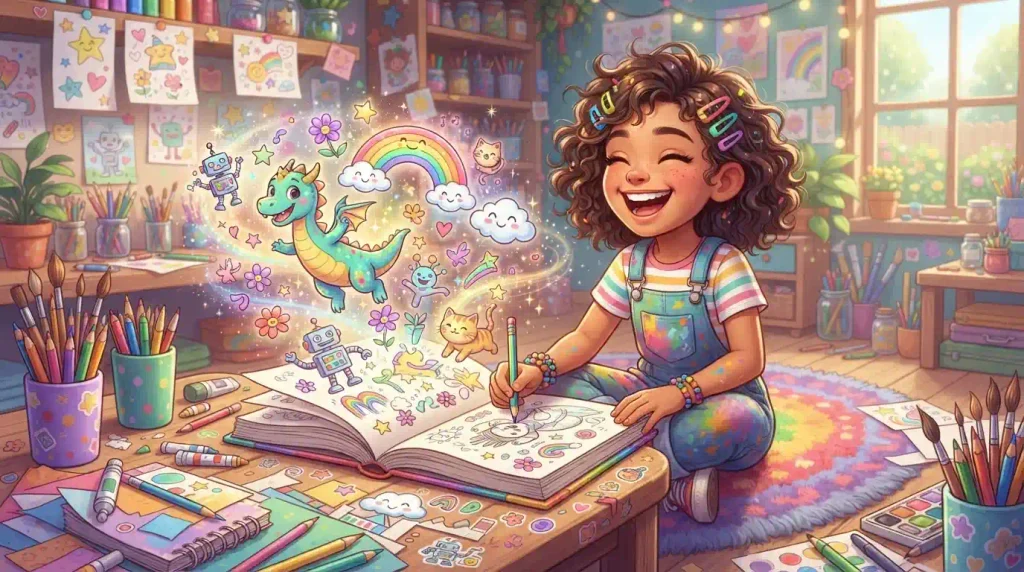
Drawing for fun is all about letting go of perfectionism and embracing creative play. It reduces stress, boosts focus, and allows you to express yourself freely without worrying about the outcome. Grab any pencil and paper to begin your low-pressure creative journey right now.
Remember when you were a kid and grabbed a crayon without worrying about perfection? Making art should feel playful, which is why drawing for fun is the ultimate way to unleash your inner artist today.
When you prioritize drawing for fun, you strip away the pressure to create a flawless masterpiece. You can enjoy the calming process of putting pencil to paper without any fear of judgment or high expectations.
Starting a habit of drawing for fun requires no special talent or expensive supplies. All you need is a plain notebook and a pen to begin your relaxing creative journey right now.
Why Drawing for Fun Beats Striving for Perfection
When you draw purely for enjoyment, magic happens in your brain. You strip away the heavy expectations that turn creative hobbies into stressful chores.
Research shows that making art lowers cortisol levels. It does not matter whether you draw like a master or scribble simple stick figures.
The Mental Health Benefits of Creative Play
Doodling acts as an active form of meditation that quiets a noisy mind. Focusing on simple lines pulls you directly into the present moment.
You give your brain a rest from daily anxieties and endless screen time. A few minutes with a sketchbook can reset your mood entirely.
Breaking Free From the Perfectionism Trap
Perfectionism is the biggest enemy of everyday creativity. Expecting every sketch to be a masterpiece causes creative block before you even start.
Drawing for fun teaches you to love the process instead of worrying about the final result. Mistakes become interesting surprises rather than failures.
Boosting Brainpower and Problem-Solving
Your brain builds new neural connections whenever you pick up a pencil. Translating ideas into shapes improves your spatial awareness and memory retention.
Doodling during meetings or lectures actually helps you retain more information. It keeps your mind active without pulling your focus completely away.
Getting Started: Minimal Gear for Maximum Joy
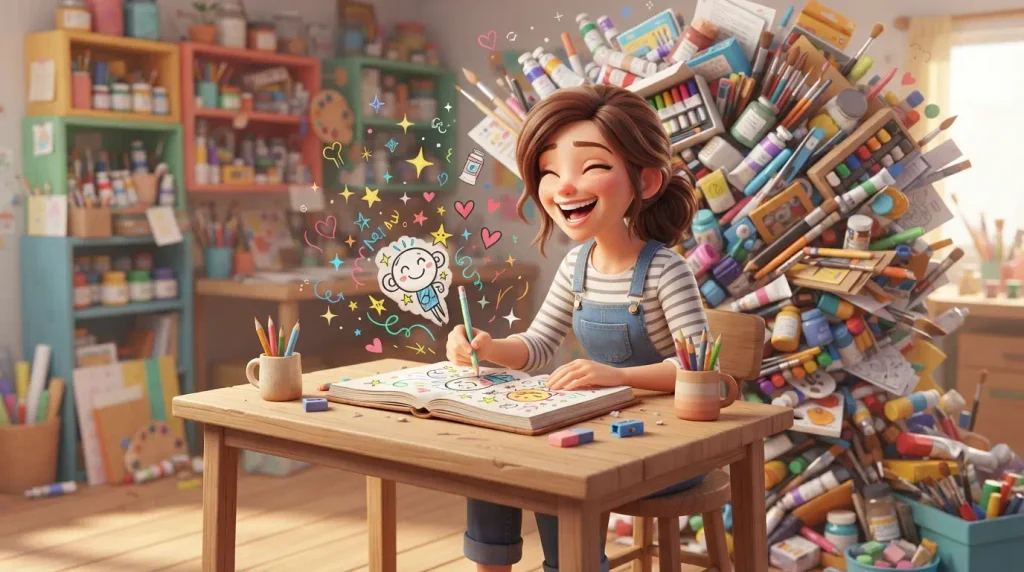
You do not need a fancy art studio or costly materials to enjoy sketching. In fact, fewer tools often mean less pressure to perform.
Keeping your supplies simple makes it easier to jump into a creative session anytime, anywhere.
Choosing Your Everyday Sketchbook
Select a blank notebook that feels comfortable to carry in a bag. A small, lightweight book invites you to make quick, casual doodles throughout your day.
Avoid buying expensive leather-bound journals if they make you feel nervous about making mistakes. Inexpensive paper gives you total freedom to experiment freely.
Simple Drawing Tools You Already Own
A plain yellow pencil, a ballpoint pen, or a cheap marker is all you really need. Ballpoint pens are surprisingly great because they offer varied line weights with light pressure.
Experiment with highlighters or sticky notes for quick visual breaks. Working with everyday items reminds you that this process is meant to be casual and fun.
Fun and Easy Drawing Ideas for Complete Beginners
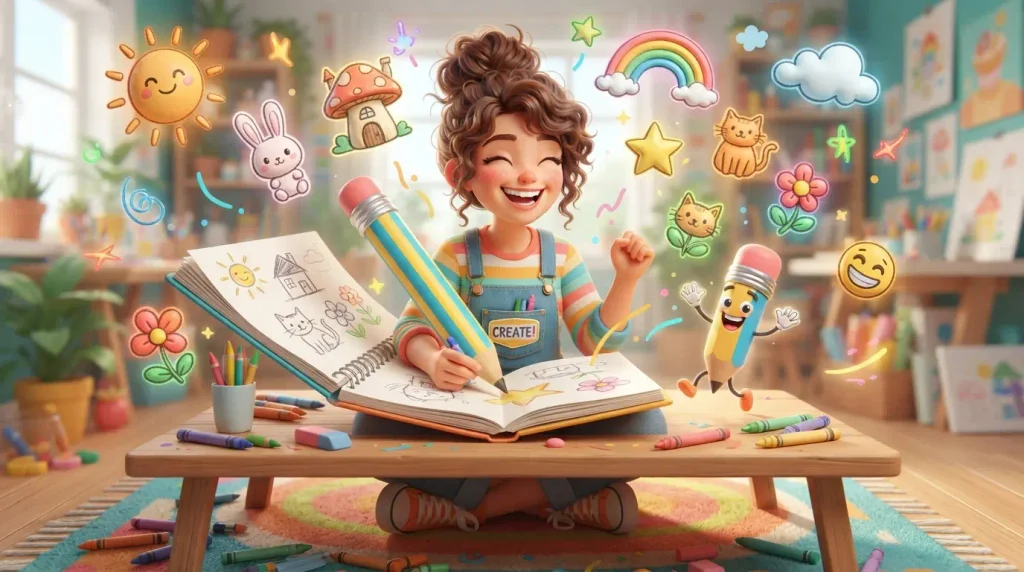
Staring at a blank page can feel overwhelming when you do not know what to draw. Having a list of playful ideas makes starting quick and painless.
Try these simple concepts whenever you want to create without feeling stuck.
Playful Abstract Doodling
Start by drawing one long, continuous squiggly line across your entire page. Intersect the line with itself to create dozens of small closed shapes.
Fill each empty pocket with different patterns like dots, stripes, or tiny cross-hatches. This gentle exercise builds hand control while putting your mind on autopilot.
Transforming Everyday Objects Into Characters
Look around your room for basic everyday items like your favorite coffee mug or a desk lamp. Draw the object using basic geometric shapes.
Now, add two tiny eyes and a silly smile to bring the object to life. Turning mundane items into cute characters instantly brings humor to your page.
Cartooning Your Daily Routine
Think about one funny thing that happened to you earlier today. Sketch yourself as a simple stick figure experiencing that moment.
Add speech bubbles to tell a miniature visual story. You do not need complex details to communicate genuine humor and emotion.
Creative Prompts to Spark Your Imagination
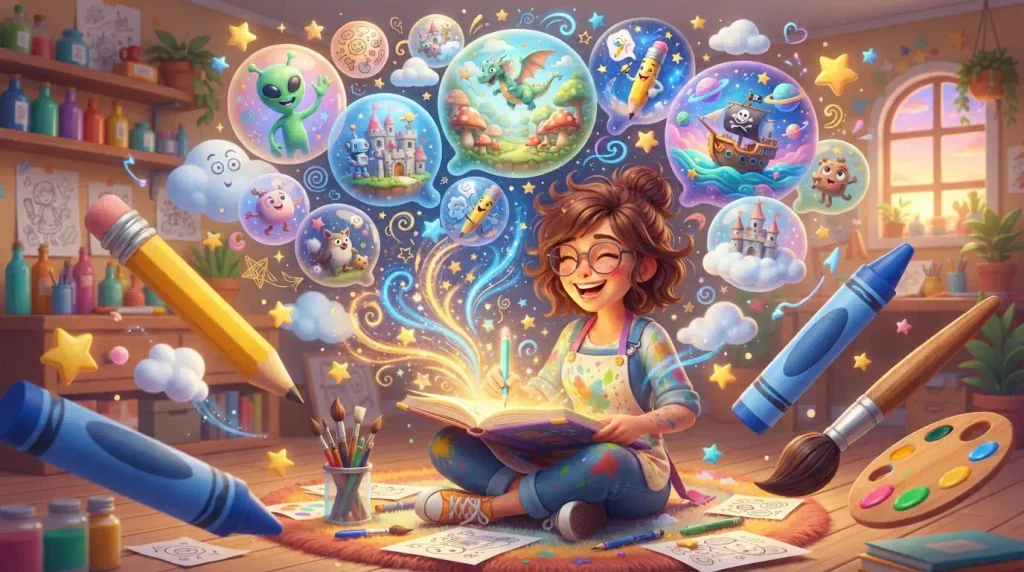
When your brain feels empty, prompts act as gentle nudges to kickstart your creativity. They take away the burden of coming up with original ideas from scratch.
Keep these prompts handy for whenever you need a quick burst of creative inspiration.
The Blind Contour Challenge
Pick an object on your desk, like your house keys or a small potted plant. Place your pen on the paper and look only at the object, not your page.
Slowly trace the edges of the object with your eyes while moving your pen at the same speed. Do not lift your pen or look down until you finish. The result will look wonderfully weird and hilarious.
The Non-Dominant Hand Experiment
Switch your pen over to your non-dominant hand and try drawing a self-portrait. Your brain has to work harder, which breaks your normal drawing habits.
Because you cannot control the lines well, you naturally give up on perfection. The wobbly lines give your picture unique charm and personality.
The 60-Second Challenge
Set a timer on your phone for exactly one minute. Pick an animal or object and try to capture its general essence before time runs out.
Working quickly prevents you from overthinking small details or second-guessing your choices. It forces you to capture the energy of the subject instantly.
Comparing Creative Approaches for Low-Stress Drawing
Below is the paragraph for the Comparing Creative Approaches for Low-Stress Drawing section, followed by three detailed H3 subheadings with clear, actionable explanations.
Exploring different drawing methods is a fantastic way to discover what helps you relax the most. Every technique offers a unique mental shift, whether you need to quiet a noisy mind after a busy workday or simply build confidence with your pencil. By experimenting with various low-stress approaches, you can easily match your drawing style to your current mood and energy level.
Finding Your Rhythm with Continuous Line Doodling
Continuous line doodling is one of the most effective ways to unwind because it keeps your hand moving without stopping to second-guess a single mark. You place your pen on the page and draw one long, looping line that twists and turns across the paper to create interconnected shapes. This continuous movement keeps your brain focused on the physical flow rather than overthinking the outcome, making it an ideal exercise for releasing mental tension.
Building Observation Skills Through Blind Contour Sketching
Blind contour sketching strips away all pressure by forcing you to focus entirely on the object in front of you instead of your sketchbook page. You fix your eyes on an everyday item, place your pencil on the paper, and slowly trace the object’s edges with your eyes while moving your pen at the same speed. Because you never look down at your drawing until it is finished, the end result is almost always hilariously distorted, which naturally lowers perfectionism and teaches you to enjoy the process.
Practicing Mindfulness with Repetitive Pattern Design
Creating repeating patterns is a deeply soothing, meditative approach that puts your mind on autopilot. You start by drawing simple geometric shapes, like small circles, overlapping arches, or clean diagonal lines, and repeat them until they fill an entire section of your page. The rhythmic, predictable nature of repeating simple strokes lowers stress levels rapidly and gives your brain a gentle, screen-free break from everyday distractions.
Building a Low-Pressure Daily Habit
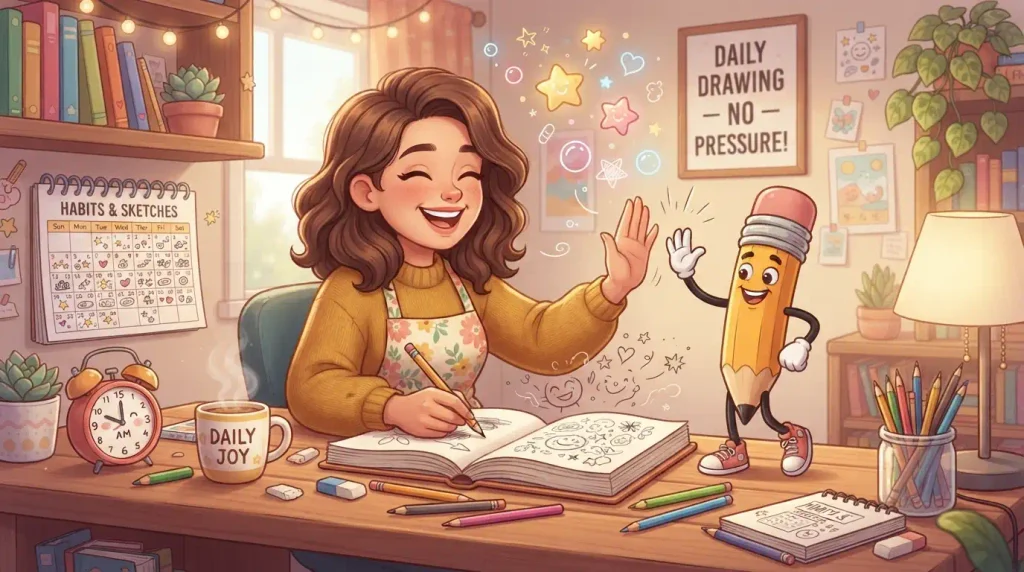
Consistency matters more than spending hours on a single drawing. A daily five-minute doodle builds momentum faster than a monthly marathon session.
Creating a routine keeps your creative juices flowing without feeling like a heavy obligation.
Creating a Cozy Creative Nook
Set up a comfortable space at home where your drawing tools are always visible and ready. Keeping supplies out in the open removes the friction of getting started.
Add good lighting, a warm drink, or soft background music to make drawing feel like a treat. Your brain will start associating drawing time with deep relaxation.
Using Micro-Sessions to Fit Busy Schedules
You do not need an hour of uninterrupted time to make art. Use tiny pockets of time throughout your day to make small marks on paper.
Doodle while waiting for your water to boil or while sitting on public transit. These tiny micro-sessions stack up into impressive creative growth over time.
Tracking Progress Without Comparison
Keep all your old sketchbooks intact rather than tearing out pages you dislike. Looking back at old pages shows you how far your confidence has grown.
Avoid comparing your rough sketches to polished artwork you see on social media. Focus purely on your personal journey and the joy of creating.
Advanced Techniques to Keep Art Fun and Fresh
Once you feel comfortable drawing simple doodles, you can explore lighthearted advanced techniques. These strategies add variety without bringing back creative pressure.
Mixing up your approach keeps your brain engaged and eager to draw.
Mixing Textures and Patterns
Combine heavy black ink shapes with light pencil textures on the same page. Contrast makes simple drawings visually interesting without requiring complex realism.
Fill big solid shapes with tiny repeating patterns like fish scales or brick textures. The rhythmic process of repeating shapes is deeply therapeutic.
Playing With Exaggerated Proportions
Draw figures or animals with hugely oversized heads, long arms, or tiny feet. Throwing accurate anatomy out the window creates expressive, funny art.
Exaggeration forces you to focus on character and emotion rather than realistic accuracy. It reminds you that art can be playful and silly.
Combining Words and Images
Incorporate hand-written lettering, quotes, or funny thoughts directly into your drawings. Words add context and visual texture to your sketches.
Try turning letters into physical objects, like drawing the word “TALL” using thin, sky-scraping letters. Combining text and visuals activates different areas of your brain.
Overcoming Common Creative Hurdles
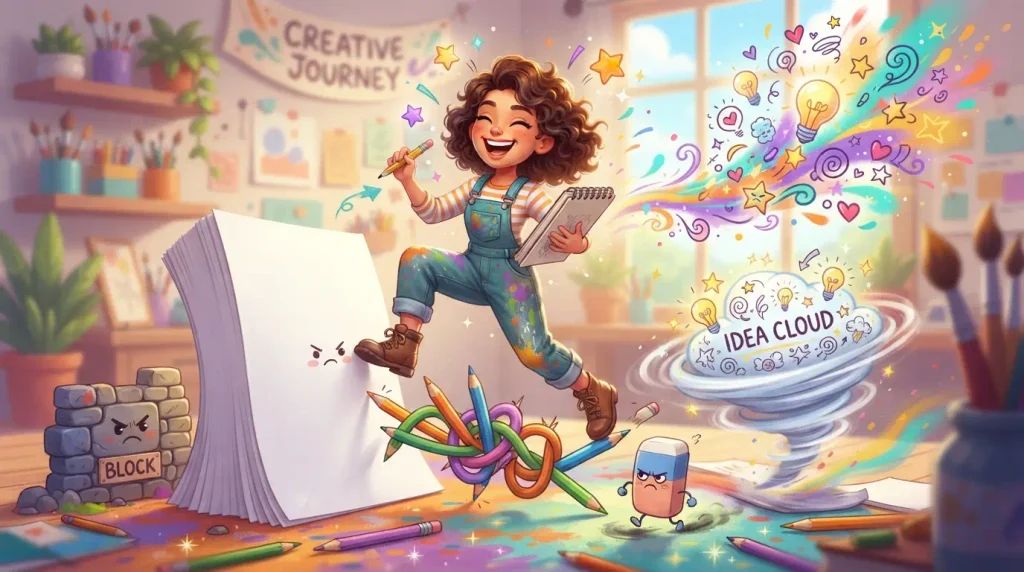
Every artist hits moments where drawing feels frustrating or boring. Knowing how to handle these moments keeps you from giving up on your creative hobby.
Here is how you can gently navigate common roadblocks when drawing for fun.
What to Do When You Feel Uninspired
If you sit down and feel completely uninspired, do not force yourself to draw something realistic. Simply color in an entire page with dark pencil strokes or scribble wildly.
Sometimes physical movement alone is enough to break through mental exhaustion. Inspiration usually follows action, rather than appearing before you start.
Dealing With the Inner Critic
We all have an inner voice telling us that our art looks terrible or pointless. When that voice appears, acknowledge it gently and keep drawing anyway.
Remind yourself that your sketchbook is a private playground, not a gallery exhibit. You have absolute permission to make ugly art whenever you want.
What to Do With Completed Sketchbooks
When you finish a notebook, celebrate the milestone! Store it on a shelf like a visual diary of your thoughts, moods, and creative play.
You can flip through old books whenever you need a quick dose of inspiration or laughter. They serve as tangible proof of your dedication to creative fun.
Practice Exercise
Questions 1–5
- What is the main goal of drawing for fun?
A. Creating photorealistic art to sell online
B. Enjoying the creative process without worrying about perfection
C. Mastering complex anatomical structures quickly
D. Winning local art competitions - Which tool is essential to start a low-pressure sketching habit?
A. An expensive set of professional oil paints
B. High-grade canvas boards
C. Any simple pencil or pen and basic paper
D. A high-end digital drawing tablet - How does daily doodling affect your stress levels?
A. It increases anxiety by forcing perfection
B. It lowers cortisol levels and promotes relaxation
C. It causes severe eye strain and mental fatigue
D. It does not affect mood or stress - What characterizes the “Blind Contour” drawing exercise?
A. Drawing with your eyes completely closed
B. Looking only at the object you are drawing, not at your paper
C. Drawing in a pitch-black room
D. Painting without using any brushes - Why is drawing with your non-dominant hand helpful?
A. It guarantees a perfect realistic portrait
B. It helps you draw twice as fast as usual
C. It lowers perfectionism by accepting wobbly, playful lines
D. It prepares you for professional design work
Questions 6–10
- How long should a quick warm-up drawing challenge take?
A. At least two hours
B. About 45 minutes
C. Around 60 seconds to a few minutes
D. Exactly half a day - What should you do when your inner critic tells you your art looks bad?
A. Throw away your sketchbook immediately
B. Stop drawing for several months
C. Erase every single line until the page is blank
D. Acknowledge the thought and keep drawing anyway - What is a key benefit of keeping an everyday sketchbook?
A. It serves as a visual record of your personal creative journey
B. It guarantees you will get hired as an illustrator
C. It forces you to spend money on expensive supplies
D. It hides your talent from the rest of the world - Why are simple geometric shapes useful for beginner drawings?
A. Real artists only use curved organic lines
B. They make complex objects easy to break down and sketch
C. They are the only shapes allowed in abstract art
D. They eliminate the need to use eraser tools - What is the best way to handle a blank page when feeling uninspired?
A. Wait until perfect inspiration strikes days later
B. Start making simple marks, scribbles, or patterns immediately
C. Copy an entire page from an encyclopedia
D. Buy a brand-new set of expensive pens
Answer Key
1. B | 2. C | 3. B | 4. B | 5. C | 6. C | 7. D | 8. A | 9. B | 10. B
FAQs
Do I need natural talent to enjoy drawing for fun?
No, you do not need natural talent to enjoy sketching. Drawing is a learned skill and a relaxing hobby open to anyone. Focus on enjoying the sensation of making marks rather than producing perfect masterpieces.
How much time should I spend drawing each day?
You can spend as little as five minutes drawing each day to reap the benefits. Short, consistent sessions fit easily into busy schedules and prevent burnout. Small daily doodles keep your creative momentum alive naturally.
What should I do if I keep making mistakes on my page?
Embrace mistakes as happy accidents that add character to your page. Instead of erasing lines, incorporate them into new patterns or shapes. Learning to work with errors removes the fear of starting new sketches.
Is digital drawing just as good for fun as paper?
Yes, digital drawing offers wonderful creative freedom with easy tools and color options. However, traditional paper provides a screen-free tactile experience that many find more relaxing. Choose whichever medium feels most convenient and enjoyable for you.
How can I stop comparing my art to people online?
Remind yourself that social media displays curated highlight reels, not everyday practice pages. Focus strictly on your personal enjoyment and progress over time. Treat your sketchbook as a private sanctuary meant only for your eyes.
Can doodling really improve my focus at work?
Yes, light doodling keeps your brain active during long meetings or lectures without taking away your primary attention. It prevents your mind from wandering or drifting into daydreams. Simple repetitive patterns work best for boosting mental focus.
Conclusion
Embracing drawing for fun allows you to reconnect with your natural creativity without the pressure of perfectionism. By picking up a simple pen and letting your imagination wander, you give your mind a well-deserved break from daily stress.
Whether you doodle for five minutes or an hour, prioritizing drawing for fun reminds you that the true value lies in the process, not the final product. Every line you draw is a small celebration of self-expression and mental freedom.
Grab whatever pencil is sitting near you right now, open a fresh page, and enjoy the pure pleasure of drawing for fun today!

Ghzala Rani is the creator and writer behind Funzonest.com, a website dedicated to making everyday topics more enjoyable, interesting, and easy to understand. With a passion for engaging content, Ghzala focuses on creating helpful articles that inform, entertain, and provide readers with useful ideas and insights.
Through Funzonest.com, Ghzala Rani aims to build a friendly online space where readers can discover fresh content and explore topics presented in a simple and enjoyable way. Her writing style focuses on clarity, originality, and reader value. She is committed to publishing well-researched and engaging content that keeps visitors informed while making their time on the website enjoyable.