

A dolphin fun fact worth knowing is that dolphins use high-frequency echolocation to navigate, hunt fish, and perceive their ocean environment in vivid detail. They also possess distinct signature whistles that function like human names, enabling complex social communication, team hunting, and lifelong recognition within their pods.
Have you ever watched an ocean creature leap effortlessly through blue waves and wondered what is going on inside its sharp brain? Every single dolphin fun fact shows just how astonishingly smart and friendly these marine mammals truly are.
When you explore the ocean world, discovering a unique dolphin fun fact reveals remarkable secrets about their communication and survival strategies. From sleeping with one eye open to using tools made of ocean sponges, these animals never cease to amaze marine scientists.
Let’s dive right into these ocean wonders and check out every incredible dolphin fun fact you can share with your friends today!
Understanding How Dolphins Echolocate Underwater

Dolphins live in underwater environments where sunlight fades quickly, and murky water limits visibility. To overcome these deep challenges, they evolved an extraordinary biological sonar system called echolocation.
This sensory power allows them to create a detailed three-dimensional picture of their surrounding environment using sound waves alone. They can easily detect the exact size, shape, speed, and density of objects hidden deep underwater.
The Science Behind the Melon Organ
Located directly on top of a dolphin’s forehead sits a large, fatty organ known to marine biologists as the melon. The melon acts like an acoustic lens, focusing high-frequency sound clicks generated near the blowhole into a concentrated beam.
These sound waves travel through ocean water until they bounce off swimming fish, rocky reefs, or sandy seabeds. The returning echoes bounce back to the dolphin, traveling through fatty channels inside the lower jawbone straight to the inner ear.
Detecting Tiny Hidden Objects in Murky Waters
The precision of dolphin sonar is so advanced that it far surpasses human military technology. A dolphin can easily distinguish between a ping-pong ball and a golf ball buried deep under ocean sand.
They can even detect internal structures inside other marine creatures, acting almost like a natural biological X-ray machine. This allows them to hunt hidden flatfish buried beneath muddy sea floors with absolute ease.
Sleeping Secrets: Half a Brain at a Time

Because dolphins are air-breathing mammals living in deep oceans, sleeping presents a major survival challenge. If a dolphin were to fall into deep unconscious sleep like humans, it would quickly suffocate underwater.
To overcome this issue, dolphins developed a fascinating sleep mechanism known as unihemispheric slow-wave sleep. This process allows them to rest safely without ever losing total consciousness in open water.
Why Dolphins Keep One Eye Open
During sleep cycles, a dolphin shuts down only one hemisphere of its brain while keeping the opposite side fully active. The active brain half monitors breathing through the blowhole, watches for approaching sharks, and controls gentle swimming motions.
The eye connected to the sleeping brain half stays closed, while the opposite eye stays wide open and alert. After an hour or two, the dolphin switches brain halves, allowing both sides to rest completely every single day.
Voluntarily Controlling Every Single Breath
Unlike humans who breathe automatically without thinking, dolphins are voluntary breathers who must consciously decide every breath. Their brain constantly sends signals to open the blowhole muscle whenever they reach the water surface.
If a dolphin loses total consciousness, its breathing stops instantly. This remarkable evolutionary adaptation ensures they stay safe while gliding smoothly near the water surface during quiet resting periods.
Social Lives and Signature Name Whistles

Dolphins are exceptionally social animals that form tight-knit communities known as pods. Pod sizes can range from a few individuals in coastal bays to massive super-pods numbering thousands of animals in open oceans.
Their complex social structures require clear communication methods to maintain order, share hunting information, and protect vulnerable calves.
Unique Name Whistles for Every Dolphin
Marine biologists discovered that every individual dolphin creates its own distinct signature whistle during its first year of life. This signature whistle functions exactly like a human name, identifying the individual to everyone in the pod.
Dolphins frequently call out their own names when meeting new groups or searching for lost pod members in murky waters. They can even mimic the signature whistles of close friends to call them over across long distances.
Displaying Empathy and Helping Podmates
Dolphins demonstrate high levels of empathy, emotional intelligence, and mutual assistance within their social pods. If an injured podmate struggles to swim or stay afloat, nearby dolphins will lift the hurt individual to the surface so it can breathe freely.
Scientists have observed dolphins assisting injured companions for days at a time until the hurt animal recovers completely. They have even been documented helping lost human swimmers escape dangerous hammerhead and tiger sharks.
Surprising Intelligence and Tool Usage

Canine lovers often praise dogs for their smart tricks, but dolphins rank among the most intelligent animals on the planet. Their brain-to-body size ratio is second only to human beings, featuring dense cortical folding for advanced thinking.
They solve multi-step problems, demonstrate self-awareness in mirrors, and pass down complex cultural traditions to younger generations.
Using Ocean Sponges as Foraging Tools
In Shark Bay, Australia, a specialized group of wild bottlenose dolphins practices a unique culture of tool use. Female dolphins tear living marine sponges off the seafloor and fit them carefully over their rostrums, or snouts.
These soft sponge covers act like protective work gloves while digging through sharp coral gravel to find hidden fish. Mother dolphins explicitly teach this delicate sponge-hunting technique to their female calves, passing down knowledge across generations.
Self-Recognition and Mirror Tests
When scientists place mirrors underwater near dolphins, the animals immediately recognize that their reflection is not a stranger. They use the mirror to inspect unusual paint marks placed on hidden parts of their bodies by researchers.
This self-recognition proves that dolphins possess clear self-awareness, an advanced cognitive trait shared by very few species on Earth, including humans, chimpanzees, and elephants.
Mind-Blowing Physical Capabilities

Beyond their high intelligence, dolphins possess incredible physical abilities that make them supreme ocean predators. Their streamlined bodies allow them to slice through ocean currents with minimal water resistance.
Every physical adaptation, from smooth, rubbery skin to muscular tail flukes, is built for extreme efficiency and speed.
Blistering Swimming Speeds and Aerial Leaps
An average bottlenose dolphin cruises comfortably at speeds around 3 to 5 miles per hour during daily travel. However, when hunting fast prey or escaping danger, they can accelerate up to 20 miles per hour in short bursts.
They use this intense speed to launch themselves high into the air, spinning and performing backflips up to 20 feet above the water surface. These dramatic leaps help them clear skin parasites, communicate across long distances, or simply play for fun.
Shedding Skin Every Two Hours
If you touch a dolphin, its skin feels remarkably soft, smooth, and firm, like a peeled hard-boiled egg. To maintain maximum hydrodynamic efficiency, dolphins shed their outer skin cells every two hours throughout the day.
This rapid skin regeneration keeps their bodies free of drag-inducing buildup like algae, barnacles, and rough debris. Smooth skin allows water to flow seamlessly over their bodies, reducing drag and saving precious energy during long swims.
Different Species of Dolphins Around the World
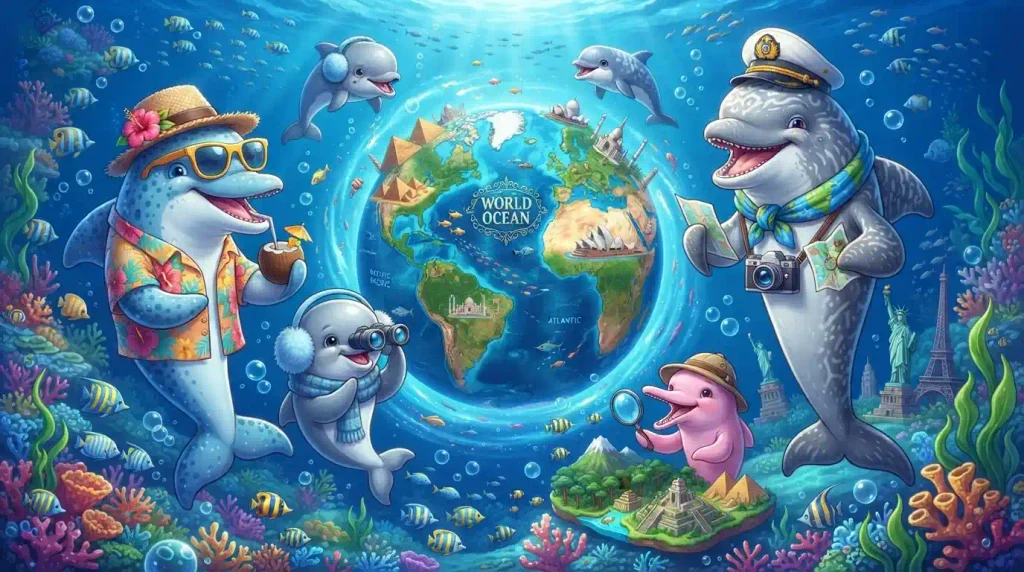
When people picture a dolphin, they usually imagine the classic gray bottlenose dolphin seen in popular television shows. However, the dolphin family, known as Delphinidae, contains nearly 40 distinct species living in diverse habitats.
These species range from tiny coastal travelers to giant ocean hunters that inhabit icy polar seas and tropical river basins.
Did You Know Orcas Are Actually Dolphins?
The famous killer whale, or orca, is not a true whale at all. It is officially the largest member of the oceanic dolphin family, growing up to 30 feet in length and weighing over six tons.
Orcas share all the core biological traits of smaller dolphins, including echolocation capabilities, melon organs, signature vocalizations, and complex pod structures. Their immense size and apex predator status make them the absolute kings of the marine dolphin family.
Pink River Dolphins of the Amazon
Deep inside the rainforest rivers of South America lives the Amazon river dolphin, also known as the boto. These unique freshwater dolphins are famous for their distinct bright pink coloration, which becomes brighter when they get excited.
Unlike marine species, river dolphins have unfused neck vertebrae that allow them to turn their heads 90 degrees. This incredible flexibility helps them maneuver around submerged tree trunks and flooded forest roots while hunting fish.
Clever Hunting Strategies and Teamwork
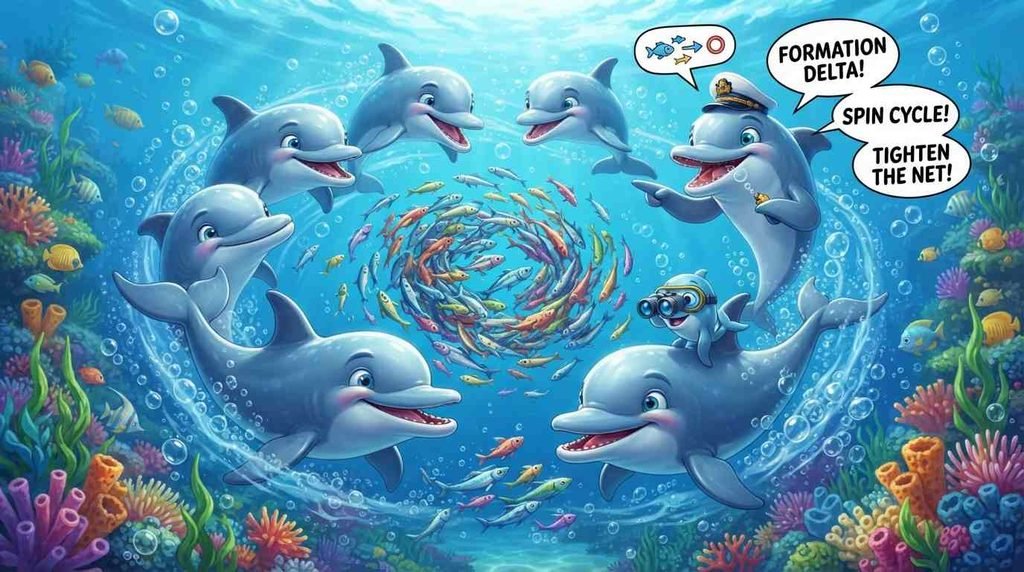
Dolphins are opportunistic carnivores that eat a wide variety of fish, squid, and crustaceans every day. Rather than hunting entirely alone, they frequently use complex group tactics that require seamless coordination and timing.
These cooperative strategies showcase their ability to plan, communicate roles, and share rewards fairly among pod members.
The Mud Ring Feeding Technique
In shallow coastal waters off the coast of Florida, bottlenose dolphins execute a brilliant hunting technique called mud-ring feeding. One lead dolphin swims in tight circles near the shallow muddy seabed, beating its tail fluke to create a thick wall of stirred-up mud.
This muddy ring traps schools of fish inside a murky cloud. As the confused fish jump high out of the water to escape the mud trap, waiting podmates line up along the outside perimeter with open mouths to catch dinner.
Herding Fish into Tight Bait Balls
In deep open ocean waters, pods work together to circle surrounding schools of sardine or herring. By swimming around the fish and blowing bubbles, the dolphins force the fish into a dense, panicked sphere known as a bait ball.
Once the bait ball is secured, the dolphins take turns driving through the middle of the school, picking off fish one by one while others hold the perimeter boundary secure.
Reproduction and Calf Care
Bringing a new calf into the ocean world requires significant physical investment, care, and social support from female pod members. Mother dolphins carry their developing calves for a long gestation period ranging between 11 and 18 months, depending on the species.
From the moment of birth, the newborn calf receives constant attention, protection, and nourishment from its mother and helper females.
Tail-First Births Underwater
Dolphin calves are almost always born tail-first rather than head-first like land mammals. This critical evolutionary adaptation prevents the baby calf from suffocating in ocean water during the delivery process.
Immediately following birth, the mother pushes her newborn calf to the water surface so it can take its very first breath of fresh air. Other female dolphins, often called “aunts,” circle nearby to protect the vulnerable newborn from opportunistic predators.
Nursing and Rich Whale Milk
Because dolphins lack flexible lips to suckle normally underwater, nursing requires a specialized approach. The mother squirts rich, thick milk directly into the calf’s mouth through mammary slits using strong internal muscles.
This nutritious milk is packed with protein and fat, allowing the young calf to grow a thick insulating layer of blubber quickly. Calves stay close by their mother’s side for three to six years, learning survival skills before venturing out on their own.
Threats and Conservation Efforts

Despite their high intelligence and top-tier hunting abilities, wild dolphins face significant survival challenges from human activities across the globe. Climate change, ocean pollution, industrial fishing nets, and habitat loss threaten coastal and river species alike.
Protecting these magnificent marine mammals requires international cooperation, safer fishing practices, and dedicated ocean conservation zones.
- Plastic pollution in ocean gyres leads to accidental ingestion and digestive blockages.
- Commercial gillnets entrap marine mammals as unintended bycatch during deep-water fishing operations.
- Chemical runoff from coastal farms contaminates marine food chains, weakening dolphin immune systems.
- Heavy motorboat traffic creates intense underwater noise pollution that disrupts delicate echolocation signals.
- Coastal development destroys shallow mangrove estuaries where young river and bay dolphins feed safely.
Practice Exercise
- What specialized organ on top of a dolphin’s forehead focuses echolocation sound waves?
A. Rostrum
B. Melon
C. Blowhole
D. Fluke - How do dolphins sleep safely without suffocating underwater?
A. They sleep on sandy ocean beds for hours.
B. They rest one hemisphere of their brain at a time.
C. They store oxygen inside their stomach lining.
D. They stop breathing completely while sleeping. - What marine animal is actually the largest member of the oceanic dolphin family?
A. Humpback whale
B. Blue whale
C. Orca
D. Sperm whale - What do dolphins use signature whistles for within their social pods?
A. To measure water temperature changes
B. To identify themselves like individual names
C. To attract small fish into nets
D. To clean their blowhole muscles - Which dolphin species is famous for living in freshwater rainforest rivers and having a bright pink color?
A. Bottlenose dolphin
B. Spinner dolphin
C. Amazon river dolphin
D. Dusky dolphin - How often do dolphins rapidly shed their outer skin cells to maintain smooth swimming?
A. Every two hours
B. Once a week
C. Twice a year
D. Every month - Why are dolphin calves born tail-first during underwater birth?
A. To help them swim faster instantly
B. To prevent drowning during delivery
C. To keep their eyes clear of ocean sand
D. To allow them to nurse immediately - What tool do wild female dolphins in Shark Bay, Australia, use to protect their snouts while foraging?
A. Clam shells
B. Seaweed mats
C. Marine sponges
D. Driftwood sticks - How fast can a bottlenose dolphin swim in short energetic bursts when hunting prey?
A. 5 miles per hour
B. 20 miles per hour
C. 50 miles per hour
D. 70 miles per hour - What unique feeding technique involves creating a wall of stirred-up seabed silt to trap fish?
A. Bubble-net spinning
B. Mud-ring feeding
C. Sponge digging
D. Coral clearing
Answer Key:
- B | 2. B | 3. C | 4. B | 5. C | 6. A | 7. B | 8. C | 9. B | 10. B
FAQs
What is the coolest dolphin fun fact about their communication?
The coolest communication detail is that dolphins possess unique signature whistles that work exactly like human names. Each dolphin creates its own whistle in early life and uses it to identify itself to podmates throughout its lifetime.
Are dolphins considered fish or mammals?
Dolphins are warm-blooded mammals that give birth to live young, produce milk, and breathe air through lungs using a blowhole. Unlike cold-blooded fish that use gills, dolphins must regularly surface above water to inhale fresh oxygen.
How long can a dolphin hold its breath underwater?
Most coastal dolphins surface to breathe every two to three minutes while cruising. However, when making deep dives to hunt fish, certain dolphin species can easily hold their breath underwater for 10 to 15 minutes at a time.
Why do dolphins leap high out of the ocean water?
Dolphins leap into the air for several fun and practical reasons, including clearing skin parasites, looking around for surface prey, and communicating with distant podmates. They also engage in high jumps simply for play and pure enjoyment.
Can dolphins drink salty ocean water to stay hydrated?
No, dolphins do not drink salty ocean water because high salt levels damage their kidneys. Instead, they get all the hydration and fresh water they need directly from the raw fish and squid they eat daily.
Do wild dolphins have any natural ocean predators?
Large ocean sharks, such as tiger sharks, great whites, and bull sharks, occasionally hunt young or sick dolphins. Additionally, large pods of wild orcas have been documented hunting smaller dolphin species in open ocean waters.
How do dolphins use echolocation to find hidden food?
Dolphins send out high-frequency sound clicks from their melon organ that bounce off underwater objects. The returning echoes travel through their lower jawbone to their ears, creating a detailed 3D map of hidden prey in total darkness.
Conclusion
Exploring these remarkable ocean secrets proves that discovering a new dolphin fun fact is always an exciting adventure. From their extraordinary echolocation abilities and unique name whistles to their deep social empathy, dolphins remain some of the world’s most incredible marine creatures.
By understanding how these smart animals live, hunt, and communicate, we can better appreciate the vital role they play in healthy ocean ecosystems. Sharing a fascinating dolphin fun fact with others spreads awareness about protecting marine life for future generations.
Keep learning about ocean wildlife and share your favorite dolphin fun fact with your family and friends today!

Ghzala Rani is the creator and writer behind Funzonest.com, a website dedicated to making everyday topics more enjoyable, interesting, and easy to understand. With a passion for engaging content, Ghzala focuses on creating helpful articles that inform, entertain, and provide readers with useful ideas and insights.
Through Funzonest.com, Ghzala Rani aims to build a friendly online space where readers can discover fresh content and explore topics presented in a simple and enjoyable way. Her writing style focuses on clarity, originality, and reader value. She is committed to publishing well-researched and engaging content that keeps visitors informed while making their time on the website enjoyable.