
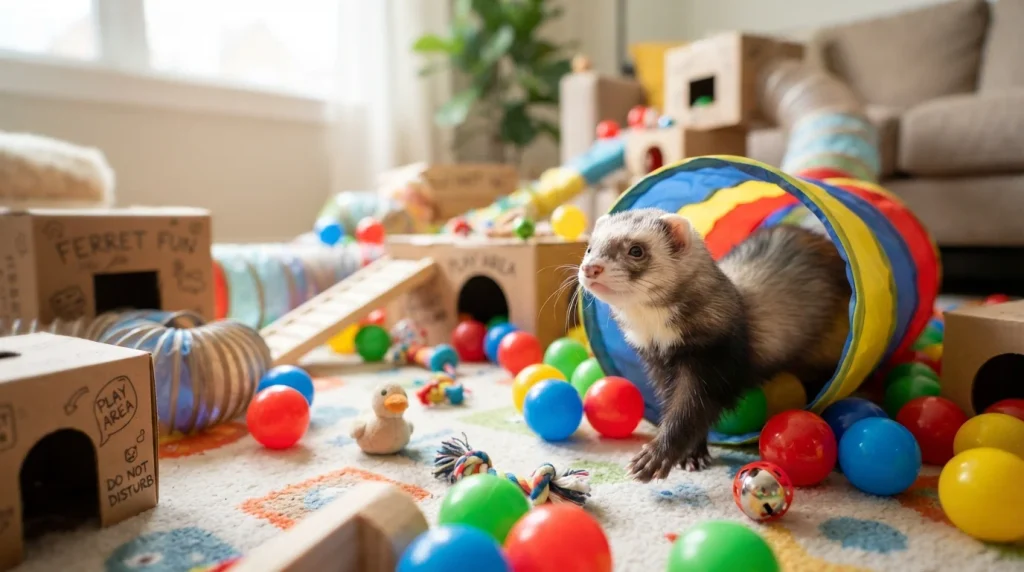
Unlocking daily ferret fun requires combining interactive games, safe tunnels, digging boxes, and rotating DIY toys that stimulate their natural hunting instincts. Providing structured playtime outside their cage, encouraging tunneling behavior, and setting up interactive treasure hunts keeps your ferrets physically active, mentally sharp, and thoroughly entertained.
Ever watched a tiny, furry acrobat do a joyful sideways bounce across your living room rug? Bringing genuine ferret fun into your home starts when you understand how these curious creatures play, explore, and interact.
Providing energetic games, puzzle toys, and safe tunneling adventures prevents boredom and keeps your pets healthy. When you create dedicated play routines, enjoying daily ferret fun becomes the highlight of your household’s afternoon.
This complete guide shares creative toy ideas, home safety steps, and bonding games to entertain your playful pets. Let us explore how you can build an amazing ferret fun paradise right inside your living space!
Understanding the Unique Nature of Ferret Play Habits
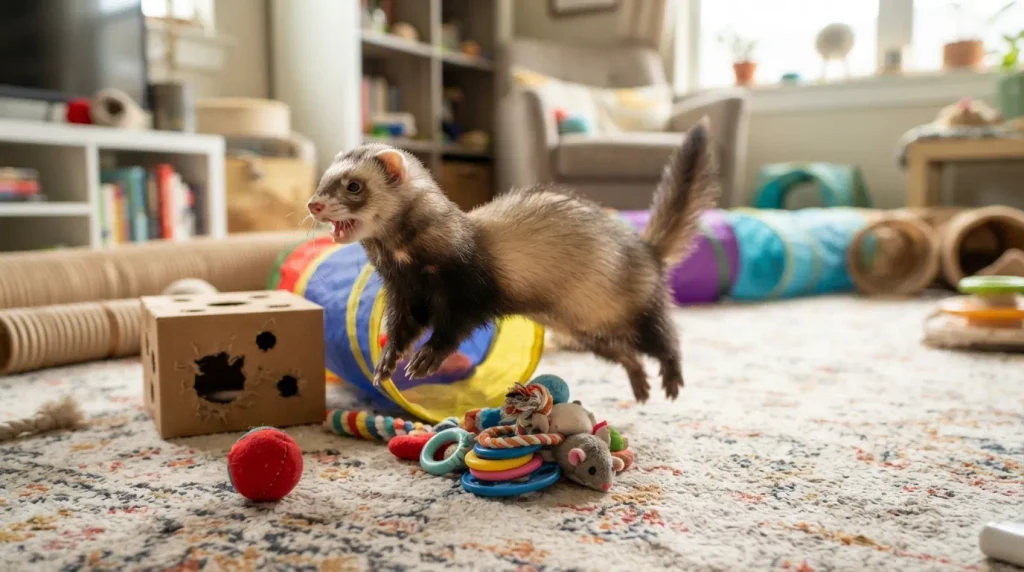
Ferrets experience the world through endless curiosity, rapid movement, and a deep desire to explore tight spaces. Unlike dogs or cats, their play style combines predatory stalking instincts with goofy, social acrobatics.
A healthy ferret spends its awake hours investigating new smells, tunneling under couch cushions, and moving small items to secret hiding spots. Recognizing their body language helps you design activities that match their natural behaviors perfectly.
The Famous Weasel War Dance Explained
One of the most hilarious behaviors you will ever witness is the infamous weasel war dance. Your ferret arches its back, puffs its tail, bounces off walls sideways, and makes soft clucking or dooking sounds.
- The war dance indicates pure joy and excitement rather than aggression or fear.
- Low-pitched “dooking” sounds mean your pet feels happy, safe, and fully engaged.
- Bouncing into furniture shows high energy levels and a desire for interactive play.
Why Ferrets Love Stashing Household Items
If your car keys, clean socks, or rubber dog toys vanish mysteriously, a ferret is usually the culprit. Ferrets possess an ancient instinct to collect food and interesting objects, stashing them inside hidden nooks.
Setting up dedicated “stash boxes” satisfies this natural hoarding habit without losing your personal belongings. Fill a cardboard box with ping pong balls or soft fleece strips so your pet can steal and hide items safely.
The Importance of Daily Physical and Mental Enrichment
Ferrets are exceptionally smart animals that become stressed, destructive, or lethargic when confined to small cages without stimulation. They require at least four hours of out-of-cage play time every single day to stay healthy.
- Physical exercise keeps their flexible spines and long muscles strong and limber.
- Mental puzzles prevent boredom, stereotypic cage-bar biting, and depression.
- Interactive social play strengthens the emotional bond between you and your fuzzy companion.
Setting Up a Safe Environment for Maximum Playtime
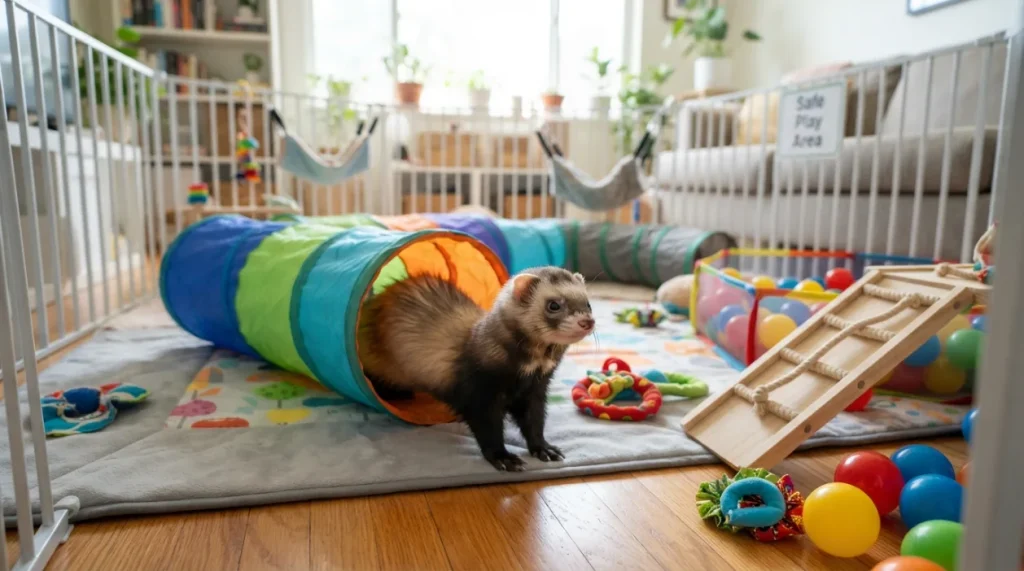
Before letting your energetic pet run loose, thorough room prep is essential to prevent accidental escapes or injuries. Ferrets can squeeze through surprisingly small openings, including holes barely larger than a golf ball.
Checking every corner of your play space gives you peace of mind while your pet explores freely. Think like a curious, flexible rodent hunter when inspecting your home for potential hazards.
Block Small Escapes and Hidden Nooks
Inspect the perimeter of your designated play room at floor level to identify potential escape routes. Pay close attention to cabinet gaps, dryer vents, and spaces behind large kitchen appliances.
- Cover under-couch bases with sturdy wooden boards or heavy plastic netting to block access.
- Seal gaps around plumbing pipes under sinks using solid metal mesh or wooden trim.
- Ensure window screens are securely latched, as ferrets can push through loose wire mesh easily.
Remove Dangerous Ingestion Hazards
Ferrets love chewing on soft rubber, foam, latex, and pliable plastic items. Swallowing small rubber pieces leads to intestinal blockages, which require dangerous and expensive emergency veterinary surgery.
- Keep rubber shoe insoles, earplugs, eraser caps, and rubber bands far out of reach.
- Inspect plush chew toys regularly and discard any item with loose stuffing or threads.
- Store houseplants safely on high shelves, as many common indoor plants are toxic to pets.
Secure Furniture and Heavy Objects
Because ferrets climb curtains, laundry hampers, and wire shelves, heavy items can tip over if bumped. Stabilize tall furniture pieces to create a worry-free play zone.
- Anchor bookcases and tall floor lamps to walls using heavy-duty safety straps.
- Check reclining chairs before sitting, as sleeping ferrets often nest inside internal mechanisms.
- Keep laundry basket lids closed so your pet does not get trapped under piles of clothes.
Engaging DIY Toys and Budget-Friendly Ideas
You do not need to spend hundreds of dollars at commercial pet stores to entertain your curious pets. In fact, most ferrets prefer simple household items over expensive manufactured plastic gadgets.
Repurposing cardboard boxes, paper bags, and plastic tubes creates an endless supply of novel toys. Rotating these homemade items weekly maintains curiosity and keeps play routines fresh.
Building the Ultimate Digging Box
Digging is an instinctive behavior that fulfills a ferret’s natural desire to excavate underground burrows. A well-constructed dig box offers hours of physical exercise and sensory enrichment without making a mess.
- Fill a large plastic storage bin with dried long-grain rice, Ping-Pong balls, or clean topsoil.
- Cut a four-inch entry hole high on the container side so contents stay inside during vigorous digging.
- Hide small freeze-dried meat treats at the bottom to encourage natural foraging behavior.
Creating Flexible Tube and Tunnel Networks
In the wild, polecats hunt inside narrow underground burrows and rabbit holes. Providing long, winding tunnel networks satisfies their deep need to run through tight, dark pathways.
- Connect long pieces of clear plastic drainage pipe or dryer ducting across your living room floor.
- Link multiple cardboard shoe boxes together with duct tape to form a giant maze.
- Snip small peek-a-boo holes along tunnel walls so your ferret can pop its head out playfully.
Cardboard Box Castles and Paper Bags
Never throw away delivery boxes or brown paper grocery bags without letting your pet play with them first. A simple cardboard box can be transformed into an interactive playground within minutes.
- Cut multiple entry doors, secret escape hatches, and lookout windows into connected boxes.
- Crumple up sheets of plain butcher paper inside a bag to create exciting crinkly textures.
- Toss a handful of noisy jingle balls into a paper bag for instant chasing fun.
Essential Ferret Activity Guide

Ferrets are exceptionally playful, curious, and energetic animals that require regular physical and mental stimulation to stay healthy and happy. Unlike pets that are content simply lounging in a cage, ferrets thrive when given dedicated daily play sessions outside their enclosure. Providing a variety of interactive games, safe exploration areas, and challenging toys prevents boredom and keeps their minds sharp. A well-structured activity routine helps maintain their physical fitness, curbs destructive behavior, and strengthens the bond between you and your pet.
Tunnels and Exploration Tubes
Ferrets have an instinct to burrow, navigate tight spaces, and explore hidden pathways. Providing flexible plastic tunnels, fabric play tubes, or even simple cardboard mailing tubes gives them hours of entertainment. You can connect multiple tubes to form a maze or hide small treats inside to encourage their natural hunting instincts.
Interactive Games and Chase Play
Ferrets love playing games with their owners, especially activities that mimic hunting and pouncing. Using feather wands, soft cat teaser toys, or light ball-chasing games helps stimulate their high energy levels. Always supervise play with string or small rubber objects to ensure they do not accidentally chew off and swallow loose pieces.
Dig Boxes and Foraging Fun
A dedicated dig box is one of the single best activity setups you can offer a pet ferret. Fill a large plastic storage bin with child-safe rice, dried beans, or crumpled paper balls, then hide small kibbles or favorite toys beneath the surface. Digging through the substrate satisfies their instinctive burrowing habits while offering a rewarding sensory workout.
Interactive Games to Strengthen Your Bond
Playing directly with your fuzzy pets is the absolute best way to build a loving, trust-filled relationship. When you participate in their goofy games, your pets view you as a giant playmate rather than just a food provider.
Use gentle movements, encouraging words, and enthusiasm during interactive play sessions. Avoid rough handling or sudden scary gestures that might startle or intimidate small animals.
The Blanket Ride and Parachute Game
Ferrets love slippery surfaces, moving fabrics, and being pulled gently across smooth hardwood or tile floors. The blanket game provides high-speed fun while keeping your pet completely safe from falls.
- Lay a soft fleece blanket flat on the floor and place your ferret right in the center.
- Pull the blanket slowly by its edges, letting your pet balance while gliding across the room.
- Lift the blanket edges up and down gently like a parachute, letting your pet chase moving shadows beneath.
Friendly Drag and Chase Games
Chasing moving targets mimics natural hunting sequences, allowing your pet to practice stalking, pouncing, and capturing prey. Use soft textile items rather than bare hands to avoid encouraging accidental biting.
- Drag a long fleece fabric strip or cat teaser wand along the floor in jerky, unpredictable patterns.
- Allow your pet to catch the fabric periodically so they feel victorious and confident.
- Tug gently on the captured fabric before letting go, making soft encouraging sounds as they victory-drag it away.
Hide-and-Seek with Human Companions
Ferrets possess surprisingly keen senses of hearing and smell, making them fantastic partners for indoor hide-and-seek. This classic game builds spatial awareness and encourages active recall training.
- Hide behind a doorway or couch cushion while making gentle squeaking or clapping sounds.
- Praise your pet enthusiastically and offer a tiny treat when they track down your hiding spot.
- Run away slowly to let them chase your feet across the room in a game of reverse tag.
Outdoor Adventures and Safe Harness Training
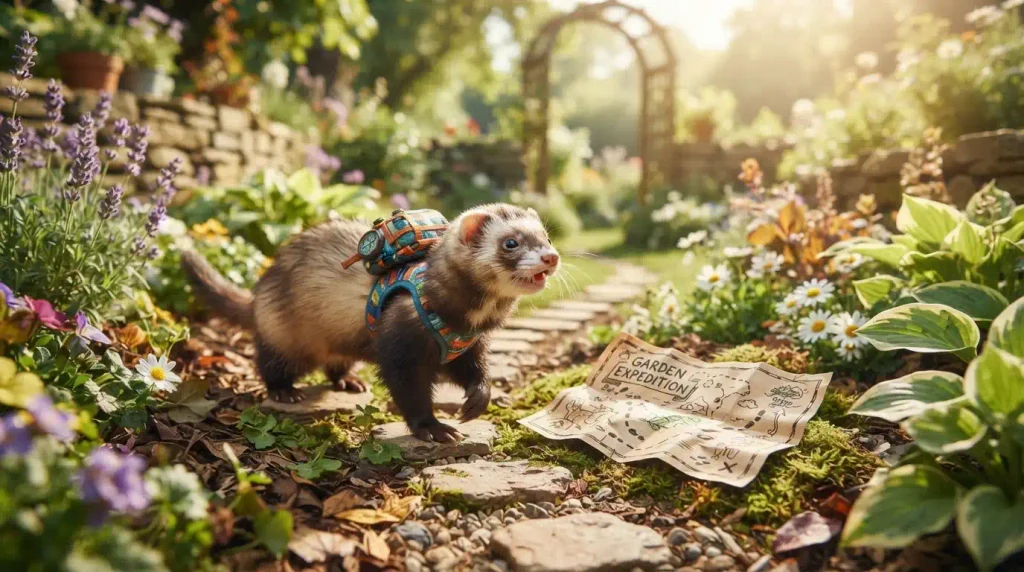
While indoor play forms the core of daily routines, exploring the great outdoors offers rich sensory stimulation. Fresh air, soil textures, and natural outdoor scents provide fantastic enrichment for adventurous pets.
However, outdoor trips require strict safety gear to prevent accidental escapes or exposure to parasites. Never allow a ferret outdoors without a secure harness and attentive adult supervision.
Selecting and Fitting an Escaper-Proof Harness
Standard dog or cat harnesses are far too loose for slender, flexible ferret bodies. Invest in specialized figure-eight or H-style harnesses designed specifically for small, tube-shaped animals.
- Adjust harness straps so you can slide only one finger comfortably between the strap and skin.
- Test harness security indoors for several days before attempting your first outdoor excursion.
- Attach a lightweight six-foot nylon leash rather than heavy metal chain leads or retractable cords.
Choosing Safe Outdoor Locations
Public parks frequented by off-leash dogs pose severe safety risks for tiny pets. Select quiet, clean, enclosed outdoor spaces free from lawn chemicals, high weed patches, and loose predators.
- Private, fenced backyards with short green grass offer ideal conditions for initial outdoor walks.
- Avoid sunny pavement or hot concrete paths that can burn delicate paw pads quickly.
- Keep outdoor excursions under twenty minutes in warm weather, as ferrets overheat easily above eighty degrees.
Protection Against Outdoor Parasites and Hazards
Outdoor environments expose your pet to fleas, ticks, heartworms, and stray bacteria. Consult an experienced veterinarian to establish safe preventative care treatments before going outside.
- Apply vet-approved topical flea and tick preventatives formulated specifically for ferret body weights.
- Check coat fur carefully after walks for attached burrs, crawling insects, or small ticks.
- Ensure core vaccinations, such as canine distemper shots, are completely up to date.
Social Dynamics: Playtime for Groups vs. Solo Pets
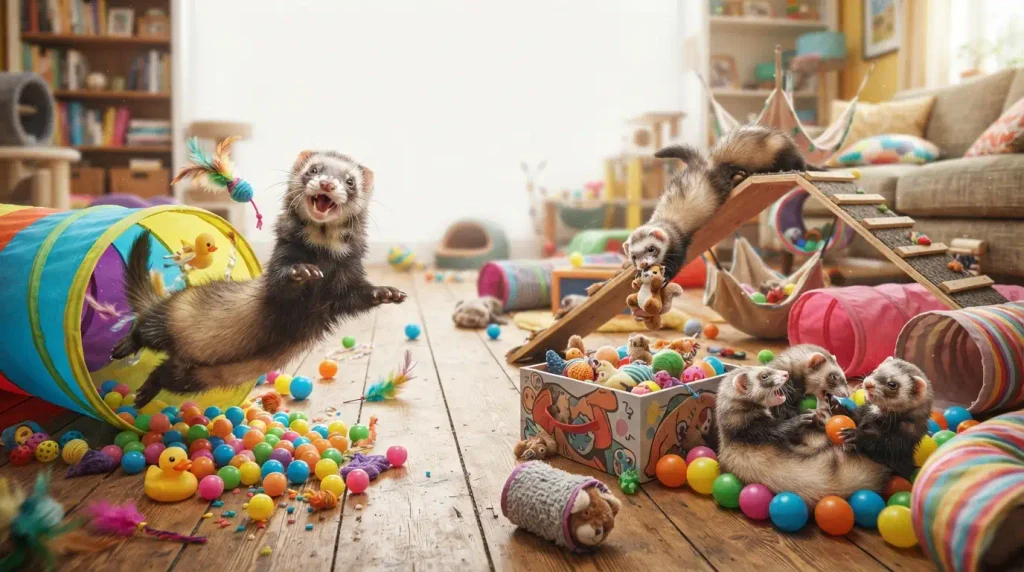
Ferrets are naturally social animals that thrive when living in pairs or small groups, often called a business. Watching two or more bonded pets wrestle and chase each other provides endless visual entertainment.
However, managing group play dynamics requires monitoring body language to ensure wrestling remains friendly. Introducing new pets slowly prevents territorial stress and accidental injuries.
Distinguishing Between Play Wrestling and True Aggression
Ferret play wrestling can look surprisingly intense to first-time owners, featuring neck-biting, rolling, and loud thuds. Understanding normal play thresholds helps you know when to step in and when to let them play.
- Normal play involves mutual chasing, turn-taking, open-mouth nipping, and happy dooking sounds.
- True aggression displays hissing, screaming, tail-pugging, fear-pooping, or relentless chasing without breaks.
- Separate wrestling pets immediately if one animal attempts to run away, hide, or cries out in genuine pain.
Group Play Activities for Multiple Pets
Multi-pet households can set up larger play configurations that challenge several animals simultaneously. Shared activities encourage cooperative exploration and reduce individual resource guarding.
- Deploy giant three-way tunnel junctions where multiple pets can bump into each other playfully.
- Scatter multiple small stash boxes across the room so every pet can collect toys independently.
- Host group foraging challenges using large cardboard mazes stocked with hidden healthy snacks.
Enriching the Life of a Single Ferret
If you own a single pet, you must step in to fulfill all of their social and physical play requirements personally. Solo ferrets need extra attention, interactive games, and daily affection to prevent loneliness.
- Spend a minimum of two dedicated hours playing directly with your single pet every day.
- Introduce interactive puzzle toys, automatic moving balls, and complex dig boxes to keep them busy.
- Carry your single pet in a fleece pouch while doing light housework to satisfy their social needs.
Care, Hygiene, and Post-Play Wind-Down Routines
After an intense hour of running, digging, and wrestling, your pets need a clean, comfortable space to rest. Establishing healthy post-play routines keeps your home smelling fresh and your pets feeling cozy.
Proper hygiene management prevents skin irritations and keeps coats soft and shiny. Balance energetic exercise with restful sleep environments to support overall health and longevity.
Managing Scent and Cage Cleanliness Naturally
Ferrets possess natural musk glands that produce a mild, earthy scent, which is completely normal for the species. Over-bathing actually strips natural coat oils, causing skin glands to overproduce musk oils and smell worse.
- Limit full water baths to two or three times per year unless your pet gets dirty in a dig box.
- Wash fleece bedding, hammock liners, and plush toys in fragrance-free detergent once a week.
- Scoop litter boxes daily and replace recycled paper litter regularly to eliminate odor buildup.
Designing Cozy Sleeping Zones for Post-Play Naps
Ferrets sleep between fourteen and eighteen hours every day, entering deep sleep cycles right after play sessions. Providing dark, enclosed, comfortable sleeping spots ensures they recharge fully for their next play adventure.
- Hang multi-tier fleece hammocks, soft hanging pods, and fabric tunnels inside their main enclosure.
- Place soft fleece blankets inside dark sleep boxes to mimic natural underground dens.
- Keep cage sleeping areas away from noisy household traffic, cold drafts, and direct sunlight.
Healthy Treats and Post-Play Hydration
High-energy play burns calories quickly, making post-play water and nutrition crucial for recovery. As obligate carnivores, ferrets require high-protein, high-fat diets with zero sugar, grains, or complex carbohydrates.
- Ensure fresh, clean water is always available in heavy ceramic bowls or high-flow water bottles.
- Offer small bits of cooked chicken, freeze-dried raw meat treats, or salmon oil as post-play rewards.
- Avoid feeding fruits, vegetables, cereal, or sugary commercial treats that cause dangerous pancreatic diseases.
Practice Exercise
Question 1
What does the famous weasel war dance indicate when displayed by a ferret? A. Extreme fear and aggressive defense mechanisms
B. Pure joy, high excitement, and playful energy
C. Severe physical pain or neurological distress
D. A desire to go to sleep immediately
Question 2
Why are soft rubber items like earplugs and shoe insoles dangerous for ferrets? A. Rubber causes dental cavities rapidly
B. Swallowed rubber pieces cause severe intestinal blockages
C. Rubber turns their coat fur green
D. Rubber lowers their body temperature to dangerous levels
Question 3
How much out-of-cage time do healthy ferrets require every day at minimum? A. Ten minutes once a week
B. At least four hours daily
C. One hour per month
D. They should never leave their cage
Question 4
What is the primary instinct satisfied by providing a rice dig box? A. Aquatic swimming behavior
B. Underground excavation and burrowing instincts
C. High-altitude flying mechanics
D. Tree-climbing nest building
Question 5
Which material should be avoided when constructing a ferret dig box? A. Dried long-grain white rice
B. Clean ping-pong balls
C. Instant sugary scented cereal grains
D. Shredded plain paper strips
Question 6
Why is over-bathing a ferret counterproductive for scent control? A. Water dissolves their coat completely
B. Stripping natural oils causes skin glands to produce more musk oil
C. Soap turns their skin bright blue
D. Bathing makes them lose their appetite
Question 7
Which harness style is safest for outdoor ferret excursions? A. Loose cat collars with bell attachments
B. Properly fitted figure-eight or H-style harnesses
C. Heavy leather dog choke collars
D. Sticky adhesive tape wrap
Question 8
What type of diet is mandatory for obligate carnivores like ferrets? A. High-fiber vegetarian grain mixes
B. Fresh fruit and sweet berry salads
C. High-protein, high-fat, meat-based diets
D. Cooked dairy milk and bread crumbs
Question 9
What sound do ferrets typically make when they feel happy and engaged during play? A. Loud screeching growls
B. Soft clucking or dooking noises
C. High-pitched dog barking
D. Hissing spray sounds
Question 10
How should you react if two wrestling ferrets begin hissing, screaming, and tail-pugging? A. Ignore them completely for several hours
B. Separate them immediately, as this indicates genuine fear or aggression
C. Spray them with cold water
D. Offer them sweet fruit candies
Answer Key
B B B B C B B C B B
FAQs
How do I know if my ferret is having fun?
Your ferret shows joy by performing the weasel war dance, arching its back, bouncing sideways, and making soft dooking sounds. These goofy movements indicate high energy, excitement, and complete comfort in their surroundings.
Can ferrets play safely with domestic cats and dogs?
Interactions should always be monitored closely, as large dogs or cats can accidentally injure a fragile ferret. Never leave them unattended together, and separate them immediately if predatory instincts appear.
What are the best homemade toys for ferrets?
Cardboard boxes with cut-out holes, long plastic drainage pipes, rice dig boxes, and paper bags make incredible low-cost toys. These simple items satisfy instincts to dig, tunnel, hide, and explore.
Why does my ferret nip my ankles when I walk?
Ankle nipping is an invitation to play, mimicking how ferrets chase each other’s back legs during games. Redirect this behavior toward drag toys, fleece strips, or balls instead of bare feet.
Are cat laser pointers safe for ferret play time?
Laser pointers provide great chasing exercise, but can cause psychological frustration if the pet can never physically catch the light target. Always end laser sessions by pointing the light onto a physical treat.
How do I stop my ferret from stealing my keys and remote control?
Provide dedicated stash boxes filled with safe toys like ping-pong balls, fabric scraps, or soft socks. Keep personal belongings inside closed drawers or elevated tables well out of climbing reach.
Can ferrets play outdoors in cold winter snow?
Short snow sessions are safe for healthy ferrets if temperatures remain above freezing and visits stay under ten minutes. Towel-dry your pet thoroughly immediately afterward and warm them up inside.
Conclusion
Unlocking endless ferret fun comes down to understanding your pet’s instincts to tunnel, dig, stash, and explore. By setting up safe spaces, rotating homemade toys, and playing interactive games, you create an enriching environment where your furry acrobats can thrive.
Prioritizing proper home safety, secure harnesses for outdoor walks, and healthy post-play routines keeps every adventure stress-free and rewarding. Embracing daily ferret fun activities strengthens your emotional bond while keeping your pets physically active and mentally sharp.
Grab a fleece blanket, set up a simple tunnel maze, and jump into the joyful chaos of playtime today. With these practical strategies, your home will be filled with bouncing war dances and happy dooks all year long!

Ghzala Rani is the creator and writer behind Funzonest.com, a website dedicated to making everyday topics more enjoyable, interesting, and easy to understand. With a passion for engaging content, Ghzala focuses on creating helpful articles that inform, entertain, and provide readers with useful ideas and insights.
Through Funzonest.com, Ghzala Rani aims to build a friendly online space where readers can discover fresh content and explore topics presented in a simple and enjoyable way. Her writing style focuses on clarity, originality, and reader value. She is committed to publishing well-researched and engaging content that keeps visitors informed while making their time on the website enjoyable.