

Fun acting involves low-pressure performance games, improvisation exercises, and creative roleplay designed to build self-confidence, sharpen communication, and foster social connection. Instead of focusing on strict theatrical perfection, it emphasizes spontaneity, imagination, and playfulness, making drama accessible and enjoyable for beginners and experienced performers alike.
Have you ever watched someone command a room with pure laughter and wondered how they make performing look so effortless? Exploring fun acting exercises is the absolute best way to break out of your shell while having an absolute blast!
Whether you want to try local theater games or host a game night at home, fun acting activities turn nervous energy into creative play.
You will quickly see how fun acting builds personal confidence, sharpens quick thinking, and brings friends closer together through hilarious storytelling!
What Is Fun Acting and Why Does It Matter?

When most people picture drama classes, they imagine intense script memorization, strict directors, and scary stage fright. Playful performance flips that traditional image around by focusing entirely on enjoyment, spontaneity, and creative freedom.
Instead of worrying about hitting every mark perfectly, you focus on reacting to your partners in the present moment.
Removing the Fear of Mistakes
The golden rule of recreational performance is simple: there are no mistakes, only unexpected discoveries.
- Judgment-Free Zones: Every weird voice, silly walk, or sudden plot twist gets embraced as a brilliant addition to the scene.
- Instant Stress Relief: Stepping into a ridiculous character lets you leave daily worries at the door for an hour or two.
- Laughter First: When accuracy takes a backseat to humor, performance anxiety melts away almost instantly.
Building Essential Real-World Skills
Playing dramatic games does far more than just entertain an audience; it builds practical skills you use every single day.
You learn to listen attentively, read non-verbal body language, and speak clearly when presenting ideas at work or school.
Popular Types of Fun Acting Games for Beginners

If you are looking for easy ways to start playing, beginner-friendly games require zero script preparation or previous experience.
These classic party and workshop games rely entirely on your imagination and quick reactions.
Improvisation and Quick-Thinking Exercises
Improv games force your brain to stop second-guessing itself and trust your first instincts.
- Yes, And…The foundational game of all comedy where you must accept whatever premise your partner states and add new detail.
- One-Word Story: A circle of players builds an epic tale by contributing exactly one word per turn around the group.
- Freeze and Switch: Two actors start a physical scene until someone shouts freeze, taps a player out, and takes their exact physical pose to start a totally new story.
Physicality and Character Swaps
Stepping away from spoken words helps actors express emotion through movement, posture, and facial expressions.
Game leaders might ask you to walk across the room as if you are moving through wet cement, floating in outer space, or trying to hide a giant secret.
How to Set Up a Fun Acting Workshop at Home

You do not need an expensive theater space or fancy lights to host an unforgettable dramatic game night for your family or friends.
Transforming your living room into a casual performance space takes just a few minutes of preparation.
Simple Materials and Prop Kits
baffling
- The Prop Box: Fill an old laundry basket with strange hats, feather boas, wooden spoons, and vintage glasses.
- Prompt Slips: Write absurd locations and weird character traits onto small slips of paper for players to draw randomly.
- Themed Music Tracks: Prepare quick audio cues for sudden genre changes like suspenseful mystery, dramatic romance, or fast action.
Creating a Supportive Environment
Set clear expectations before the first game starts so everyone feels completely safe being silly.
Applaud wildly after every performance, keep feedback strictly positive, and remind everyone that looking ridiculous is the main goal of the evening.
Comparison of Fun Acting Game Styles

When choosing an acting game style, understanding each format’s distinct focus is key to developing specific performance skills. Short-form games (such as quick-fire improv) sharpen an actor’s reflexes, fast timing, and spontaneous humor, requiring immediate on-stage reactions without a script. In contrast, long-form improv and character-driven exercises provide the space to build narrative arcs, explore emotional depth, and establish complex character relationships. Ultimately, comparing these styles highlights that while short-form games excel at building high energy and rapid thinking, long-form and physical styles are unmatched for developing deep character work, ensemble trust, and body awareness.
Short-Form Improv Games
These games are fast-paced and primarily focus on rapid thinking, comedic timing, and immediate energy. Actors must react instantly to prompts, emotions, or rules without prior planning. Popularized by shows like Whose Line Is It Anyway?, games such as “Questions Only” or “Freeze Tag” are ideal for strengthening stage presence and split-second responsiveness.
Long-Form Storytelling Style
Rather than chasing quick punchlines, long-form style emphasizes sustained narratives and genuine character connections. Performers take a single word or premise and build an extended, continuous scene or multi-character play. This format teaches actors how to listen deeply, apply the foundational “Yes, And” principle, and construct a compelling story arc over an extended timeframe.
Physicality-Driven Style
This style moves away from spoken dialogue to focus entirely on body language, spatial awareness, and non-verbal communication. Exercises like the “Mirror Game,” mime work, or “Gibberish” force actors to convey intent and emotion strictly through movement, posture, and facial expressions, making it an essential approach for strengthening overall physical expression on stage or camera.
Advanced Techniques to Make Scenes Hilarious

Once you get comfortable with basic improv rules, adding structured comedic techniques makes your scenes twice as entertaining.
Comedy relies heavily on surprise, timing, and clear contrast between characters.
The Power of the Straight Man and Wild Character
Dynamic comedic pairs usually pit one totally logical character against someone who acts completely absurd.
For instance, imagine a quiet librarian trying to help a customer who insists on speaking only in pirate rhymes. The contrast creates instant humor without needing complex scripts.
Raising the Stakes in Every Scene
To keep a short scene engaging, players must continuously raise the emotional importance of simple situations.
- Start Small: A simple argument about who forgot to buy milk.
- Add Urgency: The milk is needed for a magical recipe that saves the kingdom before sunset.
- Create Obstacles: The local grocery store is now guarded by a dramatic dragon who demands riddles.
Fun Acting Exercises for Kids and Students
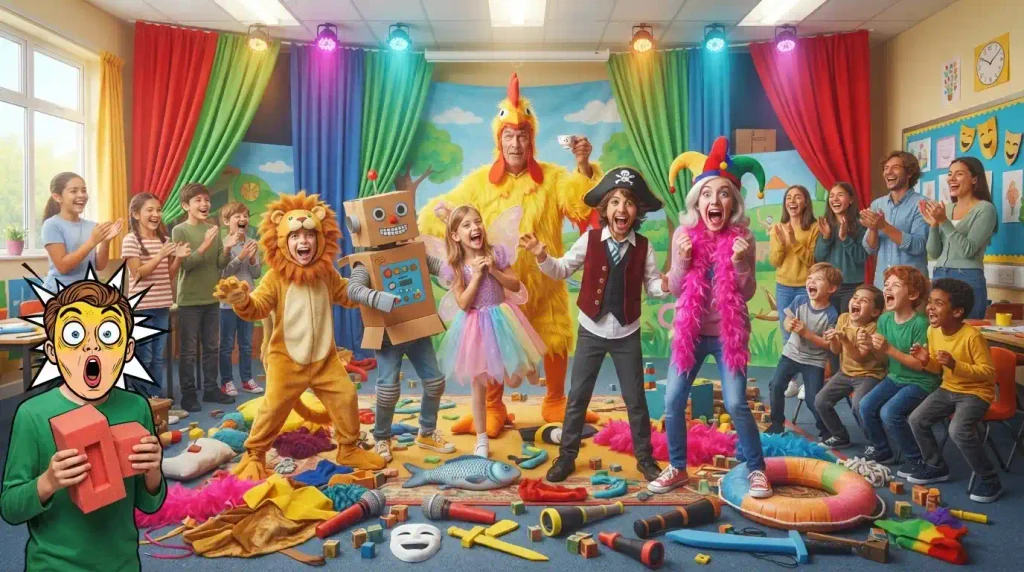
Children are natural performers because their active imaginations operate without heavy adult filters.
Using drama games in classrooms or youth groups builds emotional literacy and cooperative teamwork.
Story Drama and Roleplay
Guide younger children through interactive adventures where they act as brave explorers, magical creatures, or detective teams.
Instead of reading a storybook passively, pause every few pages and ask the kids to act out how the characters cross a roaring river or negotiate with a friendly giant.
Mirror Games for Emotional Awareness
Pairs of children stand face-to-face, with one acting as the leader and the other matching their physical movements like a mirror image.
This simple exercise improves concentration, encourages deep eye contact, and teaches subtle emotional expression through non-verbal cues.
Overcoming Stage Fright Through Playful Practice
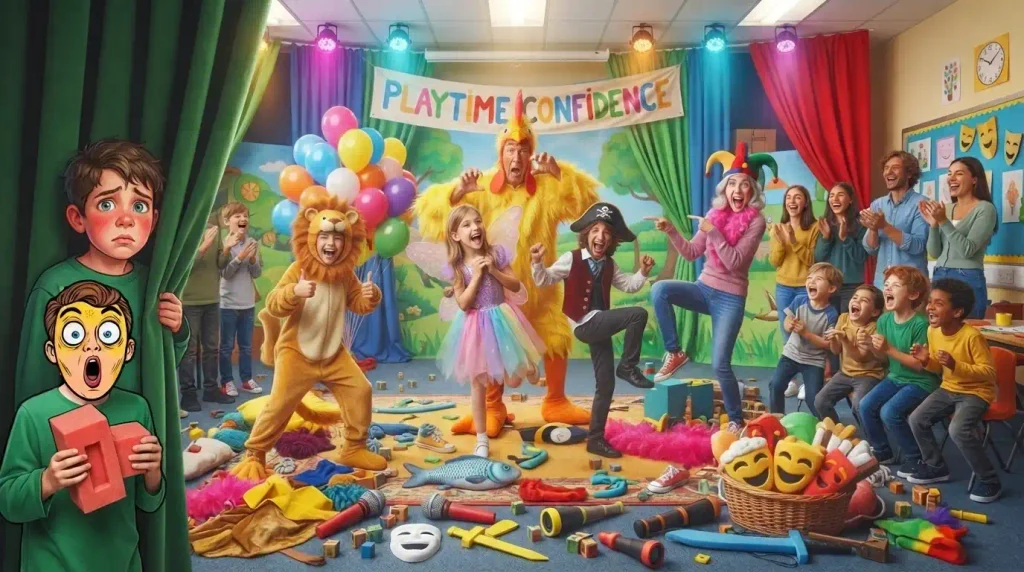
It is completely normal to feel a sudden wave of nerves when all eyes in a room turn toward you.
Using structured warm-up routines turns that nervous energy into excitement before you step into the spotlight.
Physical and Vocal Warm-Ups
Releasing physical tension in your shoulders, neck, and jaw helps your body relax naturally.
Shake out your hands while counting down from five, stretch your face wide like a lion, and crunch it tight like a lemon to loosen up facial muscles.
Mindset Shifts for Easy Performing
Shift your internal focus away from your own performance and direct your energy entirely toward helping your scene partners succeed.
When your primary goal is making your partner look brilliant, your self-conscious worries vanish immediately.
Practice Exercise
Test your knowledge on theatrical mechanics, improv rules, and playful performance strategies!
- What is considered the foundational rule of successful improvisation?
A. Always disagree with your scene partner
B. Accept premises using “Yes, and…”
C. Memorize every line before speaking
D. Never speak during a scene - What is the primary focus of recreational fun acting compared to traditional drama?
A. Perfecting historical Shakespeare accents
B. Enjoyment, spontaneity, and low-pressure play
C. Winning international acting trophies
D. Memorizing hundred-page scripts - Which item is most helpful to include in an easy home performance kit?
A. Professional film cameras
B. Random props and costume pieces
C. Expensive sound stages
D. Printed rulebooks - Why are mirror games effective for young students?
A. They teach advanced lighting design
B. They improve concentration and non-verbal awareness
C. They require fast running across fields
D. They force children to stay silent for hours - What comedic dynamic pits a sensible character against an absurd one?
A. Double monologue
B. Straight man and wild character
C. Silent choir
D. Tragedy chorus - What should you do with physical mistakes during improv exercises?
A. Stop the game and apologize immediately
B. Embrace them as creative new scene choices
C. Leave the room in embarrassment
D. Start over from the very beginning - How does shifting focus to your scene partner help with stage fright?
A. It makes you forget your partner’s name
B. It lowers self-consciousness by taking focus off yourself
C. It guarantees you will not have to speak
D. It lets you sleep during the performance - What happens during a “Freeze and Switch” improv game?
A. Everyone goes home early
B. Actors freeze mid-scene and a new player taps in to start a fresh story
C. The room lights are turned off completely
D. Players read lines off cue cards
Answer Key
A | 2. C | 3. D | 4. A | 5. C | 6. D | 7. A | 8. C
FAQs
Do I need prior experience to join a fun acting class?
No, absolute beginners are always welcome! Most casual workshops design their games specifically for people who have never stepped on a stage before, focusing on laughter, group support, and easy step-by-step participation.
How can fun acting help me in my everyday professional career?
Playing performance games sharpens public speaking skills, boosts active listening, and helps you handle unexpected workplace changes calmly. It teaches you to adapt quickly during presentations and build better connections with clients and coworkers.
What should I wear to a drama game session?
Wear loose, comfortable clothing and supportive flat shoes that allow you to move freely around the room. You might be sitting on the floor, jumping into silly poses, or running around during fast-paced physical games.
Are improv games safe for introverted personalities?
Yes, introverts often excel in structured dramatic environments! Games provide clear rules and supportive partners, giving introverts a safe space to express their creativity without the pressure of small talk or unscripted social settings.
What is the difference between improv and scripted acting?
Improv involves creating characters, dialogue, and plot completely on the spot without any preparation. Scripted performance requires actors to memorize written lines and follow pre-planned stage directions created by a playwright.
Conclusion
Exploring the world of fun acting is one of the most rewarding ways to boost your personal confidence, unleash your inner creativity, and share unforgettable laughter with others. By letting go of perfectionism and embracing the simple joy of play, you open the door to an exciting form of self-expression.
Whether you practice quick improv games in your living room or join a friendly community workshop, stepping into playful roles enriches your everyday life. It teaches you to stay present, trust your instincts, and handle life’s unexpected moments with a bright smile.
So pull together a simple prop basket, invite your favorite group of friends over, and launch your very own fun acting adventure today!

Ghzala Rani is the creator and writer behind Funzonest.com, a website dedicated to making everyday topics more enjoyable, interesting, and easy to understand. With a passion for engaging content, Ghzala focuses on creating helpful articles that inform, entertain, and provide readers with useful ideas and insights.
Through Funzonest.com, Ghzala Rani aims to build a friendly online space where readers can discover fresh content and explore topics presented in a simple and enjoyable way. Her writing style focuses on clarity, originality, and reader value. She is committed to publishing well-researched and engaging content that keeps visitors informed while making their time on the website enjoyable.