
Creating fun animal drawings comes down to breaking complex creatures into simple geometric shapes like circles, ovals, and triangles. By adjusting proportions, adding expressive eyes, and using exaggerated poses, anyone can quickly turn basic sketches into charming, cartoonish animal illustrations full of personality and humor.
Have you ever picked up a pencil intending to draw a playful puppy, only to end up with something that looks like an abstract potato? Learning to sketch fun animal drawings should feel exciting and rewarding, never frustrating or overly complicated.
When you learn to see the world through simple geometric shapes, art magic happens naturally. Crafting fun animal drawings is one of the most enjoyable ways to unleash your inner creativity and share smiles with friends.
Whether you want to doodle a quirky cat or an energetic elephant, simple step-by-step techniques make all the difference. Let us explore how you can master fun animal drawings starting today!
Demystifying Sketching Through Basic Geometry
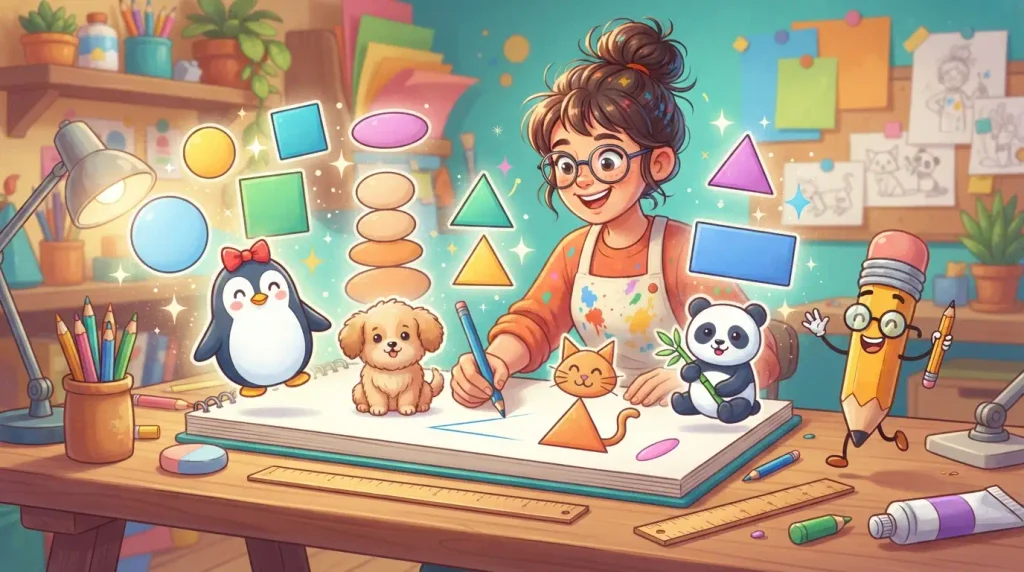
Every creature in nature, no matter how complex, is actually built from fundamental geometric shapes. When professional illustrators look at a lion, an owl, or a sea turtle, they do not see intricate muscles and fur right away.
Instead, they see a combination of circles, ovals, cylinders, and triangles grouped. Training your mind to spot these underlying shapes removes the intimidation of a blank page.
Seeing Animals as Building Blocks
Think of sketching as playing with building blocks on paper. A round bear head starts as a simple circle, while a chubby penguin body begins as an elongated egg shape.
By stacking and overlapping these basic structures, you establish the correct size and placement before adding any tiny details. This foundational step keeps your artwork balanced and proportioned.
Constructing a Friendly Golden Retriever
Let us walk through a practical example by building a joyful dog using simple shapes. Follow these quick steps to sketch your foundation:
- Draw a medium-sized circle in the center of your page for the head.
- Add a slightly smaller horizontal oval overlapping the bottom half of the circle to form the snout.
- Place a larger, slanted oval below the head for the ribcage and body.
- Sketch two long teardrop shapes on either side of the head for floppy ears.
- Connect the body with soft lines and add small rounded paws at the base.
Adding Personality and Emotion to Your Doodles
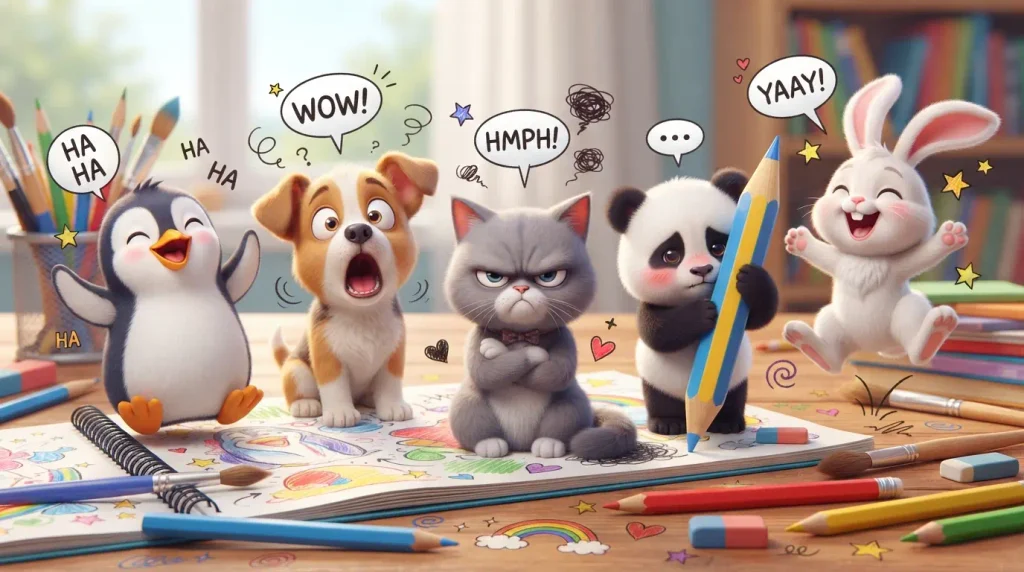
The real magic of cartooning happens when you inject human-like expressions into your sketches. A plain dog drawing becomes infinitely more entertaining when it wears a cheeky grin or an inquisitive raised eyebrow.
Exaggerating facial features turns ordinary sketches into memorable characters that jump off the page.
The Power of Eyebrows and Eye Placement
Eyes are the windows to your drawing’s soul. Changing the direction an animal looks or altering the angle of its eyebrows completely transforms its mood.
- Curious: Tilt one eyebrow high while keeping the other flat and neutral.
- Excited: Draw oversized round pupils with small white glare highlights inside.
- Sleepy: Convert eyes into soft downward curves with tiny curved eyelashes.
- Surprised: Place tiny dot pupils inside huge, wide-open circles.
Expressive Mouth Patterns for Instant Humor
An animal’s mouth carries immense expressive weight in cartooning. A simple tongue sticking out sideways instantly conveys silliness, while an exaggerated wide smile makes your character feel energetic and friendly.
Do not be afraid to play with scale. Drawing a tiny beak on a giant, round bird creates an endearing contrast that readers love.
Exploring Distinct Animal Groups with Simple Shapes
Different animal species present unique anatomical challenges, but applying our shape method makes them all approachable. Grouping animals by their physical traits helps you master drawing them quickly.
Let us examine three distinct animal categories and how to approach each one step-by-step.
Mammals: Fluffy Bodies and Expressive Ears
Mammals offer endless opportunities for playfulness because of their varied fur textures, ears, and tails. Focus on the relationship between the head size and body width to convey youth or strength.
For instance, giving a baby rabbit a head that is larger than its body instantly makes it look cute.
Birds: Dynamic Beaks and Feather Tufts
Birds are fantastic subjects for practicing clean, swooping lines and aerodynamic forms. Most bird bodies can be drawn using teardrops or sleek oval shapes.
Add personality by exaggerating the beak size or adding a messy tuft of feathers right at the top of the head.
Aquatic Life: Smooth Curves and Flowing Fins
Sea creatures rely on smooth, flowing contours rather than sharp angles. Whales, dolphins, and tropical fish start with smooth teardrop bases.
Focus on sweeping tail fins and cheerful water bubbles rising around your character to create a lively underwater scene.
Essential Tools for Budding Illustrators
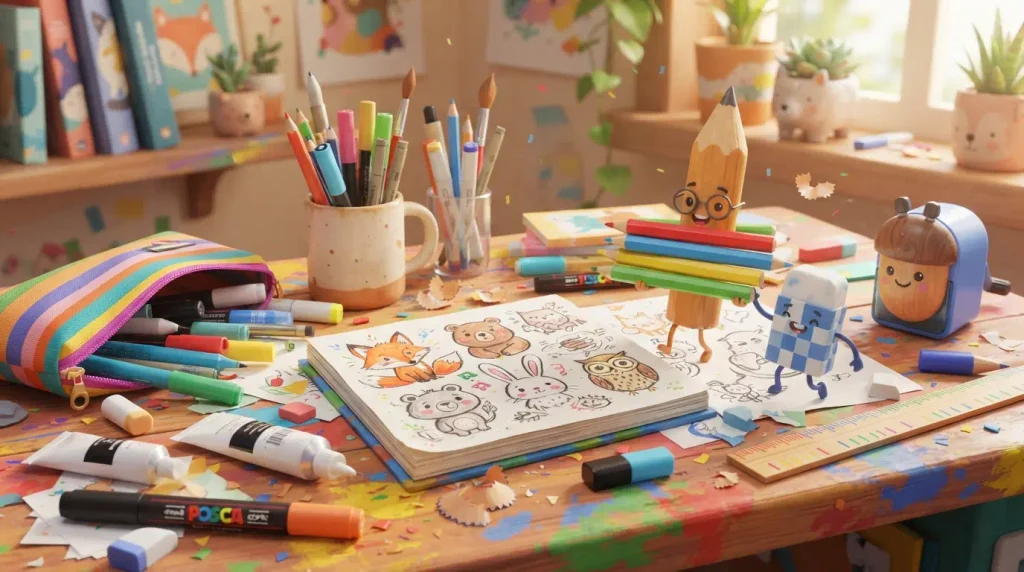
Setting up a comfortable creative workspace does not require spending a fortune on high-end art supplies or professional studio gear. Having a few reliable, high-quality essentials allows you to focus on developing techniques, mastering basic shapes, and building confidence without fighting your materials. By starting with versatile, student-friendly tools, you can experiment freely, clean up mistakes effortlessly, and transition smoothly from initial rough concepts to polished, vibrant illustrations.
Quality Pencils and Erasers for Clean Under-Sketching
The foundation of every great illustration begins with light, forgiving pencil lines. A standard HB or 2B graphite pencil offers the ideal balance of soft marking and clean erasability, making it perfect for plotting basic geometric guidelines. Pair your pencils with a moldable kneaded eraser, which allows you to gently lift excess graphite off the page without scuffing paper fibers or leaving messy eraser dust across your workspace.
Precision Fine Liners for Crisp Outlines
Once your pencil sketch is complete, transferring your shapes into permanent artwork requires dependable, smudge-proof ink pens. Fine liner pens with archival pigment ink ensure your outlines stay sharp and dark, even when layering water or markers over them later. Keeping a couple of different tip sizes, such as a fine 0.3mm for delicate details and a bolder 0.8mm for outer contours, adds instant visual depth and structure to your work.
Smooth Paper and Vibrant Coloring Options
Choosing the right paper surface prevents common frustrating issues like ink bleeding or paper warping. Smooth cardstock or heavy marker paper allows alcohol-based markers and colored pencils to glide effortlessly across the page without dragging. Utilizing quality coloring tools enables smooth gradient blending and vibrant color payoff, making your cartoon characters pop off the page with professional polish.
Advanced Techniques: Action Poses and Line Weight
Once you feel comfortable drawing stationary characters, it is time to bring your artwork to life with movement and depth. Static poses can sometimes feel stiff, but subtle adjustments add dynamic energy.
Mastering line variance and action lines makes your art feel like a frame from an animated movie.
Using the Line of Action for Dynamic Movement
Before drawing any body shapes, sketch a single sweeping curve across your page called the line of action. This curved line represents the spine and movement path of your animal.
Building your shapes along a curved line creates natural rhythm, whether your character is leaping through the air or curling up for a nap.
Varying Line Weight for Depth and Shadow
Line weight refers to how thick or thin your ink lines are throughout the drawing. Using uniform line thickness makes art look flat, while varying line weight adds instant form and shadow.
- Thick Lines: Use along the bottom edges, underneath chin areas, and on outer shadows.
- Thin Lines: Use for delicate inner details like fur textures, whiskers, and eye glares.
Overcoming Common Beginner Mistakes
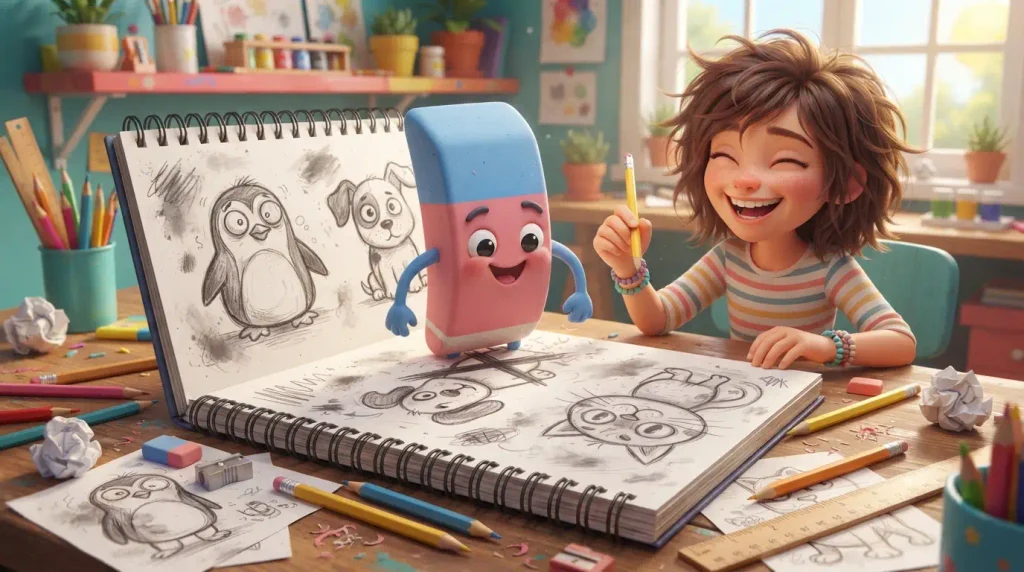
Every artist encounters frustrating moments when learning new skills. Recognizing common pitfalls early helps you fix errors smoothly and keep your creative momentum going strong.
Patience and practice are your best friends as you develop your personal artistic style.
Avoiding Stiff and Rigid Outlines
Beginners often press too hard with their pencils, creating dark, rigid lines that are impossible to erase. Pressing lightly during the early shape-building phase lets you experiment freely without ruining the paper.
Keep your wrist loose and draw using full arm movements rather than tight finger twitches.
Fixing Proportion Issues
If your animal’s legs look too short or the head appears awkwardly huge, do not panic. Step back from your drawing desk and view your artwork from a distance or in a mirror.
Flipping your drawing upside down instantly reveals proportion mistakes that your eyes missed while working up close.
Practice Exercise
Sketching Techniques and Drawing Basics
1. What basic geometric shape serves as the best starting foundation for a penguin body?
A. Solid cube form
B. Extended oval shape
C. Pointed triangular form
D. Wide rectangular block
2. Why do artists draw with light HB pencil lines during the initial phase?
A. HB graphite becomes permanent instantly
B. The marks speed up the inking process
C. Faint guidelines can be removed easily later
D. Pencil strokes automatically add color
3. What term describes the single sweeping line used to guide an animal’s movement pose?
A. Background guide
B. Line of action
C. Surface boundary
D. Directional tangent
4. How does making an animal’s head larger than its body affect character perception?
A. The design gives an aged appearance
B. The proportions create a cute, youthful impression
C. The character gains a threatening appearance
D. The size difference produces no noticeable effect
5. Which tool is best suited for lifting graphite without damaging delicate paper?
A. Rough sanding pad
B. Kneaded rubber eraser
C. Sharp metal scraper
D. Permanent ink marker
Character Design and Finishing Details
6. Where should thicker line weights generally be applied in a finished drawing?
A. Around brightly lit surfaces
B. Within reflective eye highlights
C. Near lower contours and darker sections
D. Around every tiny facial detail
7. What trick helps artists spot proportion errors in their own sketches?
A. Checking the artwork in a mirror or upside down
B. Working with the lights completely switched off
C. Keeping both eyes closed while drawing
D. Tracing the final outline with permanent ink
8. What happens when you draw a tiny beak on a very large, round bird body?
A. The unusual proportions create a charming humorous effect
B. The result follows realistic animal anatomy
C. The illustration becomes scientifically accurate
D. The paper develops physical damage
9. Why are multi-chambered alcohol markers popular among cartoonists?
A. They sharpen pencil sketches automatically
B. Their ink supports smooth color blending
C. They turn regular paper into waterproof sheets
D. Their tips produce only perfectly straight lines
10. What is the main purpose of adding a white glare dot inside an animal’s pupil?
A. The highlight covers unwanted ink marks
B. A small reflection gives the eye a lively, glossy appearance
C. The white spot reduces the overall pupil size
D. The highlight changes the surrounding ink color
Answer Key
1-B | 2-C | 3-B | 4-B | 5-B | 6-C | 7-A | 8-A | 9-B | 10-B
FAQs
How can I make my animal drawings look more cartoonish and fun?
To make drawings cartoonish, exaggerate key features like making eyes larger, heads rounder, and expressions more dramatic. Simplifying complex details into clean shapes gives your characters a fun, animated personality.
What is the easiest animal for a complete beginner to draw?
A fish or a sleeping cat is usually the easiest starting point for beginners. These animals rely on simple oval bases with minimal complex limb placement, making them quick and satisfying to sketch.
How do I stop my hand from smudging my pencil lines?
You can prevent smudging by placing a clean sheet of scrap paper under your hand while drawing. Additionally, working from top to bottom and left to right keeps your palm off fresh graphite.
What type of paper is best for marker coloring?
Heavyweight smooth cardstock or marker paper works best for alcohol and water-based markers. Thick paper prevents ink from bleeding through to the next page and allows smooth color blending.
Can I learn to draw well even if I have no natural talent?
Yes, drawing is a learned skill based on observation and muscle memory rather than raw talent. Consistent practice with basic shapes will yield dramatic improvements in just a few weeks.
How do I add fur texture without drawing every single hair?
Add fur texture by drawing small zigzag tufts along the outer outlines and key joints rather than filling the entire body. A few strategic fluff details suggest a furry coat without cluttering your drawing.
Conclusion
Mastering the art of fun animal drawings comes down to breaking big ideas into simple, manageable shapes. By focusing on basic geometry, playful expressions, and dynamic lines, you can turn any blank page into a delightful cast of characters.
Remember that every great illustrator started with simple circles and wobbling outlines. Permitting yourself to experiment, make mistakes, and create fun animal drawings is the fastest way to grow your artistic confidence and style.
Pick up your favorite pencil, find a comfortable sketchbook, and begin exploring fun animal drawings right now. Your next wonderful sketch is only a few simple shapes away!

Ghzala Rani is the creator and writer behind Funzonest.com, a website dedicated to making everyday topics more enjoyable, interesting, and easy to understand. With a passion for engaging content, Ghzala focuses on creating helpful articles that inform, entertain, and provide readers with useful ideas and insights.
Through Funzonest.com, Ghzala Rani aims to build a friendly online space where readers can discover fresh content and explore topics presented in a simple and enjoyable way. Her writing style focuses on clarity, originality, and reader value. She is committed to publishing well-researched and engaging content that keeps visitors informed while making their time on the website enjoyable.