
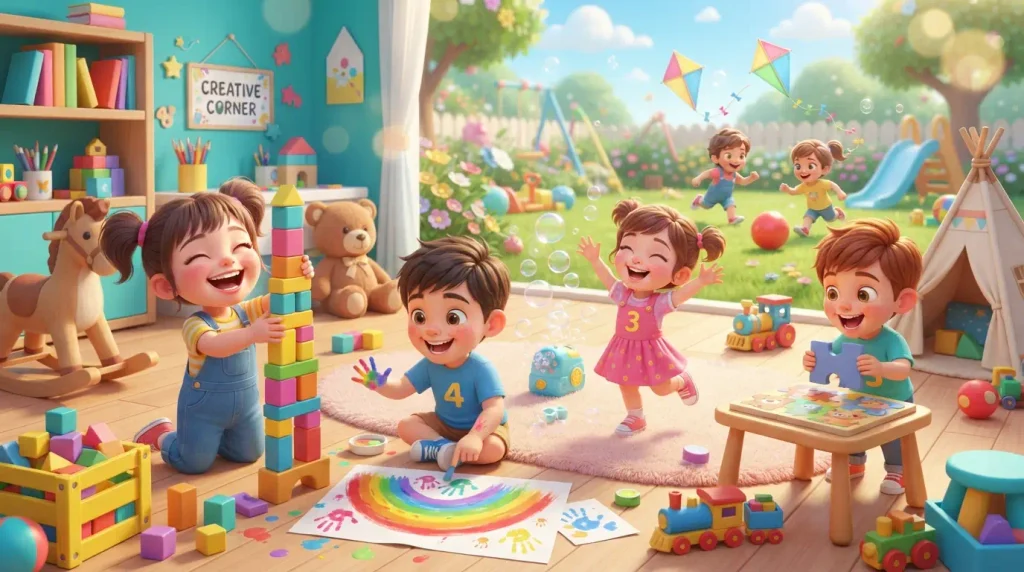
First fun refers to the initial, foundational play experiences and interactive activities introduced to young children, toddlers, or beginners. These early engaging moments foster cognitive development, sensory exploration, and emotional bonding through simple games, creative play, and hands on discovery in safe, welcoming environments.
Have you ever wondered why early play memories stay with us for a lifetime? Introducing a child to their very first fun creates essential pathways for learning, creativity, and lasting happiness.
Whether you are setting up simple playtimes at home or exploring outdoor spaces, planning that first fun experience helps build real confidence in young discoverers.
Let’s explore how simple, structured play can turn everyday moments into magical milestones. You are about to discover easy techniques to make your child’s first fun truly unforgettable and impactful!
What Does First Fun Mean for Early Development?
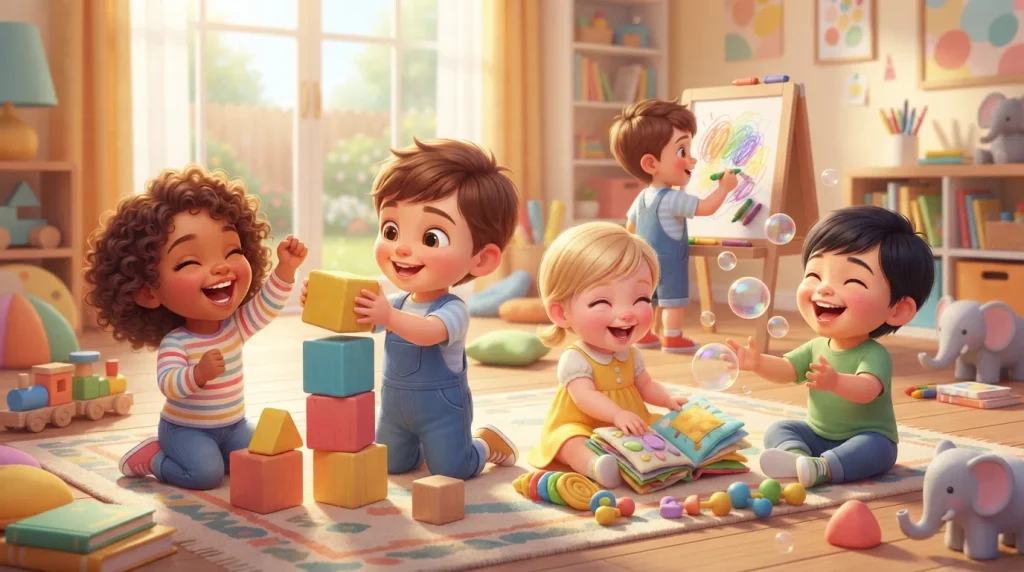
The concept of early enjoyable activities goes far beyond simple entertainment for young children. When a child engages in play for the early moments of life, their brain actively forms millions of new neural connections every single second.
Play serves as the natural language through which young minds explore physical boundaries, test cause-and-effect relationships, and process new sensory input. When an activity feels joyful, the brain releases dopamine, which strengthens memory retention and builds positive associations with learning.
Understanding how early play works allows parents and educators to design environments that naturally spark curiosity. By focusing on joyful, low-pressure experiences, we set the stage for lifelong confidence and social growth.
The Psychology Behind Early Play and Joy

Child psychologists have long recognized that early joyful experiences form the emotional foundation of childhood. When activities feel rewarding, children naturally develop intrinsic motivation, driving them to explore their surroundings without fear of failure.
Building Emotional Security Through Play
Early play offers a safe space where children can experiment with control and independence. When a toddler stacks blocks and knocks them down with a laugh, they are mastering basic physical control while learning emotional resilience.
This early sense of agency builds self-esteem faster than structured instruction ever could. Safe, playful environments reassure young learners that taking small risks leads to exciting discoveries rather than danger.
How Joy Drives Cognitive Growth
Brain development thrives on novelty and positive reinforcement. Joyful play stimulates the prefrontal cortex, which governs decision-making, focus, and creative problem-solving skills.
- Pattern Recognition: Sorting colorful objects helps young minds identify shapes, sizes, and sequences naturally.
- Spatial Awareness: Reaching for floating bubbles or crawling through soft tunnels teaches body placement and distance.
- Language Acquisition: Pairing playful actions with descriptive words accelerates vocabulary growth exponentially.
Setting Up Your First Fun Space at Home
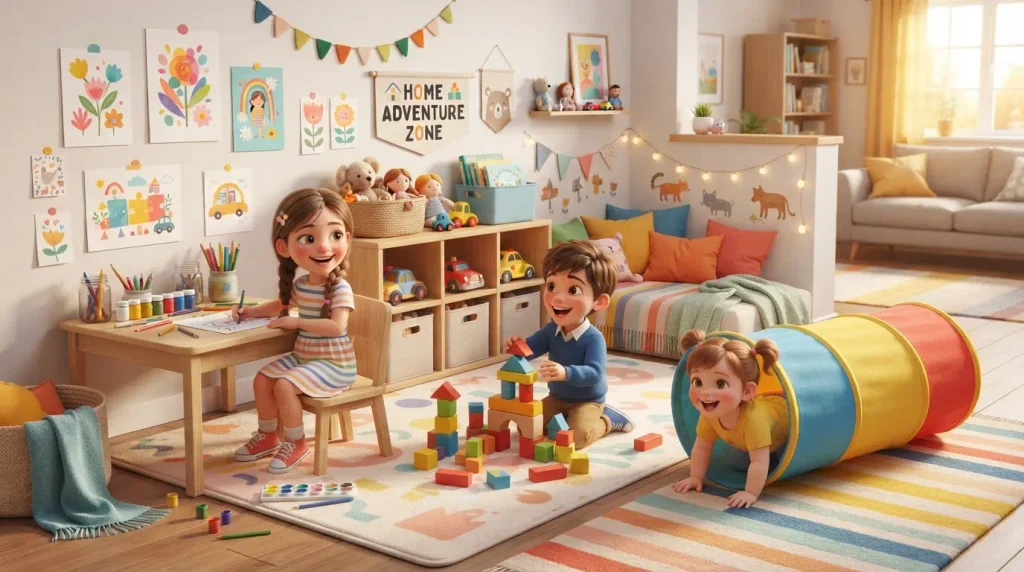
You do not need an expensive playroom filled with high-tech gadgets to create a fantastic play zone. In fact, simple, open-ended environments often encourage far more imagination and independent exploration.
Choosing the Right Room and Layout
Select a well-lit area in your living room or child’s bedroom that allows for easy supervision. Ensure the space is free from sharp furniture corners, exposed electrical outlets, and tripping hazards.
Soft floor coverings like foam mats or woven rugs provide a comfortable surface for crawling, sitting, and tumbling. Keeping the floor clear of clutter encourages children to move around freely and follow their curiosity.
Selecting Age-Appropriate Play Tools
When choosing play items, prioritize versatility over single-use electronics. Classic toys that can be used in multiple ways stimulate much higher levels of creative thinking.
- Soft Stacking Blocks: Excellent for developing fine motor skills and hand-eye coordination safely.
- Sensory Bins: Filled with dry rice, large pasta, or water, these bins provide hours of tactile exploration.
- Musical Shakers: Simple maracas or DIY rice bottles introduce rhythm, sound recognition, and cause-and-effect.
Indoor Play Ideas for Early Explorers
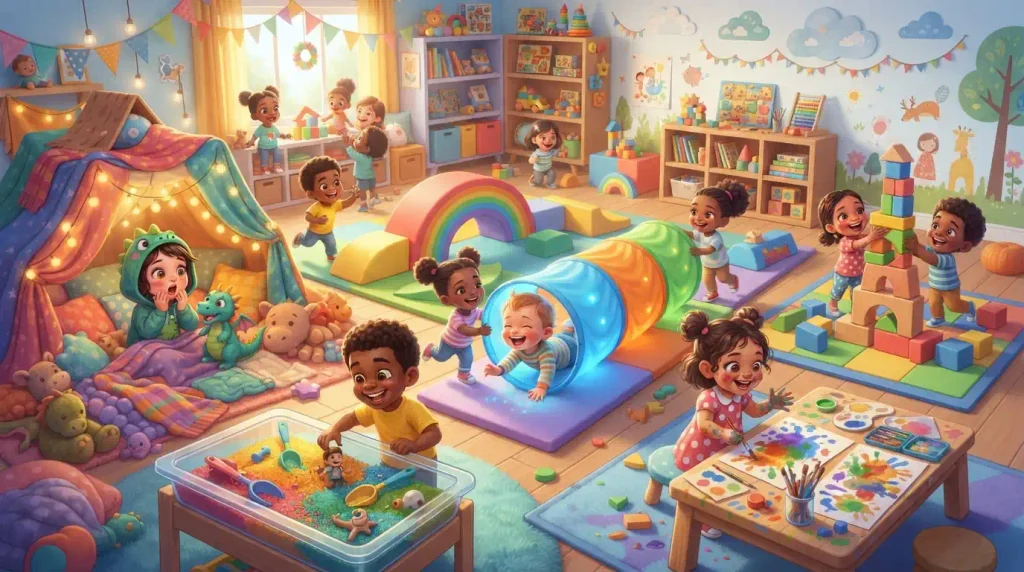
When weather keeps you indoors, creative household activities can transform an ordinary day into an exciting adventure. These simple setups require minimal preparation while delivering maximum engagement.
Simple Sensory Stations
Sensory play engages multiple senses simultaneously, making it one of the most effective ways to hold a child’s attention while supporting brain growth.
Water Play Magic
Fill a shallow plastic container with warm water and add a few floating cups, sponges, and plastic scoops. Children love pouring water back and forth, which secretly teaches them about volume, gravity, and fluid dynamics.
Always supervise water play closely, even when using shallow containers. Adding a drop of blue food coloring or a few ice cubes turns a simple basin into a magical arctic ocean.
Texture Discovery Boxes
Gather several small cardboard boxes and line the bottoms with different textured fabrics like velvet, faux fur, silk, and burlap. Cut a safe opening in the top so children can reach inside and feel the contrasting surfaces.
This exercise builds descriptive vocabulary as you name the textures together smooth, rough, soft, or bumpy. It also turns sensory processing into an intriguing guessing game.
Indoor Obstacle Courses
Physical movement is essential for burning off energy and developing gross motor skills. You can build a safe, exciting obstacle course using items you already own around the house.
- Cushion Mountain: Stack sofa cushions on a carpeted floor for climbing over safely.
- Tunnel Crawl: Drape a light blanket over two chairs to form an inviting tunnel.
- Painter’s Tape Balance Beam: Stick a straight line of colorful painter’s tape on the floor for walking practice.
Taking Play Outside: Outdoor Discoveries
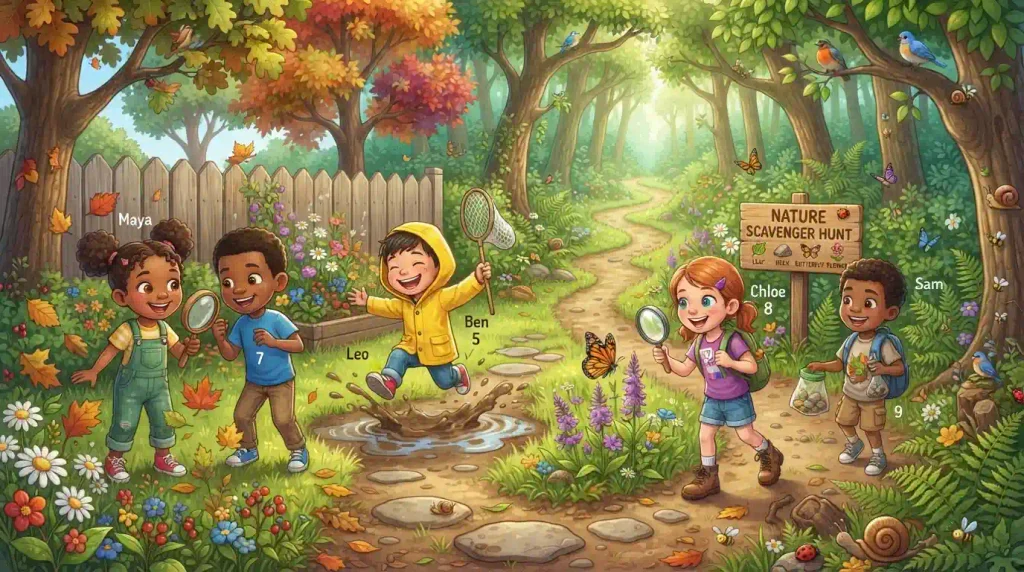
Step outside into nature to unlock an endless playground of sights, sounds, and physical challenges. Nature offers unstructured sensory richness that indoor settings simply cannot replicate.
Backyard Nature Scavenger Hunts
An outdoor scavenger hunt turns a basic backyard walk into a thrilling quest. Create a simple visual checklist with pictures of common natural items for your young explorer to locate.
- Green Leaves: Look for different shapes, sizes, and shades of green on garden plants.
- Smooth Stones: Collect small, rounded rocks from pathways or flower beds.
- Bird Feathers: Spot fallen feathers near trees or bird feeders.
Guide your child gently without rushing them. The goal is not finishing the list quickly, but enjoying the textures, smells, and observations along the path.
Park and Playground Adventures
Public parks offer spacious grounds for running, jumping, and interacting with other children. Introduce equipment gradually, ensuring your child feels secure before trying higher slides or swinging bridges.
Playing on grassy hills teaches balance as children roll down or run upward. Watching bugs, listening to birds, and feeling the breeze build a lasting appreciation for the outdoor world.
The Role of Social Interaction in Early Activities
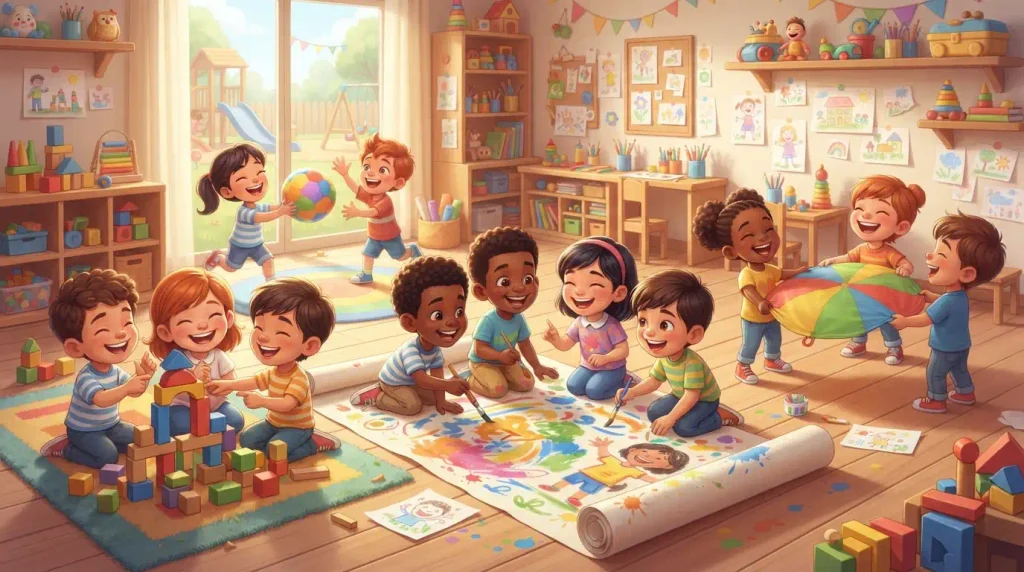
Play is naturally social, providing the primary avenue through which young human beings learn to communicate, share, and empathize with others.
Parallel Play vs. Interactive Play
Very young children often engage in parallel play, sitting near peers and playing with similar toys without interacting directly. This behavior is completely normal and serves as an essential stepping stone toward cooperative play.
Over time, parallel play transitions into interactive play, where children begin sharing items, negotiating roles, and building joint storylines. Supporting this transition with gentle adult guidance helps prevent frustration during shared play sessions.
Teaching Sharing and Cooperation Through Games
Sharing is a complex skill that requires emotional maturity and impulse control. Instead of forcing immediate sharing, use cooperative games where everyone works toward a common, fun goal.
- Pass the Ball: Rolling a soft ball back and forth teaches taking turns in a simple, predictable rhythm.
- Group Parachute Fun: Holding the edges of a small sheet to lift soft toys together builds teamwork naturally.
- Building Together: Creating a tall block tower as a team teaches collaboration and shared achievement.
Creative Arts and Craft Projects
Artistic expression allows young minds to communicate ideas and feelings long before they possess the words to articulate them fully. Focus on the creative process rather than trying to produce a picture-perfect final product.
Finger Painting and Color Mixing
Finger painting provides a rich tactile experience that introduces basic color theory through direct hands-on experimentation. Use non-toxic, washable paints on thick paper tape-sealed onto a tray.
Show your child how combining red and yellow paint instantly creates bright orange. Seeing colors transform right beneath their fingertips feels like pure magic to a young artist.
Play Dough Sculpting
Manipulating soft play dough strengthens tiny hand muscles required for future writing and tool use. Roll the dough into balls, flatten it into pancakes, or use cookie cutters to make fun shapes.
You can make safe, homemade dough using simple kitchen ingredients like flour, salt, water, and vegetable oil. Adding a drop of vanilla extract or cinnamon introduces a delightful scent to the activity.
Storytelling and Imaginary Adventures
Imagination unlocks unlimited entertainment using nothing more than human creativity. Storytelling builds advanced language skills, deepens emotional empathy, and sharpens abstract thinking abilities.
Bringing Storybooks to Life
Reading together becomes far more engaging when you turn book time into an interactive performance. Use distinct character voices, make dramatic sound effects, and invite your child to act out key scenes.
Pause on colorful illustrations to ask open-ended questions like, “Where do you think the little puppy is going next?” This practice converts passive listening into active comprehension and creative dialogue.
Dress-Up and Role-Playing Games
A simple box filled with old hats, scarves, aprons, and oversized shirts provides endless pretend-play possibilities. Role-playing allows children to step into different identities and process real-world scenarios safely.
- Pretend Doctor: Using a toy stethoscope to check teddy bear heartbeats reduces anxiety about real medical visits.
- Grocery Store: Setting up a mini store with empty food boxes teaches basic math, sorting, and polite conversation.
- Firefighter Rescue: Wearing a helmet and using a rolled-up towel as a hose builds courage and problem-solving skills.
Essential Early Play Categories Comparison
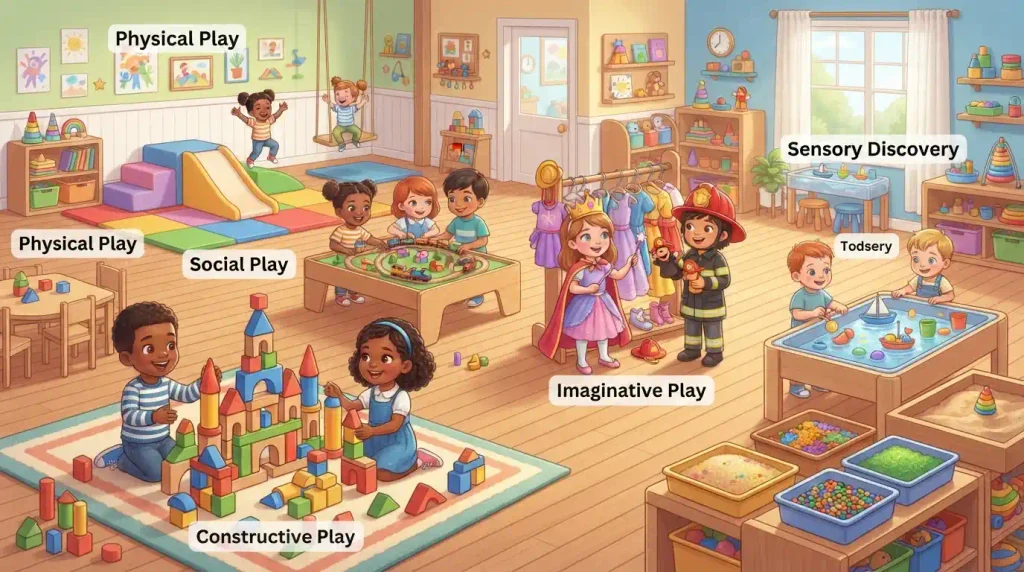
The Essential Early Play Categories Comparison highlights how different play styles target distinct areas of childhood development. Rather than focusing on a single type of activity, offering a balance of sensory tasks, physical movement, and creative expression ensures that a child builds well-rounded cognitive, social, and motor skills. Comparing these core play categories helps parents and educators select the right activity for their child’s specific developmental needs and environment.
Sensory Exploration vs. Gross Motor Play
Sensory stations like water basins or texture boxes focus heavily on fine motor control, tactile processing, and deep concentration in low-energy settings. In contrast, gross motor activities like cushion obstacle courses prioritize large muscle coordination, balance, and spatial awareness, making them ideal for burning off excess energy indoors or outdoors.
Outdoor Nature Discovery vs. Indoor Creative Arts
Outdoor nature hunts foster curiosity, environmental awareness, and observational skills through open-ended exploration of real-world elements like leaves and stones. On the other hand, structured indoor creative projects like finger painting and play dough sculpting emphasize artistic expression, color mixing, and hand-eye coordination within a contained craft space.
Imaginary Role-Playing vs. Cooperative Group Games
Pretend play and dress-up games allow children to explore emotional empathy, language skills, and self-expression through creative storytelling in safe, self-directed spaces. Cooperative group games like passing a ball or parachute fun focus more directly on social boundaries, teaching essential interpersonal concepts like turn-taking, patience, and team collaboration.
Overcoming Common Play Challenges
Not every play session goes smoothly, and that is completely normal. Understanding how to handle boredom, overstimulation, and reluctance ensures that activities remain positive for everyone involved.
Dealing with Short Attention Spans
It is entirely natural for young children to shift focus rapidly from one activity to another. Do not treat short attention spans as a problem; instead, keep activities flexible and modular.
When a child loses interest in an activity, transition smoothly to something new without forcing them to finish. Following their natural lead keeps enthusiasm high and prevents unnecessary tantrums.
Managing Overstimulation and Meltdowns
Bright lights, loud noises, and complex rules can quickly overwhelm a child’s sensory system. Signs of overstimulation include sudden irritability, covering eyes or ears, or complete emotional withdrawal.
- Create a Quiet Corner: Set up a cozy space with soft pillows, plush animals, and dim lighting for calming down.
- Simplify the Setup: Reduce the number of toys available at one time to minimize visual clutter.
- Lower the Energy: Transition to quiet activities like gentle book reading or soft music when energy levels spike too high.
Technology vs. Hands-On Traditional Play

Digital screens and interactive apps are widespread today, but physical, hands-on play remains irreplaceable for healthy early development.
The Limits of Screen-Based Entertainment
While educational apps can teach basic recognition skills, they lack the three-dimensional tactile feedback required for deep spatial understanding. Screens offer passive consumption, whereas physical objects demand active manipulation, trial, and physical correction.
Excessive screen time during early years can also reduce opportunities for essential face-to-face social bonding and physical exercise. Balancing digital exposure with abundant physical play protects healthy growth.
Integrating Tech Thoughtfully
If you choose to include technology, treat it as a secondary tool that supplements real-world exploration rather than replacing it.
Use screens interactively by watching short videos about animals or outer space, then immediately moving to an offline craft or pretend-play game based on what you watched together. This hybrid approach keeps human connection and physical movement at the center of learning.
Practice Exercise
Play & Child Development
- What primary chemical does the brain release during joyful play that strengthens memory and learning?
A. Cortisol
B. Dopamine
C. Melatonin
D. Insulin - Which type of play involves children sitting near each other with similar toys without direct interaction?
A. Competitive play
B. Parallel play
C. Cooperative play
D. Digital play - What is the primary developmental benefit of manipulating play dough?
A. Improving reading speed
B. Strengthening fine motor hand muscles
C. Increasing physical height
D. Enhancing long-term vision - Which indoor setup is best for developing gross motor skills and physical balance?
A. Reading a storybook
B. A simple sensory bin
C. An indoor cushion obstacle course
D. Quiet dress-up play - Why are open-ended classic toys often preferred over single-use electronic toys?
A. They cost much more money
B. They encourage higher levels of imagination and creative thinking
C. They require batteries to operate properly
D. They prevent children from moving around
Creative Play & Exploration
- What part of the brain governs creative problem-solving and focus during play?
A. The occipital lobe
B. The prefrontal cortex
C. The brainstem
D. The spinal cord - What should you do if a child shows signs of overstimulation during play?
A. Add more loud toys to distract them
B. Transition to a quiet, simplified space with soft lighting
C. Force them to finish the game immediately
D. Turn on bright overhead lights and television shows - How does water play secretly benefit a child’s early conceptual understanding?
A. It teaches complex computer coding
B. It introduces basic ideas of volume, gravity, and fluid motion
C. It replaces the need for sleep
D. It eliminates the need for adult supervision - What is the main focus when introducing art and craft activities to young children?
A. Producing a perfect, gallery-ready painting
B. Completing the project as quickly as possible
C. Enjoying the creative process and sensory discovery
D. Following strict, rigid adult instructions without variation - What type of activity best combines observation, physical exercise, and natural discovery?
A. Watching cartoons on a tablet
B. A backyard nature scavenger hunt
C. Sitting quietly on a couch
D. Playing a handheld video game
Answer Key
1. C | 2. A | 3. D | 4. B | 5. C | 6. A | 7. D | 8. B | 9. C | 10. A
FAQs
What age is best to start structured play activities?
You can start introducing simple sensory and physical play from infancy. As babies grow into toddlers, you can gradually introduce structured games, obstacle courses, and basic craft projects matched to their developing motor skills.
How long should an early play session last?
Early play sessions should typically last anywhere from 10 to 30 minutes depending on the child’s age and interest level. Young children naturally move between activities, so keep setups flexible and allow frequent breaks.
How can I make play fun without buying expensive toys?
You can easily create amazing activities using everyday household items like cardboard boxes, plastic tubs, cushions, and kitchen utensils. Children often find open-ended household objects far more fascinating than commercial toys.
What are the best outdoor activities for early explorers?
Simple outdoor activities like nature scavenger hunts, bubble chasing, puddle jumping, and park playground visits are fantastic. These outdoor options build physical strength, environmental awareness, and spatial coordination naturally through.
Is screen-based play suitable for very young children?
Hands-on play helps children build physical, thinking, and social skills through real-world experiences. If you use digital media, keep screen sessions brief, select age-appropriate quality content, and watch together while actively engaging with your child.
Conclusion
Creating a memorable first fun experience for young learners is one of the most rewarding journeys you can undertake as a parent, caregiver, or educator. By focusing on simple setups, rich sensory exploration, and low-pressure environments, you give children the perfect foundation to explore the world with absolute confidence.
Remember that early developmental play does not require expensive equipment or perfection; it thrives on warmth, safety, creative freedom, and genuine human connection. Every laughter-filled moment of your child’s first fun helps build essential neural connections that support future academic success and emotional well-being.
Start small today by setting up a simple sensory bin or an indoor cushion course! Take that exciting first step, embrace the joyful moments, and give your little one a wonderful first fun adventure that transforms ordinary afternoons into lifelong memories.

Ghzala Rani is the creator and writer behind Funzonest.com, a website dedicated to making everyday topics more enjoyable, interesting, and easy to understand. With a passion for engaging content, Ghzala focuses on creating helpful articles that inform, entertain, and provide readers with useful ideas and insights.
Through Funzonest.com, Ghzala Rani aims to build a friendly online space where readers can discover fresh content and explore topics presented in a simple and enjoyable way. Her writing style focuses on clarity, originality, and reader value. She is committed to publishing well-researched and engaging content that keeps visitors informed while making their time on the website enjoyable.