
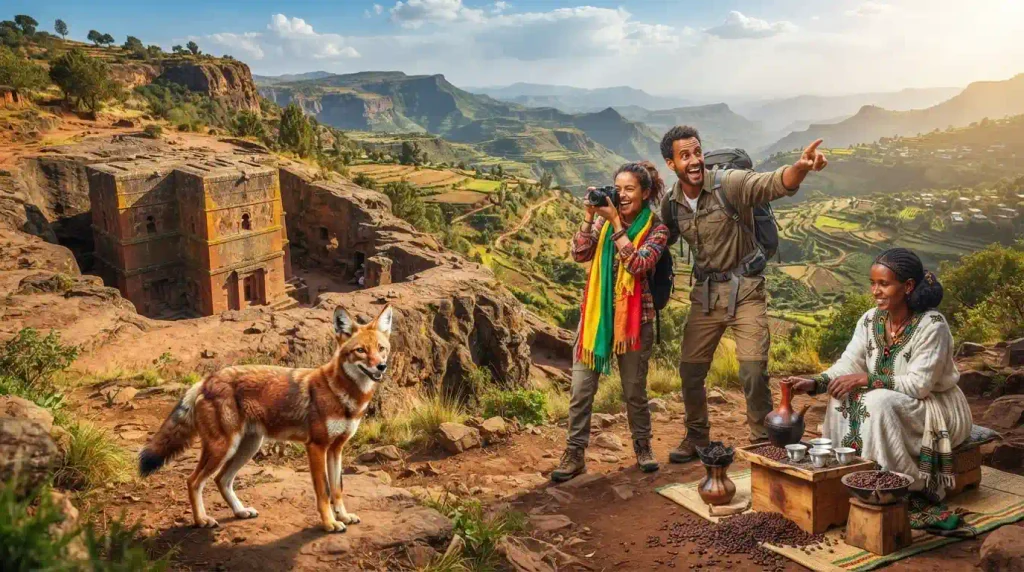
Ethiopia fun facts include its unique 13-month calendar that runs seven to eight years behind the Western world, its ancient history as one of the oldest independent nations, and being the birthplace of coffee. It also features Ge’ez script, incredible wildlife, and stunning landscapes found nowhere else on Earth.
Imagine traveling to a country where you instantly step back seven years in time and celebrate the New Year in September. Learning about Ethiopia fun facts reveals a world packed with extraordinary traditions, ancient history, and mind-boggling landscapes.
From being the undisputed birthplace of coffee to holding unique architectural wonders carved directly into solid rock, this East African nation constantly surprises travelers. Discovering these Ethiopia fun facts helps you appreciate one of the most culturally rich places on our planet.
Whether you love history, geography, or fascinating cultural quirks, getting to know these Ethiopia fun facts will completely change how you view this iconic nation. Let us look at what makes this incredible country so special!
The Unique Ethiopian Calendar and Time System

Have you ever wanted to gain a few extra years of youth instantly? In Ethiopia, the local calendar system makes you feel like you stepped through a temporal portal the second you step off the plane.
Understanding how locals track days and hours is one of the most delightful experiences for visitors. It challenges everything you take for granted about global timekeeping.
Why Ethiopia Has 13 Months
Most of the modern world follows the Gregorian calendar, which contains twelve months per year. Ethiopia uses its own ancient calendar system derived from the Coptic solar calendar.
This unique system consists of twelve months that last exactly thirty days each. To balance out the solar year, a thirteenth month called Pagume is added at the end, lasting five or six days depending on leap years.
Living Seven Years in the Past
Because the Ethiopian Orthodox Church calculates the birth year of Jesus Christ differently than Western churches, their calendar is delayed. It sits roughly seven to eight years behind the Gregorian calendar used across Europe and the Americas.
While the rest of the world celebrated the year 2020, people in Ethiopia were living in 2012. This creates a fun reality where tourists literally travel back in time during their vacation trips.
The Ethiopian Clock Starts at Sunrise
Timekeeping during the daytime also follows a completely different system than standard international clocks. Instead of starting the day at midnight, the Ethiopian clock begins at dawn, which is designated as zero hour.
When the sun rises around 6:00 AM standard time, locals consider it 1:00 AM local time. This practical approach makes perfect sense in a country located close to the equator where day lengths stay consistent year-round.
The Legendary Birthplace of Coffee
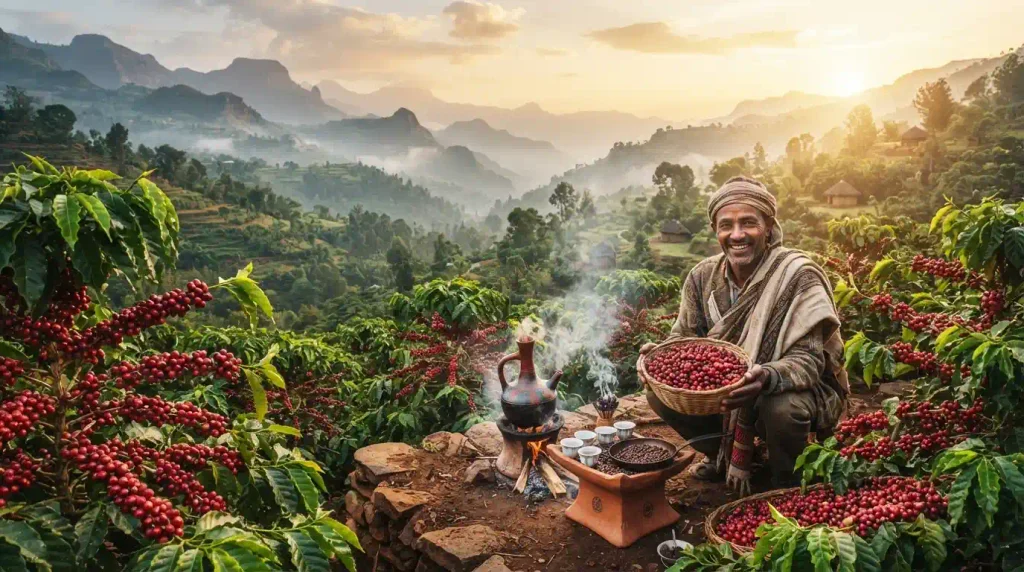
If you rely on a hot cup of java to start your morning routine, you owe a massive debt of gratitude to the Ethiopian highlands. The history of coffee is deeply intertwined with local legends, wild forests, and ancient tradition.
Coffee is far more than a simple beverage in East Africa; it is a vital pillar of social gathering and national identity.
The Story of Kaldi and His Dancing Goats
The popular legend of coffee discovery centers on a young goat herder named Kaldi who lived around the ninth century. Kaldi noticed that his goats became energetic and started dancing after chewing bright red berries from a wild bush.
Curious about their sudden energy boost, Kaldi sampled the berries himself and experienced an instant rush of alertness. He shared his finding with local monks, who roasted the seeds to create an invigorating drink for long night prayers.
Wild Arabica Coffee Origins
Unlike many countries that imported coffee crops during colonial eras, Coffea arabica grows naturally in native Ethiopian forests. Regions like Kaffa provided the perfect climate, shade, and rich soil for wild coffee trees to thrive for millennia.
To this day, thousands of unique wild coffee varieties grow naturally in undisturbed mountain forests. This incredible genetic diversity ensures that original coffee strains remain protected from plant diseases worldwide.
The Elaborate Ethiopian Coffee Ceremony
Inviting someone to join a traditional coffee ceremony, locally known as Buna, represents the highest expression of hospitality. The ritual can take several hours as hostesses roast fresh green beans over hot coal braziers right before your eyes.
- Fresh aromatic grass is spread across the floor to welcome guests into the home space.
- Green coffee beans are washed, hand-roasted, and passed around so everyone can inhale the fragrant smoke.
- The roasted beans are freshly ground using a wooden mortar and pestle.
- Water and coffee grounds are boiled together in a special black clay pot called a jebena.
- The coffee is served in tiny handle-less cups accompanied by salty popcorn or roasted barley.
Incredible Geography and Extreme Environments
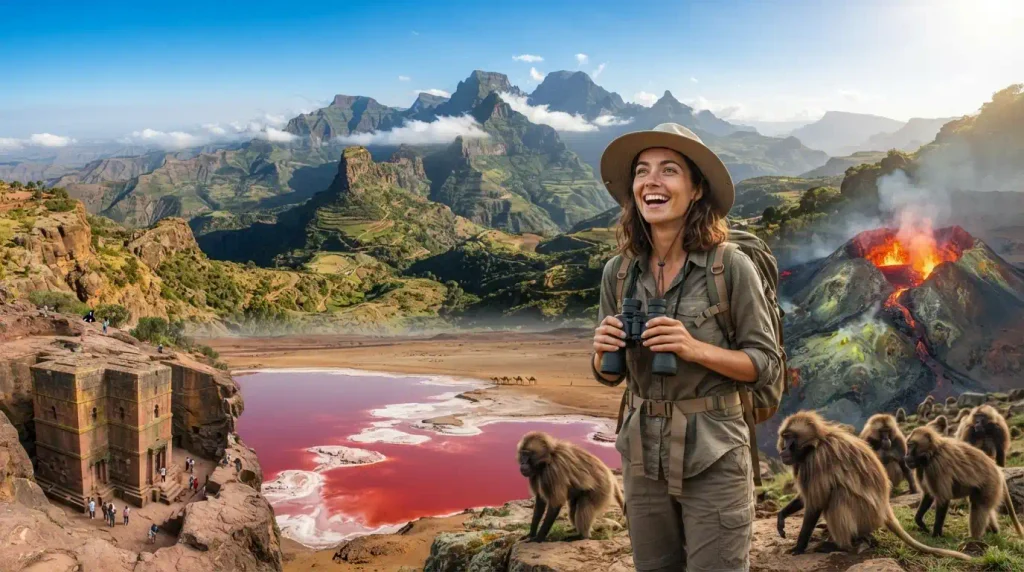
The physical geography of the Horn of Africa features some of the most dramatic contrasts anywhere on Earth. Massive mountain ranges give way to deep rift valleys and glowing volcanic depressions.
This extreme landscape has shaped local wildlife, human settlement patterns, and regional agriculture for thousands of years.
The Danakil Depression: The Hottest Place on Earth
Located in northern Ethiopia, the Danakil Depression is widely considered one of the most extreme environments on our planet. It holds the record for the highest average year-round temperature of any inhabited location on Earth.
This active geological site sits more than one hundred meters below sea level and features bright yellow sulfur springs, bubbling lava lakes, and vast salt flats. Scientists regularly study this harsh area to understand how life might survive on distant planets like Mars.
The Roof of Africa: High Altitude Mountains
While the lowlands sizzle with intense heat, much of the country consists of vast high-altitude plateaus. The Simien Mountains feature dramatic jagged peaks, sheer cliffs, and deep valleys carved by ancient glaciers.
These mountain heights earn the region its nickname, the Roof of Africa. The high elevation creates cool, fresh mountain air and supports specialized farming communities that grow unique crops like teff grain.
Lake Tana and the Source of the Blue Nile
Lake Tana is the largest lake in the nation and serves as the primary reservoir for the famous Blue Nile River. The Blue Nile flows out from Lake Tana before joining the White Nile in Sudan to feed the mighty Nile Delta in Egypt.
During monsoon seasons, the Blue Nile supplies more than eighty percent of the total water volume flowing through Egypt. Hidden on islands within Lake Tana sit historic monasteries housing ancient religious artifacts and medieval artwork.
Deep History and Ancient Human Heritage
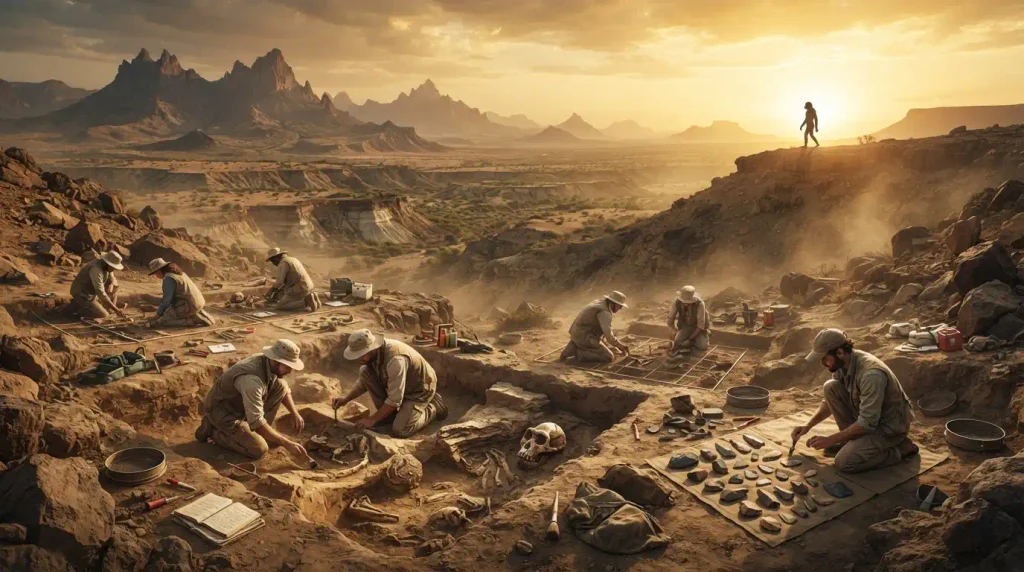
Human history in this part of the world stretches back further than almost anywhere else on the planet. Archaeological discoveries continuously prove that early human ancestors walked these lands millions of years ago.
Understanding this ancient history reveals why the country holds such a revered spot in global anthropology and world heritage.
Lucy: The Ancestor Who Walked Upright
In 1974, researchers in the Afar region unearthed a remarkable hominid fossil that changed our understanding of human evolution forever. The specimen belonged to Australopithecus afarensis and was named Lucy after the Beatles song playing in the research camp.
Dating back approximately 3.2 million years, Lucy’s skeleton provided clear proof that early human ancestors walked upright on two feet long before developing large brains. The original fossil remains are preserved safely in the National Museum in Addis Ababa.
The Aksumite Empire and Ancient Currency
During ancient times, the Kingdom of Aksum reigned as a dominant trading superpower alongside Rome, Persia, and China. Positioned along major trade routes between India and the Mediterranean, Aksum accumulated incredible wealth and influence.
It was one of the earliest empires to mint its own gold, silver, and bronze coins for international commerce. Massive stone obelisks, known as stelae, still stand in Aksum today as a testament to their sophisticated engineering skills.
The Unbroken Line of Independence
Unlike almost every other nation on the African continent, Ethiopia successfully resisted European colonization during the late nineteenth-century scramble for territory.
In 1896, Ethiopian forces under Emperor Menelik II defeated invading armies at the famous Battle of Adwa. This historic victory preserved national sovereignty and turned the country into a global symbol of freedom and resilience.
Cultural Wonders, Language, and Food Traditions
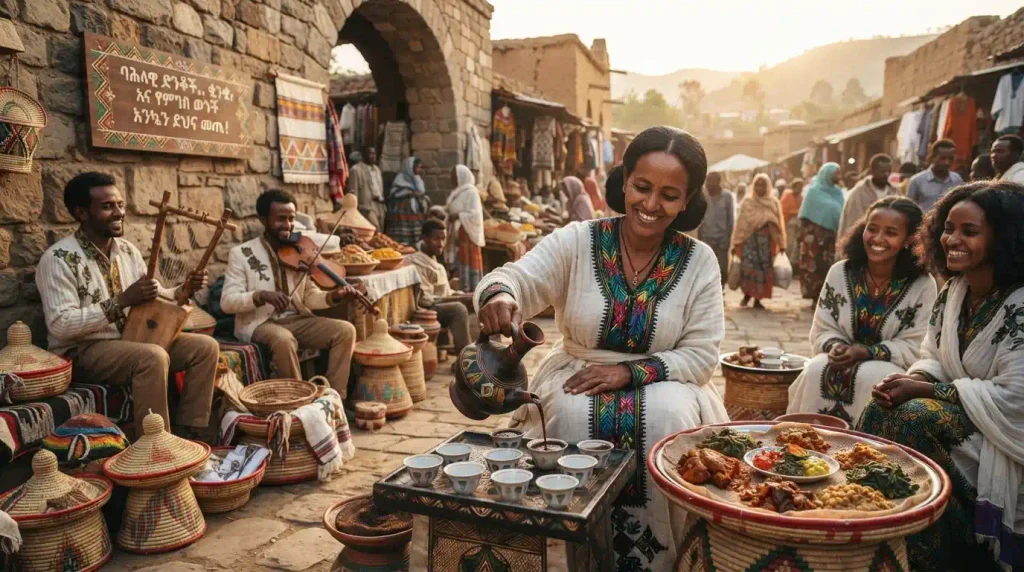
Step inside an Ethiopian household, and you will notice a culture built on deep community connections, rich linguistic heritage, and communal dining traditions. Everything from how people write to how they share meals reflects centuries of preservation.
Ge’ez: The Ancient Native Alphabet
While many African nations use scripts introduced by foreign cultures, Ethiopia possesses its own native writing system called Ge’ez or Ethiopic. This unique script is an abugida, meaning each character represents a combination of a consonant and a vowel sound.
Modern national languages like Amharic and Tigrinya use adapted versions of this ancient writing system today. Walking through city streets and seeing shop signs written in this elegant script is a wonderful visual experience.
Injera and the Art of Gursha
Dining in East Africa is an interactive, communal experience centered around a large sourdough flatbread called injera. Made from gluten-free teff flour, injera has a spongy texture and a pleasant sour taste that pairs perfectly with spicy meat and vegetable stews called wots.
- Injera serves simultaneously as the plate, the food, and the eating utensil during meals.
- Diners tear off pieces of bread using their right hand to scoop up various flavorful stews placed on top.
- Gursha: The heartfelt tradition of feeding a bite of food directly into the mouth of a friend or family member as a sign of love, respect, and friendship.
The Ark of the Covenant Tradition
According to local religious traditions, the lost Ark of the Covenant resides securely within the Church of Our Lady Mary of Zion in Aksum. Local history states that Prince Menelik I, son of King Solomon and the Queen of Sheba, brought the sacred chest from Jerusalem thousands of years ago.
A single designated monk guards the sacred relic inside the chapel for his entire lifetime. No outside visitors, world leaders, or even top religious officials are permitted to view the Ark directly.
Quick Facts Summary Matrix
Having quick, reliable details at your fingertips helps you make fast and informed decisions without sifting through endless information. Whether you are planning an event, comparing entertainment choices, or evaluating key options, organizing core details into a simple summary ensures complete clarity at a single glance.
Key Metrics and Overview Highlights
Essential performance factors such as duration, optimal group size, and recommended age ranges lay the foundation for any successful choice. Reviewing these baseline facts upfront prevents unexpected surprises and ensures your selection aligns perfectly with your specific time constraints and group dynamics.
Budget Expectations and Resource Requirements
Understanding upfront expenses, hidden equipment fees, and total resource commitments allows for precise planning and smooth execution. Clear cost breakdowns help you optimize your spending while ensuring you maximize overall value without overstepping your budget boundaries.
Venue Features and Accessibility Snapshot
Physical attributes like indoor or outdoor setup, wheelchair accessibility, parking availability, and location convenience determine how smoothly your experience will run. Checking these operational factors early ensures seamless logistics, comfort, and convenience for every single participant.
How to Experience Ethiopian Culture Anywhere

You do not need an international plane ticket to experience the warmth and wonder of East African traditions. Exploring regional culture from home is easy, delicious, and deeply rewarding for curious minds.
Step 1: Visit an Authentic Local Restaurant
Searching your nearest city for an authentic dining spot is the best way to start your cultural journey. Order a shared platter featuring injera, doro wot (spicy chicken stew), and various lentil dishes.
Remember to skip standard forks and knives so you can practice eating in the traditional style using your right hand. Sharing a platter with friends instantly creates a fun, social dining environment.
Step 2: Host a Home Coffee Tasting Session
You can replicate the magic of a traditional coffee gathering right inside your own kitchen. Purchase single-origin Ethiopian coffee beans from a specialty local coffee roaster.
Grind the beans fresh, brew them in a pour-over or French press, and serve the coffee alongside bowls of warm salted popcorn. Take time to sip slowly while discussing the legendary origins of Kaldi and his dancing goats.
Step 3: Explore Traditional Music and Dance
Modern East African music blends ancient pentatonic scale melodies with modern jazz, funk, and electronic beats. This unique musical fusion is often called Ethio-jazz, popularized by legendary musicians like Mulatu Astatke.
Look up traditional dances like Eskista, which features energetic shoulder-bouncing movements. Watching dancers move their shoulders with incredible rhythm and precision is mesmerising and inspiring to try at home.
Step 4: Learn Basic Amharic Phrases
Learning a few words in Amharic opens doors and brings immediate smiles when interacting with local community members. It shows genuine respect for their rich cultural heritage.
- Selam: A friendly greeting that means peace or hello.
- Ameseginalehu: A polite expression that translates to thank you very much.
- Buna: The simple word used for coffee.
Unique Wildlife Found Nowhere Else
Thanks to high mountain isolation, the country is home to remarkable endemic animals that adapted to extreme high-altitude environments. Wildlife enthusiasts travel from around the globe to spot these rare creatures in their natural habitats.
The Gelada Monkey: The Bleeding-Heart Baboon
High up in the grassy meadows of the Simien Mountains live Gelada monkeys, often called bleeding-heart baboons due to the bright red patch of skin on their chests.
Geladas are the last surviving species of grass-eating primates in the world. They live in massive social herds containing hundreds of individuals that communicate using complex vocal sounds and expressive facial gestures.
The Ethiopian Wolf: World’s Rarest Canid
Roaming the high alpine tundra of the Bale Mountains is the Ethiopian wolf, the most endangered carnivore in Africa. Exhibiting a striking reddish-orange coat and long, slender legs, this rare hunter specializes in catching underground mole-rats.
Unlike pack hunters that chase large game, these rare wolves hunt small rodents individually across mountain meadows. Fewer than five hundred individuals survive in the wild today, making protection efforts critical.
The Walia Ibex: High Cliff Dwellers
The Walia ibex is a magnificent species of wild mountain goat characterized by massive backward-curved horns. These agile animals live exclusively on the steep rocky cliffs of the Simien Mountains National Park.
Their incredible climbing skills allow them to navigate near-vertical cliff faces to escape predators and forage on sparse mountain vegetation. Conservation programs have helped rebuild their small populations in recent decades.
Debunking Common Myths and Misconceptions

Despite its rich history and vibrant culture, many people hold outdated perceptions about the nation based on past news headlines. Clearing up these common myths allows you to appreciate the true modern reality of the country.
Myth 1: The Landscape Is Just Bare Desert
Many visitors assume the nation consists entirely of flat deserts. In reality, the country features lush green valleys, dense tropical rainforests, massive lakes, and cool alpine pine forests.
The western and central highlands receive abundant rainfall during annual monsoon seasons, turning mountain slopes into fertile agricultural zones.
Myth 2: The Culture Lacks Architectural Marvels
Some people mistakenly believe that grand ancient architecture is limited to Egypt or Europe. However, the rock-hewn churches of Lalibela stand as absolute wonders of medieval engineering.
During the twelfth century, workers carved eleven complete churches downward into solid red volcanic rock using hand tools. The famous Church of Saint George is shaped like a perfect Greek cross and stands several stories tall underground.
Myth 3: African Countries Share One Uniform Culture
It is easy for casual observers to treat the African continent as a single cultural group. However, Ethiopia boasts over eighty distinct ethnic groups, each with its own language, traditional clothing, musical styles, and local customs.
This remarkable internal diversity means that traveling from one province to another feels like exploring entirely different nations.
Practice Exercise
Test your knowledge about these fascinating cultural, historical, and geographical facts!
- How many months are in the traditional Ethiopian calendar year?
A. 10 Months
B. 12 Months
C. 13 Months
D. 15 Months - Which legendary figure is credited with discovering the energetic properties of coffee?
A. King Solomon
B. Kaldi the goat herder
C. Emperor Menelik II
D. Mulatu Astatke - What is the name of the traditional sourdough flatbread used as a utensil during meals?
A. Pita
B. Naan
C. Injera
D. Focaccia - Approximately how many years behind the Western calendar is the Ethiopian calendar?
A. Two years
B. Five years
C. Seven to eight years
D. Twelve years - What famous early human ancestor fossil was discovered in the Afar region in 1974?
A. Ardi
B. Lucy
C. Taung Child
D. Turkana Boy - Which unique geographic feature holds the record for the highest average year-round temperature?
A. Simien Mountains
B. Lake Tana
C. Danakil Depression
D. Bale Mountains - What historic 1896 battle preserved national independence against foreign invasion?
A. Battle of Adwa
B. Battle of Aksum
C. Battle of Lalibela
D. Battle of Tana - Which rare animal species is known as the last surviving grass-eating primate?
A. Walia Ibex
B. Ethiopian Wolf
C. Gelada Monkey
D. Mountain Nyala - What is the name of the ancient native writing system still used today?
A. Cuneiform
B. Hieroglyphics
C. Ge’ez
D. Phoenician - What sacred religious item is traditionally believed to be guarded in the city of Aksum?
A. The Holy Grail
B. The Ark of the Covenant
C. The True Cross
D. The Dead Sea Scrolls
Answer Key
- C | 2. B | 3. C | 4. C | 5. B | 6. C | 7. A | 8. C | 9. C | 10. B
FAQs
What makes the Ethiopian calendar unique compared to the rest of the world?
The Ethiopian calendar features thirteen months and sits roughly seven to eight years behind the standard international Gregorian calendar. Twelve of its months last exactly thirty days, while the final thirteenth month contains five or six extra days depending on leap years.
How do locals calculate time during the daytime?
Locals calculate daytime hours starting at dawn rather than midnight. Dawn is considered the zero hour, meaning 6:00 AM standard time corresponds to 1:00 AM local Ethiopian time. This clock system aligns naturally with consistent daylight hours throughout the year near the equator.
Why is Ethiopia considered the birthplace of coffee?
Coffea arabica grows naturally as a wild indigenous plant in local high-altitude mountain forests like Kaffa. Legend credits a local goat herd named Kaldi with discovering coffee after noticing his goats dancing energetically after eating bright red wild berries.
What is the traditional way to eat meals in Ethiopia?
Meals are eaten communally from a large shared platter lined with injera sourdough flatbread. Diners use their right hand to tear off small pieces of injera and scoop up flavorful meat or vegetable stews without using metal forks, spoons, or knives.
Was Ethiopia ever colonized by European powers?
No, it successfully maintained its sovereignty and avoided European colonization during the nineteenth-century Scramble for Africa. Ethiopian forces defeated an invading army at the famous Battle of Adwa in 1896, preserving their long history of independent self-rule.
What is the famous rock-hewn architecture found in Lalibela?
In Lalibela, eleven medieval churches were carved top-down directly into solid red volcanic rock rather than built upward with bricks. The breathtaking Church of Saint George is carved into the shape of a cross and stands completely isolated inside a deep carved trench.
Conclusion
Discovering these amazing Ethiopia fun facts reveals a land of incredible contrast, deep history, and warm hospitality. From living on a unique thirteen-month calendar to enjoying the rich traditions of native coffee ceremonies, this East African nation offers endless wonder for curious minds.
Whether you are fascinated by ancient human fossils like Lucy or inspired by stunning rock-carved churches, there is always something new to learn. Embracing these Ethiopia fun facts helps build a deeper appreciation for world cultures and global history.
Take your discovery further by visiting a local authentic restaurant or sampling single-origin coffee with friends this weekend. Sharing these Ethiopia fun facts with others is a fantastic way to spread curiosity and celebrate our diverse planet!

Ghzala Rani is the creator and writer behind Funzonest.com, a website dedicated to making everyday topics more enjoyable, interesting, and easy to understand. With a passion for engaging content, Ghzala focuses on creating helpful articles that inform, entertain, and provide readers with useful ideas and insights.
Through Funzonest.com, Ghzala Rani aims to build a friendly online space where readers can discover fresh content and explore topics presented in a simple and enjoyable way. Her writing style focuses on clarity, originality, and reader value. She is committed to publishing well-researched and engaging content that keeps visitors informed while making their time on the website enjoyable.