
Integrating fun and learning strategies combines interactive games, hands-on crafts, storytelling, and real-world experimentation to make acquiring new skills enjoyable, boosting memory retention, critical thinking, and lifelong curiosity for learners of all ages without feeling like tedious chore work.
Have you ever noticed how easily children remember every single detail of their favorite game while struggling to memorize a plain list of facts? Bringing a fun-and-learn approach into daily routines transforms tough lessons into exciting personal discoveries.
When you pair active play with real-world practice, a fun and learn mindset keeps curiosity alive for both kids and adults. Adopting a fun and learn lifestyle turns ordinary study sessions into joyful adventures that naturally boost confidence, creativity, and long-term memory!
The Science of Playful Education and Cognitive Growth

Learning works best when your brain actively enjoys the process instead of feeling stressed or bored. When you participate in enjoyable activities, your brain releases dopamine, a chemical that improves focus, mood, and memory formation.
Neuroscientists have shown that positive emotions strengthen neural connections in the brain. That means you absorb complex ideas faster and retain them longer when learning feels like playing a game with friends.
Traditional rote memorization often causes mental fatigue and anxiety, which blocks creative problem-solving skills. Playful educational methods lower stress levels, allowing your brain to process new information with open curiosity and enthusiasm.
How Dopamine Fuels Brain Connections
Dopamine acts as a natural signal amplifier inside your central nervous system. When an activity feels rewarding, dopamine signals to your brain that this specific information is worth saving for future use.
This natural chemical reaction turns passive listening into active brain engagement. As a result, concepts learned during cheerful moments stick in your long-term memory much more effectively.
Lowering Cognitive Load Through Playful Tasks
Cognitive load refers to the total amount of mental effort being used in your working memory at any given moment. Complex instructions presented in boring ways can easily overwhelm a beginner’s mental processing capacity.
Gamifying lessons breaks heavy subjects into bite-sized, digestible pieces that feel easy to tackle. By turning lessons into step-by-step challenges, learners build understanding without feeling mentally drained or frustrated.
The Power of Trial and Error in Safe Spaces
Play creates a risk-free environment where making a mistake carries no scary penalties or negative consequences. When losing a point in a game is your worst outcome, you naturally feel free to test bold ideas.
This freedom to experiment fosters resilience and flexible thinking habits. Learners discover that mistakes are simply helpful clues that guide them toward finding the right solution.
Core Pillars of Gamified Study Methods

Gamification means taking the core elements of popular games and applying them to educational subjects. You do not need expensive video games or high-tech gear to make study sessions feel like rewarding quests.
Using simple mechanics like points, timers, visual progress trackers, and friendly competitions changes the energy of any room instantly.
Interactive Challenges and Story Quests
Framing a boring assignment as a heroic mission sparks immediate imagination and interest. For example, instead of completing ten basic math problems on paper, frame the task as unlocking secret codes to escape a hidden dragon cave.
Storytelling turns abstract numbers and facts into relatable adventures. Learners become active heroes working toward clear goals rather than passive listeners sitting silently at desks.
Immediate Feedback and Reward Loops
Video games keep players hooked because they provide instant feedback after every action. You know right away whether your jump landed safely or missed the target platform.
Applying fast feedback to learning helps correct misunderstandings before bad habits take root. Small rewards like colorful stickers, custom badges, or bonus free time validate effort and maintain high motivation levels.
Friendly Group Competitions and Team Quests
Working alongside teammates builds strong social skills, cooperation habits, and clear communication techniques. Group trivia games, spelling relays, and team-building challenges encourage players to support one another’s progress.
Friendly competition adds healthy excitement without creating toxic pressure. Celebrating shared victories teaches players to appreciate team contributions and learn gracefully from occasional losses.
Hands-On DIY Projects for Home and Classroom
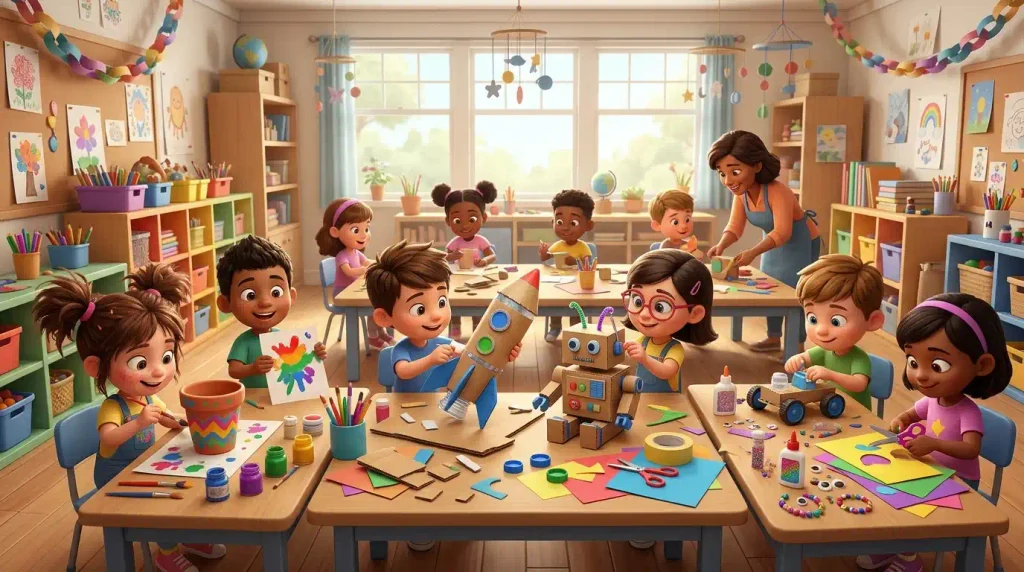
Physical building projects bridge the gap between abstract textbook theories and real-world physical reality. Constructing models using household items lets learners see, touch, and test scientific principles directly.
Here are engaging hands-on projects that demonstrate foundational concepts in science, art, and engineering.
Kitchen Science: Chemical Reaction Volcanoes
Mixing simple kitchen staples like baking soda, warm water, and dish soap inside a plastic bottle creates an instant fizzing reaction. Adding red food coloring and pouring in vinegar triggers a bubbly eruption that simulates real volcanic lava flows.
This classic experiment demonstrates acid-base chemical reactions in a visually stunning way. It prompts young scientists to ask questions about gas pressure, chemical changes, and natural earth structures.
- Measure three tablespoons of baking soda into an empty plastic bottle.
- Add a few drops of dish soap and red food coloring for thick foam effects.
- Place the bottle on a wide tray or outdoors on a dirt patch to catch overflows.
- Pour one cup of white vinegar directly into the bottle opening and step back to watch the eruption.
Paper Bridge Engineering Challenges
Challenge learners to construct a sturdy bridge spanning an eight-inch gap using only two sheets of plain paper and clear tape. Test each bridge design by placing penny coins one by one on the center deck until the structure buckles.
This simple activity introduces structural engineering concepts like tension, compression, and weight distribution. Builders quickly learn that folding paper into accordions or triangular tubes drastically increases load-bearing strength.
Backyard Solar Ovens Made from Pizza Boxes
Convert a clean cardboard pizza box into a solar cooker using aluminum foil, black construction paper, and clear plastic wrap. Angle the foil flap to reflect sunlight directly through the plastic cover onto a marshmallow or slice of cheese inside.
This solar project visually demonstrates renewable solar thermal energy and heat absorption principles. Learners observe how dark colors trap solar heat while reflective surfaces redirect sunlight effectively.
Digital Tools and Interactive Educational Apps

Modern digital devices offer incredible opportunities for self-paced learning when used thoughtfully. Educational mobile apps and online platforms use vivid graphics, sound effects, and adaptive algorithms to tailor lessons to individual skill levels.
Balancing screen time with physical play ensures that digital learning tools remain a healthy, productive part of daily life.
Adaptive Learning Algorithms for Personalized Math
Adaptive educational platforms analyze how quickly and accurately a user solves practice questions. If a player masters addition quickly, the app automatically transitions to multiplication challenges without causing boredom.
Conversely, if a learner struggles with fractions, the software offers gentle step-by-step visual hints and easier review questions. This personalized pacing prevents frustration and ensures steady, confident growth.
Virtual Museum Tours and Digital World Exploration
High-definition interactive maps and digital museum archives bring historical landmarks straight into your living room. You can walk through ancient Egyptian pyramids, examine space rockets up close, or explore deep ocean trenches virtually.
Visual exploration makes history and geography feel vivid, colorful, and real. Seeing artifacts in three-dimensional digital space sparks curious questions that drive deeper research and reading habits.
Coding Games That Teach Logic and Syntax
Child-friendly programming games use visual drag-and-drop code blocks to move characters across maze boards. Players learn fundamental programming logic like loops, conditional statements, and debugging sequences without typing complex text code.
Solving coding mazes builds analytical reasoning skills that apply far beyond computer screens. It teaches minds to break giant problems into logical, step-by-step instructions.
Adapting Activities for Different Age Groups

A game that captivates a four-year-old child will likely bore a middle school student or an adult learner. Matching the complexity, pacing, and theme of an activity to your audience’s age ensures active participation.
Understanding developmental stages helps you select or adjust activities for maximum engagement and fun.
Early Childhood: Sensory Exploration and Music
Preschoolers learn primary concepts through physical senses, movement, rhyming songs, and simple touch interactions. Sorting colored plastic blocks, singing counting songs, and tracing alphabet letters in tray sand build foundational skills naturally.
Keep activities short, bright, and physical for young learners. Frequent movement breaks and playful praise keep their natural curiosity flowing without causing sensory fatigue.
Elementary Age: Structured Games and Building Kits
Children in elementary grades thrive on clear rules, goal-oriented tasks, building projects, and friendly team challenges. Card games that require basic mental math, board games involving strategy, and Lego building projects are ideal picks.
Encourage elementary learners to design their own rules for existing games. Creating custom rules fosters deep analytical thinking, fairness discussions, and creative problem-solving skills.
Teens and Adults: Complex Strategy and Real Simulations
Teens and adult learners enjoy complex strategy games, real-world simulations, escape room puzzles, and hands-on maker challenges. Activities that involve budgeting money, designing working mechanical devices, or debating current events offer satisfying mental workouts.
Relating new skills directly to real-world career interests or personal hobbies maintains strong engagement. Adult learners appreciate seeing immediate practical value in every concept they master through play.
Building a Supportive Environment at Home
Creating a space that encourages active curiosity takes more than just buying toys and downloading software apps. The physical setup of your room and the emotional culture you build dictate how freely learners explore.
Here are simple environment design principles that make daily discovery a natural, ongoing habit.
Organizing Accessible Craft and Reading Stations
Store art supplies, building blocks, puzzle boxes, and colorful books on low open shelves where learners can reach them independently. When materials are visible and easy to grab, spontaneous creative play happens naturally throughout the day.
Rotate items every few weeks to keep the environment feeling fresh and surprising. Bringing out forgotten puzzle sets or fresh drawing papers revives interest without needing new purchases.
Normalizing Mistakes as Helpful Progress Signs
How adults react to failed attempts shapes a learner’s willingness to try difficult tasks in the future. Instead of showing disappointment over a broken model or wrong answer, respond with calm interest and helpful questions.
Ask open questions like, “What do you think happened to the paper bridge when we added that heavy coin?” Treating mistakes as interesting experiments removes fear and builds true intellectual courage.
Setting Balanced Screen and Motion Routines
Pairing digital learning sessions with equal amounts of physical outdoor movement maintains healthy body balance and mental focus. After spending thirty minutes on a math app, head outside for a game of tag or a neighborhood nature stroll.
Physical movement increases blood flow to the brain, consolidating what was just learned on screens. A healthy rhythm between quiet focus and active play keeps energy levels high all day long.
Practice Exercise
Test your knowledge of playful learning principles, cognitive science, and project strategies with this quick review quiz!
Questions 1–5
1. What brain chemical is naturally released during enjoyable activities and can support motivation and attention?
A. Insulin
B. Dopamine
C. Cortisol
D. Hemoglobin
2. What term describes the amount of mental effort required by a learning task?
A. Muscle endurance
B. Sensory adaptation
C. Cognitive load
D. Visual acuity
3. Why is creating a safe space for trial and error important in education?
A. Learners gain confidence by avoiding all mistakes
B. Adults can stop supervising learning activities
C. Typing skills improve without any practice
D. Learners feel less afraid of failure and develop creativity and resilience
4. Which kitchen staple reacts with baking soda to produce a bubbly volcanic eruption?
A. Olive oil
B. Tap water
C. White vinegar
D. Whole milk
5. What key structural engineering principle is demonstrated by folding paper into accordion shapes for bridges?
A. Increasing load-bearing strength through structural shape
B. Changing paper colors under sunlight
C. Removing weight from the bridge deck
D. Dissolving paper fibers in water
Questions 6–10
6. What type of software algorithm automatically adjusts question difficulty based on a user’s performance?
A. Static database code
B. Adaptive learning algorithm
C. Random number generator
D. Basic text editor
7. What is a main cognitive benefit of keeping study materials on accessible open shelves?
A. Open shelves help prevent books from getting dusty
B. Quiet rooms eliminate all outside noise
C. Lower energy use reduces electricity costs
D. Accessible materials encourage independent, spontaneous creative play and exploration
8. How should adults ideally react when a learner makes a mistake during a game?
A. Enforce a strict penalty instantly
B. Show curiosity and ask helpful questions, treating the mistake as a learning clue
C. Cancel the game immediately and store it away
D. Ignore the learner for the rest of the day
9. Which learning method is most suitable for preschoolers aged three to five?
A. Sensory touch bins and simple rhyming songs
B. Advanced algebraic lecture videos
C. Long written essay assignments
D. Complex multi-page spreadsheet tracking
10. Why is physical movement recommended after a digital learning session?
A. Physical activity increases blood flow to the brain and can support memory and learning.
B. Wearing out shoes makes it easier to buy new ones.
C. Digital learning information disappears from the brain afterward.
D. Screen brightness automatically improves through physical movement.
Answer Key
1-B | 2-C | 3-D | 4-C | 5-A | 6-B | 7-D | 8-B | 9-A | 10-A
FAQs
How can I make boring vocabulary memorization more fun for kids?
Turn vocabulary lists into interactive matching games, bingo boards, or playful charades. Acting out word meanings or racing to find hidden word cards around the living room transforms dry memorization into high-energy play.
What should I do if a learner resists playing educational games?
Let the learner choose the topic or game format so they feel a sense of ownership over the activity. If resistance continues, step back and switch to open-ended play with building blocks or art crafts without forcing rigid rules.
Can adults benefit from gamified learning methods too?
Yes, adults learn languages, professional skills, and new software faster through gamified apps, interactive simulations, and strategy puzzles. Gamification keeps adult minds active, reduces workplace stress, and boosts personal skill growth efficiently.
How much daily time should be spent on digital learning apps?
For young children, restrict digital app time to twenty or thirty minutes per session. Balance every digital session with plenty of physical outdoor play, hands-on craft projects, and face-to-face social conversations for healthy brain development.
How do I measure progress when using open play methods?
Track progress by observing increased problem-solving speed, longer attention spans, creative questioning habits, and growing confidence. You can also keep a portfolio of drawings, craft projects, and photo records to celebrate milestones visually over time.
What are cheap ways to build hands-on learning projects at home?
Use recycled household items like cardboard boxes, paper towel tubes, plastic bottles, rubber bands, and string. Simple everyday materials offer endless possibilities for building science projects, art crafts, and structural models without spending extra money.
Conclusion
Embracing a fun and learn philosophy transforms education from a tedious daily chore into an exciting lifelong adventure filled with discovery. By combining interactive games, hands-on science projects, and positive reinforcement, learners of all ages can build deeper understanding while developing confidence and creativity.
Designing an accessible home environment, normalizing mistakes, and balancing digital tools with physical play creates a healthy foundation for steady personal growth. Adopting a fun and learn mindset ensures that acquiring new skills remains an inspiring and joyful journey for the entire family.
Start exploring new activities today, gather your supplies, and make your next lesson unforgettable! You can discover fresh project guides, educational games, and activity ideas through fun and learn resources to keep your learning adventures engaging, effective, and full of joy.

Ghzala Rani is the creator and writer behind Funzonest.com, a website dedicated to making everyday topics more enjoyable, interesting, and easy to understand. With a passion for engaging content, Ghzala focuses on creating helpful articles that inform, entertain, and provide readers with useful ideas and insights.
Through Funzonest.com, Ghzala Rani aims to build a friendly online space where readers can discover fresh content and explore topics presented in a simple and enjoyable way. Her writing style focuses on clarity, originality, and reader value. She is committed to publishing well-researched and engaging content that keeps visitors informed while making their time on the website enjoyable.