
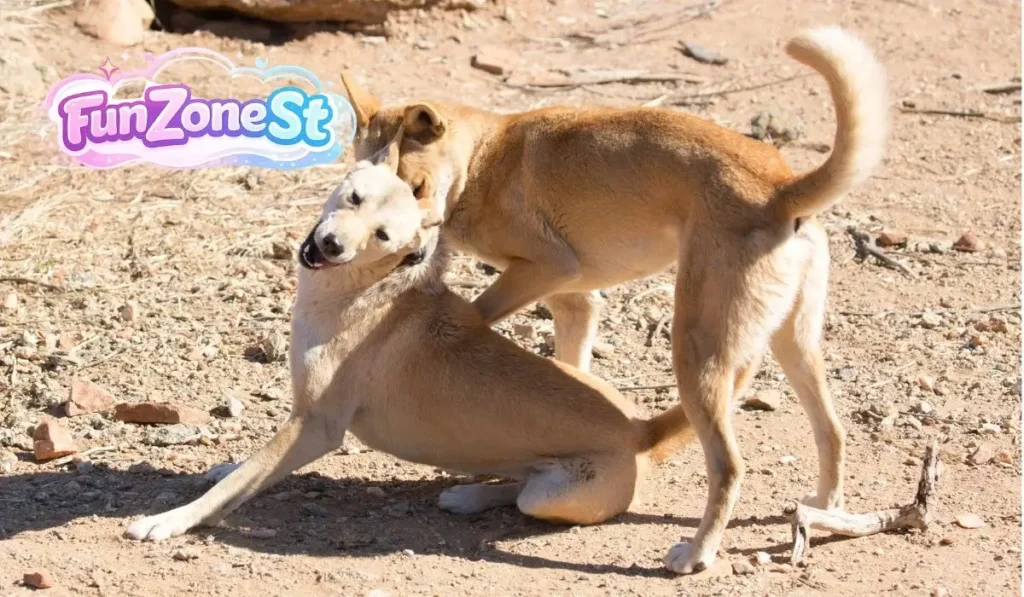
Dingo fun facts highlight the dingo as Australia’s apex wild canine, famous for its rotating wrists, silent hunting style, and ability to howl like a wolf rather than bark. Positioned between wild wolves and domestic dogs, dingoes play a vital ecological role in balancing ecosystems across diverse Australian habitats.
Have you ever looked at a wild animal and wondered if it was just a furry dog wearing a secret forest disguise?
If you stumble upon Australia’s most famous wild predator, these awesome dingo fun facts will show you there is way more to them than meets the eye.
Learning these wild dingo fun facts helps us understand how a creature can look like a household pet while ruling the harsh Outback as a top predator.
Let us explore the wild universe of dingoes and discover what makes these iconic canines so incredibly special.
The Mystery and Origins of Australia’s Wild Canine
When you first see a dingo, you might think you are looking at a Shiba Inu or a golden-coated mixed breed.
However, geneticists have shown that dingoes represent a completely separate lineage that split off thousands of years ago.
How Dingoes Arrived Down Under
Dingoes were not originally native to the isolated island continent of Australia.
Seafaring traders brought the ancestors of dingoes from Asian maritime regions roughly 3,500 to 5,000 years ago.
Once they stepped off the boats, these adaptable animals spread across deserts, forests, and snowy mountains.
Over thousands of years, they reverted to a completely wild state and adapted to the tough climate.
Are Dingoes Dogs, Wolves, or Something Else?
Biologists have debated the scientific classification of the dingo for well over a century.
Some researchers label them as Canis lupus dingo, a subspecies of the gray wolf, while others classify them as Canis dingo, a distinct species.
They sit in a fascinating evolutionary space right between ancient wolves and modern domestic dogs.
Unlike pet dogs, dingoes evolved through natural selection rather than selective human breeding.
The Indigenous Connection to Dingoes
Aboriginal Australian cultures have shared a deep, sacred bond with dingoes for thousands of generations.
Indigenous groups kept wild dingoes as hunting companions, camp guards, and living blankets during cold desert nights.
Dingoes star in traditional Dreamtime stories, cave paintings, and songs across Australia.
They are viewed not as pests, but as respected cultural relatives and spiritual protectors of the land.
Physical Superpowers That Make Dingoes Unstoppable
If you compare a domestic dog to a wild dingo, you will quickly notice incredible physical differences.
Dingoes possess unique biomechanical traits that help them navigate treacherous rocky cliffs and dense wilderness with total ease.
Wrist Flexibility and Climbing Mastery
Unlike your typical backyard dog, a dingo can rotate its wrists almost like a human.
This rare wrist mobility allows dingoes to turn doorknobs, climb trees, and scale steep rock faces easily.
Their flexible joints make them exceptional climbers and agile jumpers.
If a dingo wants to reach a food source hidden up in a low tree branch, it can climb right up after it.
Double-Jointed Necks for Total Vision
A dingo can turn its head nearly 180 degrees to look directly behind its own shoulders.
This extreme neck flexibility allows them to scan their surroundings for danger or prey without moving their entire bodies.
Combined with huge, rotating ears, this flexible neck turns the dingo into a walking radar system.
Nothing sneaks up on a dingo in the bush without it noticing first.
Eyes That Glow in the Dark
Dingoes have large, almond-shaped eyes that range in color from bright amber to deep golden brown.
Inside their eyes is a special reflective layer called the tapetum lucidum.
This layer acts like a mirror, bouncing light back through the retina to grant them extraordinary night vision.
When you shine a flashlight into the bush at night, dingo eyes shine back with a green-gold glow.
The Paws Built for Digging and Tracking
A dingo’s paws are noticeably larger and broader than a domestic dog of similar weight.
Their front paws feature flexible, spreadable toes that act like natural snowshoes or sand paddles.
This design prevents them from sinking into soft dunes while hunting native animals.
Their strong claws also make quick work of digging deep burrows to escape the scorching afternoon heat.
Vocal Communication: Why Dingoes Do Not Bark
If you visit a remote dingo sanctuary, you might notice a surprising silence across the landscape.
Unlike domestic dogs that bark at every passing shadow, dingoes express themselves through a completely different vocal catalog.
The Iconic Dingo Howl
Instead of barking, dingoes communicate using long, melodic howls that sound eerily similar to wolf calls.
They use three distinct howl types: short chirping howls, mournful pitch-changing howls, and chorus howls.
Each howl conveys specific information over long distances across the vast Outback.
A dingo might howl to rally its pack, warn rivals to stay away, or locate lost family members.
Sneeze Warnings and Hisses
When a dingo senses immediate danger, it does not growl like a typical guard dog.
Instead, it makes a sharp, dry sneezing sound to alert the rest of the pack instantly.
If a dingo feels trapped or cornered, it emits a low, menacing hiss that sounds surprisingly like a cat.
These strange sounds keep the pack safe without giving away their location to distant predators.
Silent Hunters of the Bush
When a dingo goes on a hunt, it becomes almost completely silent.
Domestic dogs often make heavy panting, whining, or barking sounds while chasing balls or prey.
Dingoes carefully control their breathing and padded movements to approach targets without making a single sound.
This stealthy approach allows them to stalk alert native animals like wallabies and bandicoots without detection.
Social Structure and Pack Dynamics
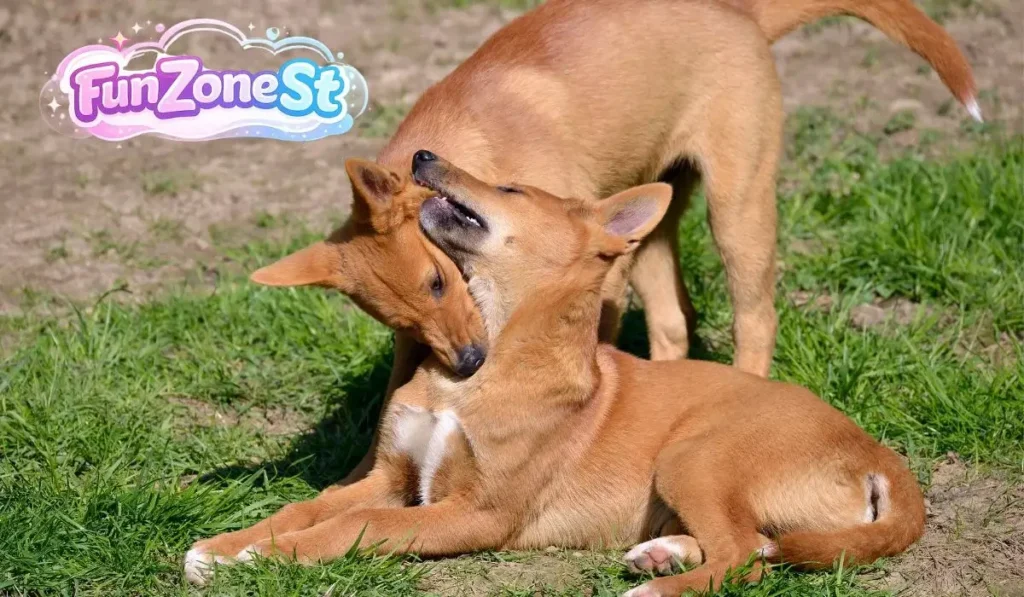
Dingoes are highly social animals that thrive within complex family groups.
Understanding how dingo packs function reveals a sophisticated society built on cooperation, loyalty, and strict social hierarchy.
The Alpha Rule
A typical dingo pack consists of an alpha male, an alpha female, and their offspring from recent years.
The alpha pair makes all major decisions for the group, such as when to hunt and where to establish dens.
In most packs, only the alpha female is permitted to breed and raise pups successfully.
If subordinate females give birth, the alpha female may suppress or absorb those litters to conserve resources for her own pups.
Raising Pups Is a Family Effort
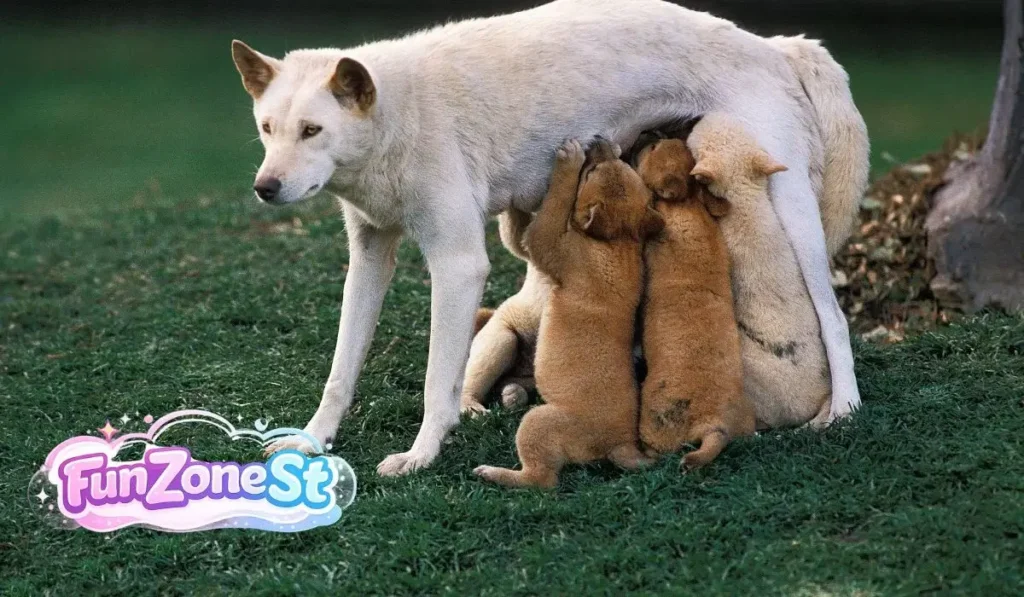
When a litter of dingo pups is born, every adult in the pack steps up to help raise them.
Older brothers and sisters guard the den site while the parents hunt for food.
Returning pack members bring back meat and regurgitate it for the growing pups.
This communal babysitting system ensures a high survival rate even during severe dry seasons.
Solitary Dingoes: The Lone Travelers
While pack life offers protection, many young adult dingoes choose to live as solitary wanderers.
Young males often leave their birth pack around two years of age to find new territory and partners.
These lone dingoes are exceptionally clever and cautious because they must hunt and protect themselves without pack support.
Solitary dingoes often patrol the edges of established pack territories, waiting for a chance to start their own family.
Diet and Survival Tactics in the Australian Outback
Survival in the Australian bush requires a flexible appetite and clever hunting strategies.
Dingoes are opportunists that adjust their menu based on the season, weather conditions, and regional prey availability.
What Dingoes Eat
Dingoes are carnivores, but they are far from picky eaters when food is scarce.
Their diet changes dramatically depending on whether they live in coastal forests, central deserts, or alpine mountains.
- Red kangaroos and wallabies
- Introduced rabbits and feral rodents
- Native birds, reptiles, and frogs
- Insects like grasshoppers and beetles
- Stranded marine life along coastal beaches
Pack Hunting Tactics
To catch large prey like adult red kangaroos, dingoes hunt in coordinated teams.
One group of dingoes will chase the prey toward a hidden ambush party waiting in thick brush.
They use strategic relay tactics, taking turns chasing the prey to wear it down over long distances.
This high-level cooperation allows a pack of 45-pound wild dogs to bring down prey twice their size.
Surviving Extreme Heat and Drought
Water is scarce in the arid Outback, but dingoes have evolved brilliant water-saving strategies.
They get a large portion of their required fluids directly from the meat of the prey they consume.
During hot summer afternoons, dingoes rest inside cool underground burrows or hollowed-out tree trunks.
They restrict their activity almost entirely to dusk, nighttime, and early morning hours to avoid dehydration.
Dingoes vs Domestic Dogs: Key Differences
It is easy to confuse a dingo with a domestic dog at first glance, but they are built for entirely different lifestyles.
Here is how Australia’s wild canine stacks up against your faithful domestic companion.
The Dingo Fence: The Longest Structure of Its Kind
You cannot discuss dingo history without mentioning one of the largest synthetic engineering projects on the planet.
Australia built a massive barrier specifically designed to keep wild dingoes away from sheep grazing pastures.
History of the Great Barrier
In the late 1800s, sheep farming became a massive industry across southeastern Australia.
Because dingoes targeted vulnerable sheep herds, farmers demanded a permanent solution to protect their livestock.
Workers constructed an enormous wire fence stretching over 3,500 miles across multiple states.
It remains one of the longest continuous structures on Earth, rivaling the Great Wall of China in total distance.
Ecological Impacts of the Fence
While the fence successfully kept dingoes out of southern sheep country, it created unexpected ecological consequences.
Without dingoes around as apex predators, populations of feral cats, foxes, and kangaroos exploded on the southern side.
These unchecked pests wiped out populations of small native mammals and overgrazed native vegetation.
Today, scientists study the fence as a dramatic example of what happens when you remove top predators from an ecosystem.
Why Dingoes Are Essential Apex Predators
In any ecosystem, top predators play a crucial role in maintaining balance and biodiversity.
Dingoes act as the environmental health managers of the Australian bush.
Controlling Invasive Pests
Invasive species like wild European rabbits, red foxes, and feral cats cause immense damage to Australia’s native wildlife.
Dingoes actively hunt these non-native species, keeping their numbers from spiraling out of control.
By keeping fox and feral cat populations low, dingoes indirectly protect smaller endangered marsupials like bilbies and numbats.
Areas with healthy dingo populations often show a higher diversity of native wildlife.
Preventing Overgrazing
When dingoes patrol an area, native herbivores like large kangaroos remain on the move.
This prevents kangaroos from gathering in massive herds and stripping delicate landscapes bare of plant life.
Keystone predator activity keeps grasslands lush, protects topsoil from erosion, and ensures water sources stay clean.
Healthy plants provide shelter and food for thousands of species of birds, insects, and small reptiles.

Unique Dingo Hybrids and Conservation Challenges
Today, pure wild dingoes face serious threats to their long-term survival.
The biggest challenge facing dingo conservation is not habitat loss or hunting, but genetic dilution through interbreeding.
The Hybridization Problem
As human settlements expand deeper into wild areas, domestic pet dogs frequently interact with wild dingoes.
Because dingoes and dogs belong to the same canine family, they can interbreed and produce fertile offspring.
These mixed-breed animals are called dingo-dog hybrids.
In many parts of eastern Australia, true genetically pure wild dingoes have become increasingly rare.
Saving Pure Dingo Lineages
Conservation groups across Australia are working hard to protect remaining pure dingo populations.
Isolating remote island sanctuaries, like K’gari (formerly Fraser Island), provides a haven for wild, unhybridized dingoes.
DNA testing programs help wildlife managers identify pure packs and protect their wilderness territories.
Educating the public about respectful co-existence helps ensure these majestic animals remain wild and free.
Practice Exercise
- What status does the dingo hold in Australia’s ecosystem?
A. Small herbivore
B. Australia’s largest apex predator
C. Domestic pet
D. Aquatic mammal - Roughly how many years ago did dingos arrive in Australia?
A. 100 years ago
B. 3,500 to 5,000 years ago
C. 50,000 years ago
D. 10 years ago - How do wild dingos primarily communicate instead of barking?
A. Meowing
B. Howls and yelps
C. Chirping
D. Whispering - What unique physical trait helps dingos climb trees and steep rocks?
A. Webbed feet
B. Flexible, double-jointed ankles and wrists
C. Long hooves
D. Prehensile tail - How far can a dingo turn its head to scan for prey?
A. 45 degrees
B. Nearly 180 degrees
C. 360 degrees
D. It cannot turn its head - How often do female wild dingos go into heat per year?
A. Once a year
B. Four times a year
C. Every month
D. Twice a year - What is the approximate length of Australia’s famous “Dingo Fence”?
A. 100 kilometers
B. Over 5,600 kilometers
C. 50 kilometers
D. 10,000 kilometers - What dietary feature do pure wild dingos lack compared to domestic dogs?
A. Ability to digest starches
B. Need for water
C. Ability to eat meat
D. Vitamin absorption - Which members of a dingo pack usually breed?
A. All pack members
B. Only the alpha male and female
C. The youngest pups
D. None of them - What distinct eye color is most common in wild dingos?
A. Bright red
B. Golden or light brown
C. Deep blue
D. Emerald green
Answer Key
- B 2. B 3. B 4. B 5. B 6. A 7. B 8. A 9. B 10. B
Frequently Asked Questions (FAQs)
Are dingoes dangerous to humans?
Dingoes are naturally timid and generally avoid human contact whenever possible. However, like any wild predator, they can become aggressive if people feed them, corner them, or habituate them to human food scraps.
Can you legally keep a dingo as a domestic pet?
Pet ownership rules vary wildly depending on your country and state regulations. In many parts of Australia, keeping pure dingoes requires specialized wild animal permits, while in other regions, it is completely illegal.
Why do dingoes have white patches on their tails and paws?
Pure dingoes typically feature distinct white markings on their paw tips and the very tip of their tails. These white markers act as visual tail lights, allowing pack members to follow each other through dark brush.
Do dingoes hunt alone or in large packs?
Dingoes adapt their social structure based on the size of the prey they are chasing. They hunt small animals like rabbits individually, but form organized family packs to hunt large game like adult red kangaroos.
What color coat does a wild dingo have?
While ginger-tan is the most famous color, wild dingoes actually come in three distinct coat variations. Depending on their regional environment, their fur can range from sandy ginger to black-and-tan or pure alpine white.
Do dingoes bark like regular domestic dogs?
Dingoes possess the vocal ability to bark, but they rarely ever do so in the wild. Their barks are short, harsh, one-syllable warnings, choosing instead to howl or sneeze to communicate with their pack.
Conclusion
Uncovering dingo fun facts shows us just how wild, intelligent, and adaptable these ancient creatures really are. Bringing dingo fun facts into your animal trivia knowledge gives you a whole new appreciation for their survival skills, complex pack structures, and rich natural history.
Their presence across the Australian landscape continues to captivate researchers and nature lovers around the world.
Keep exploring wildlife secrets, stay curious about the natural world, and share your favorite dingo fun facts with other animal lovers today!

Ghzala Rani is the creator and writer behind Funzonest.com, a website dedicated to making everyday topics more enjoyable, interesting, and easy to understand. With a passion for engaging content, Ghzala focuses on creating helpful articles that inform, entertain, and provide readers with useful ideas and insights.
Through Funzonest.com, Ghzala Rani aims to build a friendly online space where readers can discover fresh content and explore topics presented in a simple and enjoyable way. Her writing style focuses on clarity, originality, and reader value. She is committed to publishing well-researched and engaging content that keeps visitors informed while making their time on the website enjoyable.