
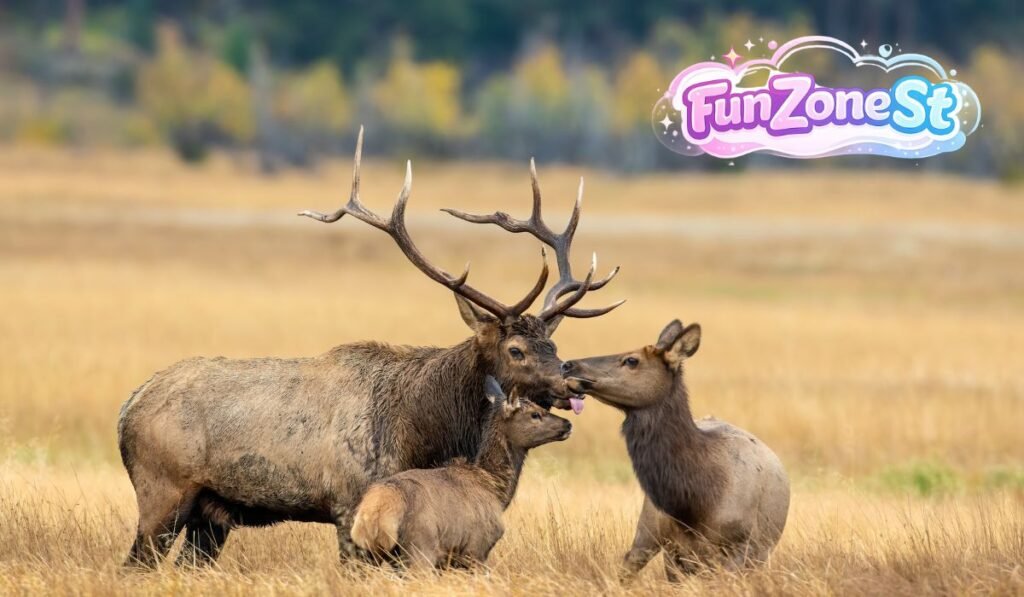
Elk are among the largest land mammals in North America, famous for their massive antlers, distinctive vocal bugles, and incredible adaptability. These majestic creatures live in diverse habitats ranging from dense mountain forests to open meadows, playing a crucial role in maintaining balanced ecosystem dynamics across the globe.
Have you ever stood on a forest trail and heard a high-pitched sound echoing through the trees that felt like a mix between a trumpet and a whistle? If so, you have likely crossed paths with one of North America’s most impressive wild creatures while searching for elk fun facts.
These incredible animals are far more than just huge deer wandering through the woods. From growing massive antlers every year to communicating across miles of mountain valleys, learning surprising elk fun facts reveals a world full of biological wonders.
Whether you are planning a wildlife trip or simply love learning about nature, these top elk fun facts will completely change how you view these majestic giants. Let us explore the remarkable secrets that make these forest dwellers so unique.
What Exactly Is an Elk?
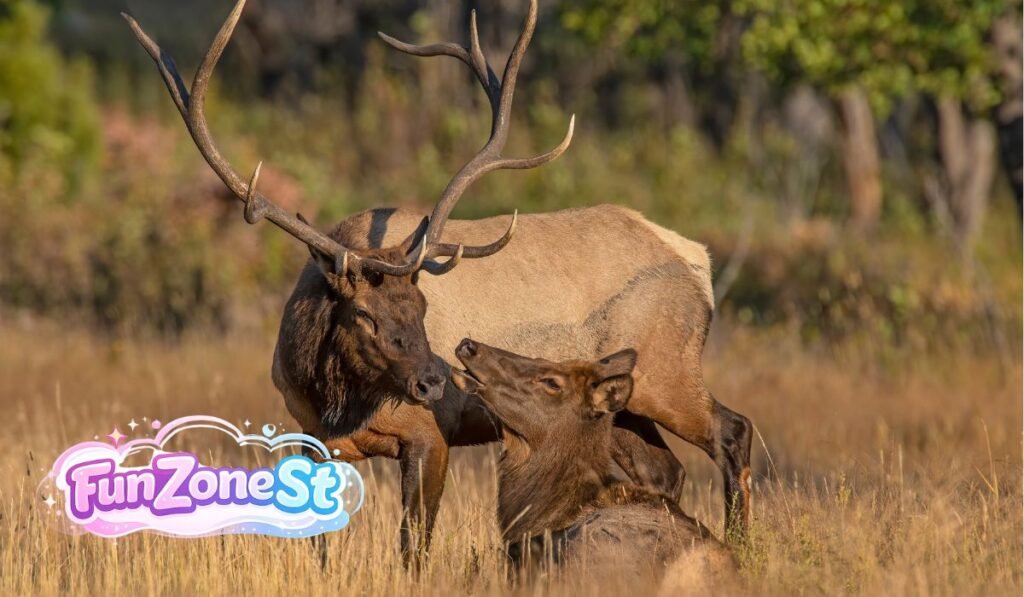
To truly appreciate these creatures, we first need to understand where they fit in the animal kingdom. Many people easily confuse them with other large hoofed mammals, but they have distinct physical traits and behaviors.
Deer Family Royalty
Elk belong to the deer family, known scientifically as Cervidae. In fact, they are the second-largest members of this entire family worldwide, sitting right behind the massive moose.
When Native Americans first observed these magnificent beasts, they called them “wapiti.” This traditional word translates to “white rump,” which perfectly describes the light-colored patch of fur covering their backside.
In European countries, the word “elk” actually refers to what North Americans call a moose. This historical naming overlap creates a lot of confusion, but in North America, the name always refers to these massive, tan-bodied forest giants.
Physical Characteristics and Appearance
An adult bull can weigh anywhere between 700 and 1,100 pounds. Females, called cows, are slightly smaller but still weigh an impressive 400 to 600 pounds.
Their coats change colors depending on the season to help them blend into their surroundings. During the warm summer months, their fur is a sleek reddish-brown color. When winter approaches, they grow a much thicker, darker brown coat with a dense undercoat that traps heat against their skin.
Their strong legs allow them to travel over rough mountain terrain without tiring easily. Their wide hooves act like built-in snowshoes, helping them walk across deep winter snow drifts that would sink other heavy animals.
Mind-Blowing Antler Growth Facts

One of the most captivating aspects of these animals is the dramatic bone structure growing from the heads of the males. These antlers are not permanent horns; they are living, growing bone tissue that resets every single year.
The Fastest Growing Bone on the Planet
Did you know that antlers are the fastest-growing bone tissue of any mammal on Earth? During the peak of spring, a bull’s antlers can grow up to nearly an inch in a single day.
While the antlers are growing, they are covered in a soft, fuzzy skin known as velvet. This velvet layer is full of blood vessels and nerves that deliver vital nutrients to nourish the growing bone beneath.
As autumn approaches, the antlers harden into solid bone, and the blood supply is completely cut off. The bull then rubs his antlers against tree trunks to shed the dried velvet layer, revealing sharp, polished antlers underneath.
Why Do They Shed Their Antlers Every Year?
Growing a massive set of antlers requires a massive amount of energy and bodily resources. Once the autumn mating season ends, retaining those heavy antlers through a harsh, food-scarce winter becomes a physical burden.
Around late winter or early spring, dropping testosterone levels cause the bone connection at the base of the skull to weaken. The heavy antlers simply drop off onto the forest floor, leaving the bull antlerless for a few weeks.
Nature never wastes anything in the wild. Rodents, squirrels, and mice quickly chew on shed antlers because they are packed with rich calcium and phosphorus.
Incredible Senses and Communication Secrets
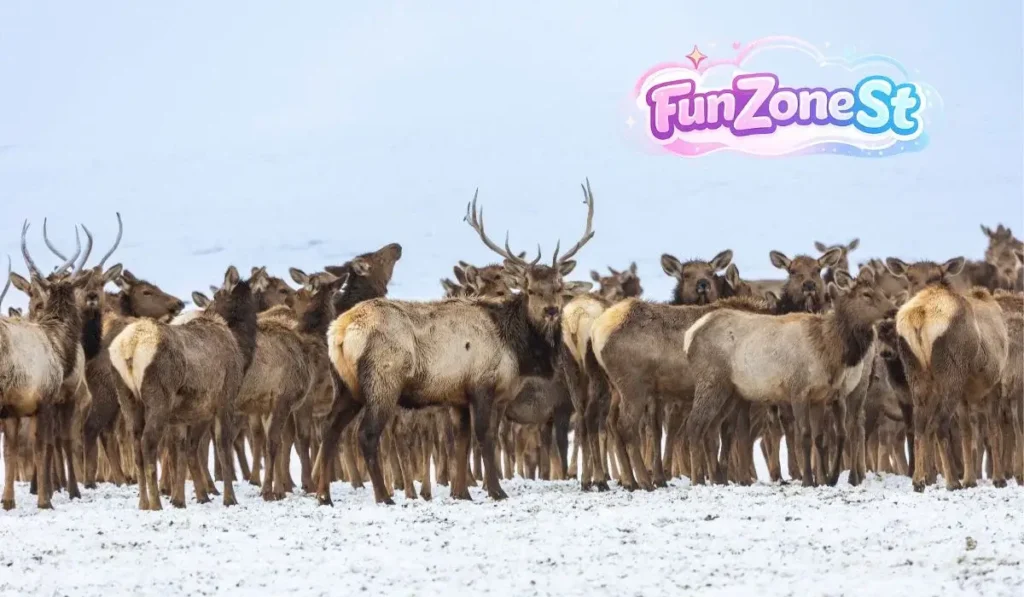
Surviving in the wild alongside powerful predators requires sharp senses and effective ways to talk to one another across long distances.
The Famous Elk Bugle
If you visit a national park like Yellowstone during the fall, you will likely hear an eerie, loud sound piercing the air. This call is known as a bugle, and it can carry for over a mile across open valleys.
A bull produces this unique sound by using both his vocal cords and his nostrils simultaneously. The result is a high-pitched whistle that transitions smoothly into a deep, guttural grunt.
This powerful call serves two main purposes during the fall mating season:
- It warns rival males to stay away from the bull’s territory.
- It announces his strength and presence to nearby females.
Nose, Ears, and Eyesight
These animals rely heavily on an extraordinary sense of smell to spot danger long before it gets close. They can detect the scent of a predator or human downwind from hundreds of yards away.
Their large ears swivel independently in almost any direction, allowing them to pinpoint subtle sounds like breaking twigs in dense brush.
Their eyes are positioned on the sides of their heads, giving them a wide field of vision to scan for danger without turning around. While they struggle to see fine details, their eyes are remarkably sharp at detecting tiny movements along the horizon.
Habitat, Diet, and Grazing Habits
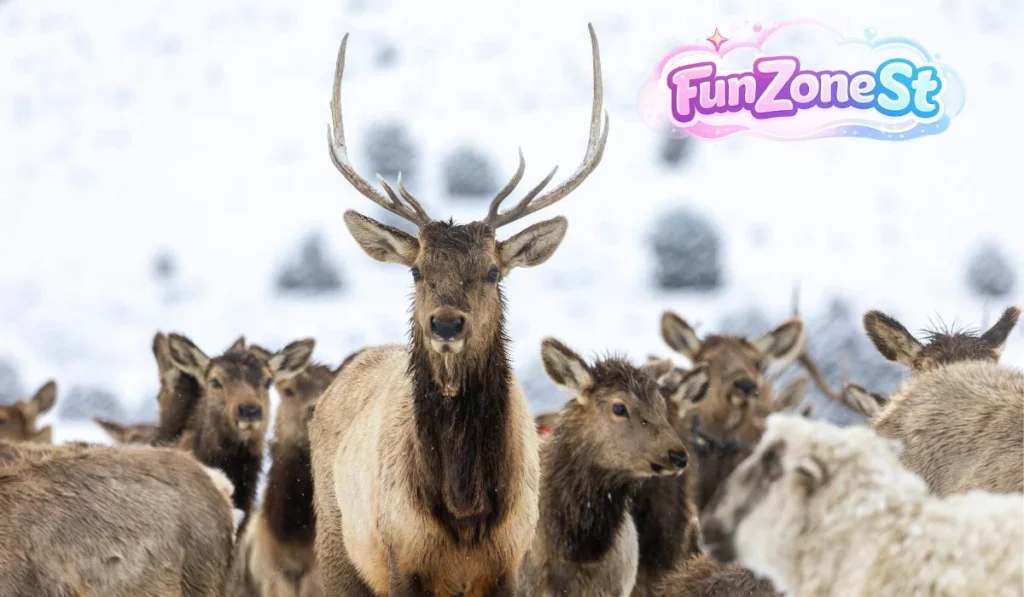
To maintain their massive body mass, these herbivores spend a large portion of their daily lives searching for high-energy plant foods.
What Do They Eat?
These giant mammals are classified as grazers and browsers, meaning their diet changes dramatically depending on what plants are available during each season.
In the spring and summer, they feast primarily on fresh green grasses, flowering plants, and tender leaves. During this period of abundance, an adult can consume up to 20 pounds of vegetation every single day.
When winter blankets the ground in snow, fresh grass disappears. They adapt quickly by browsing on woody vegetation, tree bark, willow twigs, and aspen shoots to survive the cold months.
Specialized Four-Chambered Stomachs
Like domestic cows, these creatures are ruminants with a complex four-chambered stomach. This multi-stage digestive system allows them to break down tough plant cellulose that most animals cannot digest.
After being quickly swallowed, the grass gathers in the first stomach chamber, known as the rumen. Later, while resting safely in thick cover, they regurgitate small portions of this food back up to chew it a second time. This process is called “chewing the cud.”
This clever biological design lets them gather food rapidly in open areas where predators might see them, then digest it slowly while hiding safely in dense trees.
Social Structure and Herd Behavior
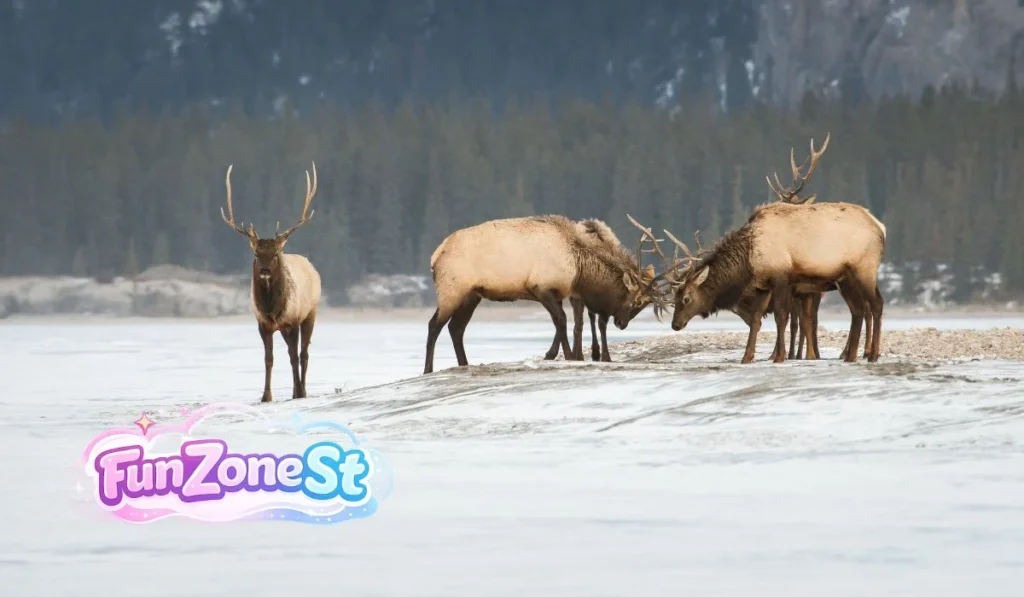
These animals are highly social creatures that organize themselves into groups that change based on the calendar year.
Separate Summer Herds
During most of the spring and summer, males and females live completely separate lives in different areas of the forest.
Females form large nursery herds consisting of mothers, young calves, and yearling females. These groups travel together, sharing the responsibility of watching out for hungry predators while raising their newborn calves.
Meanwhile, young and adult males live in small, peaceful groups often called “bachelor herds.” These males spend their summer feeding side-by-side, peacefully growing their antlers without any rivalry.
The Autumn Breeding Season (The Rut)
Everything changes when autumn arrives and the annual mating season, known as the rut, officially begins. The peaceful summer lifestyle disappears as hormones rise.
During the rut, dominant bulls leave their bachelor groups and try to gather as many females as possible into a group called a harem. A single strong bull may control and defend a harem of 20 to 50 females.
To defend his group, the bull must continuously chase away rival males. Most conflicts are settled through loud bugling and body displays, but evenly matched bulls will lock antlers in violent, pushing battles to prove their dominance.
Newborn Calves and Survival Strategies
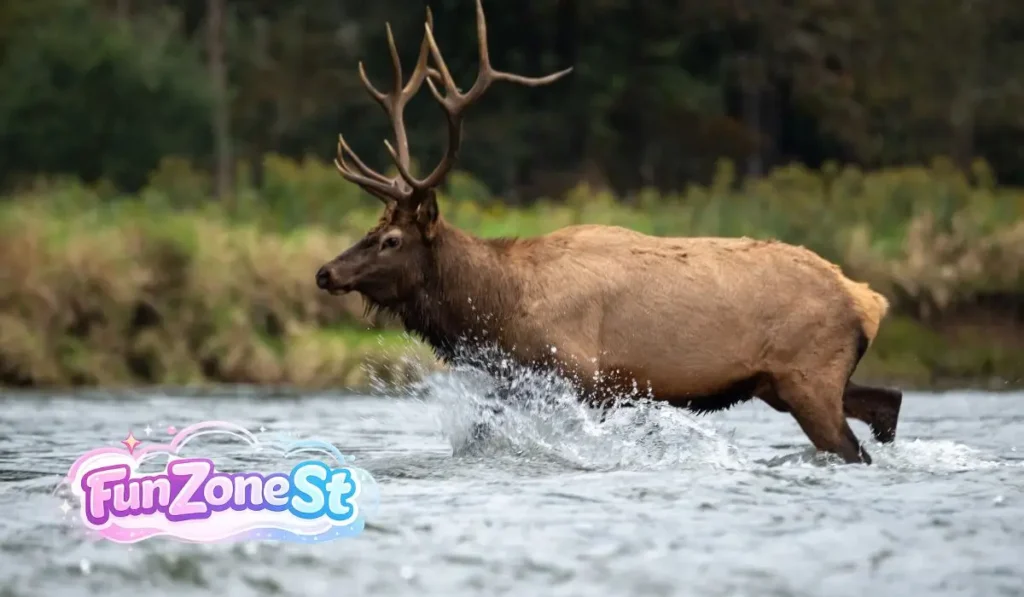
The arrival of new calves in early summer is a crucial milestone for the survival of the herd.
Built-in Camouflage and Odorless Defense
Cows give birth to a single calf in late May or early June after a pregnancy lasting about eight and a half months. Newborn calves weigh around 30 to 35 pounds at birth.
For the first few weeks of life, a calf is too weak to run away from swift predators like wolves, bears, or mountain lions. Nature provides them with two incredible survival tools:
- Their reddish coats feature bright white spots that mimic dappled sunlight filtering through forest trees.
- Newborn calves are virtually odorless, making it nearly impossible for predators to track them by scent alone.
While the mother grazes nearby, the calf lies completely still in tall grass or hidden brush. If a predator walks right past, the calf stays frozen in place, relying on its spots and lack of smell to stay invisible.
Rapid Growth and Integration
Within just two weeks, a calf gains enough strength to run fast alongside its mother. At this point, the mother brings her youngster back to join the main nursery herd.
By late summer, the calf’s white camouflage spots fade away, replaced by a solid adult coat. The young calf begins eating solid plants alongside drinking its mother’s rich milk, preparing for the harsh winter ahead.
Historic Range and Conservation Success
The story of these creatures in North America is a remarkable journey from near extinction to an inspiring conservation comeback.
From Abundance to Near Extinction
Before European settlers arrived, an estimated 10 million of these animals roamed across almost the entire North American continent, from coast to coast and from Canada down into Mexico.
Uncontrolled overhunting and massive habitat loss throughout the 1800s devastated their populations rapidly. By the early 1900s, fewer than 100,000 survived, mostly concentrated in and around Yellowstone National Park.
A Modern Wildlife Success Story
Thanks to dedicated conservationists, local hunters, and wildlife management agencies, aggressive protection laws were established in the early 20th century.
Animals from surviving herds in the West were carefully captured and transported by train to re-establish wild populations in eastern states like Pennsylvania, Kentucky, Tennessee, and Michigan.
Today, thanks to these historic relocation efforts, over one million of these animals roam North America once again, thriving in areas where they had been missing for over a century.
Practice Exercise
Test your knowledge of these amazing animals by choosing the best answer for each question below.
- What did Native Americans mean when they called this animal “wapiti”?
A. Silent runner
B. White rump
C. Forest king
D. Big horn - Where do these creatures rank in size within the deer family (Cervidae)?
A. First largest
B. Second largest
C. Third largest
D. Fourth largest - What is the soft, fuzzy layer that covers growing antlers called?
A. Fleece
B. Down
C. Velvet
D. Felt - What digestive feature allows these animals to chew their cud?
A. Simple stomach
B. Four-chambered stomach
C. Dual-pass intestine
D. Gizzard system - How much can a bull’s antlers grow in a single day during peak spring growth?
A. Up to nearly 1 inch
B. Up to 3 inches
C. Up to 5 inches
D. Up to 12 inches - What is the seasonal mating period called?
A. The chase
B. The muster
C. The rut
D. The roar - Why are newborn calves virtually impossible for predators to hunt by smell?
A. They roll in mud
B. They are born virtually odorless
C. Their mother licks them with pine sap
D. They hide underwater - What is a group of females controlled by a single dominant bull during mating season called?
A. A pod
B. A harem
C. A pack
D. A flock - What do rodents chew on shed antlers to obtain?
A. Vitamin
C and Iron
B. Protein and Fiber
C. Calcium and Phosphorus
D. Water and Salt - What color coat does a calf have to help it blend into forest shade?
A. Solid gray
B. Reddish coat with white spots
C. Jet black
D. Striped brown and yellow
Answer Key
- B | 2. B | 3. C | 4. B | 5. A | 6. C | 7. B | 8. B | 9. C | 10. B
Frequently Asked Questions (FAQs)
What is the difference between an elk and a moose?
Moose are noticeably larger, featuring dark brown coats, broad flat palm-shaped antlers, and long droopy snouts. These animals are lighter tan with dark brown necks, have branching pointed antlers, and prefer living in social herds rather than living alone.
Do female elk grow antlers?
No, female cows do not grow antlers at all. Antlers are grown exclusively by males for display and fighting during the autumn mating season. The only exception occurs in rare cases of severe hormonal imbalances in individual females.
How fast can an elk run?
An adult can reach top running speeds of up to 45 miles per hour across open ground. Their exceptional speed and stamina allow them to easily outrun most forest predators like bears or wolves over long distances.
Are elk dangerous to humans?
They are generally peaceful animals that prefer avoiding humans, but they can become aggressive if approached too closely. Cows are protective of young calves in spring, and bulls are territorial during the autumn rutting season.
How long do elk live in the wild?
In wild habitats, these animals typically live between 10 and 13 years on average. In protected areas with lower predator numbers, or in managed human care, some individuals can reach 15 to 20 years of age.
Why do elk bugle in the fall?
Bulls bugle to advertise their presence, assert dominance, and claim territory during the mating season. The high-pitched sound warns rival males to keep their distance while signaling strength to nearby females.
What eats elk in the wild?
Major natural predators include gray wolves, mountain lions, grizzly bears, and black bears. Bear species frequently hunt young, vulnerable calves in early spring, while wolf packs hunt adults during cold winter months.
Conclusion
Exploring these remarkable elk fun facts shows us just how fascinating these woodland creatures truly are. From their incredible fast-growing antlers to their unique communication calls, sharing interesting elk fun facts helps people appreciate these mountain giants around the world.
Their survival story is a powerful reminder of how effective modern wildlife conservation can be when people work together to protect natural habitats. The comeback of these forest giants proves that balance can be restored to wild ecosystems.
Next time you visit a national park or explore mountain forests, keep these surprising elk fun facts in mind and enjoy watching these impressive creatures in their quiet woodland home!

Ghzala Rani is the creator and writer behind Funzonest.com, a website dedicated to making everyday topics more enjoyable, interesting, and easy to understand. With a passion for engaging content, Ghzala focuses on creating helpful articles that inform, entertain, and provide readers with useful ideas and insights.
Through Funzonest.com, Ghzala Rani aims to build a friendly online space where readers can discover fresh content and explore topics presented in a simple and enjoyable way. Her writing style focuses on clarity, originality, and reader value. She is committed to publishing well-researched and engaging content that keeps visitors informed while making their time on the website enjoyable.