
Fun birds refer to avian species known for their playful personalities, hilarious antics, vivid colors, and remarkable intelligence. From dancing parrots and clever crows to colorful backyard visitors, these captivating creatures bring endless joy to birdwatchers, pet owners, and nature lovers around the world.
Have you ever stopped to watch a tiny backyard songbird do a silly little dance on a tree branch and felt an instant smile light up your face? Exploring the world of fun birds opens up a whole new realm of entertainment, wonder, and surprising discovery right outside your window.
Whether you are fascinated by wild parrot colonies in tropical jungles or curious about keeping a quirky feathered companion at home, learning about fun birds is a delightful journey. These playful creatures constantly amaze us with their unique social quirks, clever problem-solving skills, and comical vocal talents.
So, if you are eager to discover which feathered friends pack the most personality into their colorful wings, you have come to the right place. Let us take a detailed tour through the captivating world of fun birds and see what makes them so special!
What Makes Certain Avian Species So Entertaining?
Have you ever wondered why some winged species seem like natural comedians while others remain quiet and serious? The secret lies in a fascinating mix of intelligence, social structure, and natural evolutionary traits that shape their everyday actions.
Understanding these traits helps us appreciate the clever humor behind their antics. As a result, observing feathered creatures becomes far more rewarding when you recognize why they act so playfully.
High Cognitive Abilities and Problem Solving
Many playful avian species possess remarkable brainpower that rivals primates and young human children. Crows, ravens, and parrots routinely invent games, construct complex tools, and solve multi-step puzzles purely for enjoyment.
For example, wild crows in urban neighborhoods have been observed dropping hard nuts onto pedestrian crosswalks so passing cars crack them open safely. This incredible mental agility keeps them constantly curious, active, and endlessly entertaining to watch in real time.
Complex Social Dynamics and Play Behavior
Avian species that live in large, cooperative flocks naturally develop rich social lives filled with games, vocal chatter, and friendly drama. They engage in playful chase games through dense forest canopies, perform synchronized aerial acrobatics, and even groom each other for fun.
Consequently, these vibrant social bonds encourage expressive behaviors that look surprisingly human to outside observers. Living in a group gives them both the safety and the spare energy needed to indulge in pure playfulness.
Play vs Survival Movements
Scientists distinguish true play from survival tasks by observing whether an action serves an immediate need like hunting or nesting. When a young bird rolls down a snowy roof repeatedly, it is simply having fun and sharpening its coordination rather than looking for food.
Most Hilarious and Playful Wild Species Worldwide
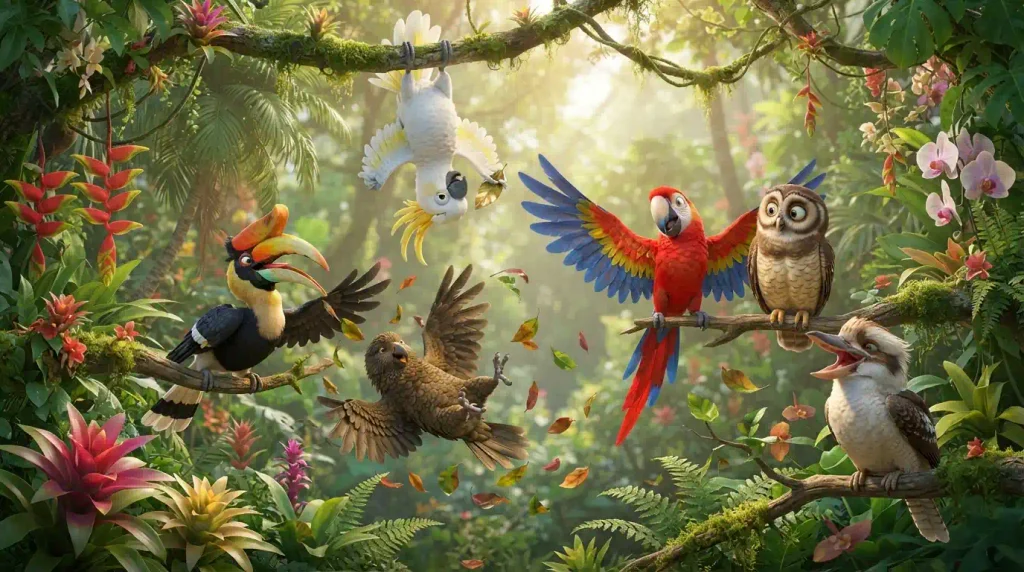
Nature is filled with eccentric winged personalities that make wildlife researchers laugh out loud. From high-altitude mountain parrots to courtship dancers in deep rainforests, unique species inhabit every corner of our planet.
Exploring these wild characters shows us just how diverse and creative nature can be. Let us meet a few of the most famously quirky species found across the globe today.
The Kea: New Zealand’s Alpine Comedian
Living in the chilly mountains of New Zealand, the Kea holds the title of the world’s only alpine parrot. These remarkably bold olive-green birds are legendary for their mischievous curiosity around ski resorts and hiking campsites.
They routinely inspect backpacks, untie shoelaces, and carry away small rubber windshield wipers from parked cars just to see how they work. Furthermore, researchers have discovered that Keas make a distinct playful call that causes other nearby Keas to join in the fun instantly.
The Superb Bird-of-Paradise: Masters of Dance
Deep inside the lush rainforests of New Guinea, male Superb Birds-of-Paradise take courtship rituals to an entirely new artistic level. To attract a mate, the male transforms his black plumage into an iridescent blue-and-black oval disk that looks like a smiling mask.
He then snaps his tail feathers rhythmically while hopping in precise circles around a female perched on a branch. This mesmerizing dance routine looks like a carefully rehearsed Broadway stage performance, demonstrating the extreme lengths nature goes to for love.
The Dancing Blue-Footed Booby
Along the coastal cliffs of the Galápagos Islands, Blue-Footed Boobies perform their own iconic mating dance. Males lift their bright blue webbed feet high in slow, deliberate steps while pointing their beaks straight toward the sky to impress nearby females.
The Lyrebird: Nature’s Ultimate Sound Mimic
Found in the dense forests of Australia, the Superb Lyrebird possesses the most advanced vocal cords in the animal kingdom. While male lyrebirds sing to mark their territory, they routinely incorporate sounds from their surrounding environment into their musical routines.
In fact, a wild lyrebird can perfectly copy the calls of twenty other species alongside artificial noises like camera shutters, car alarms, and chainsaws. Hearing a forest songbird replicate a ringing smartphone with flawless precision is an unforgettable experience.
Popular Household Species Full of Personality
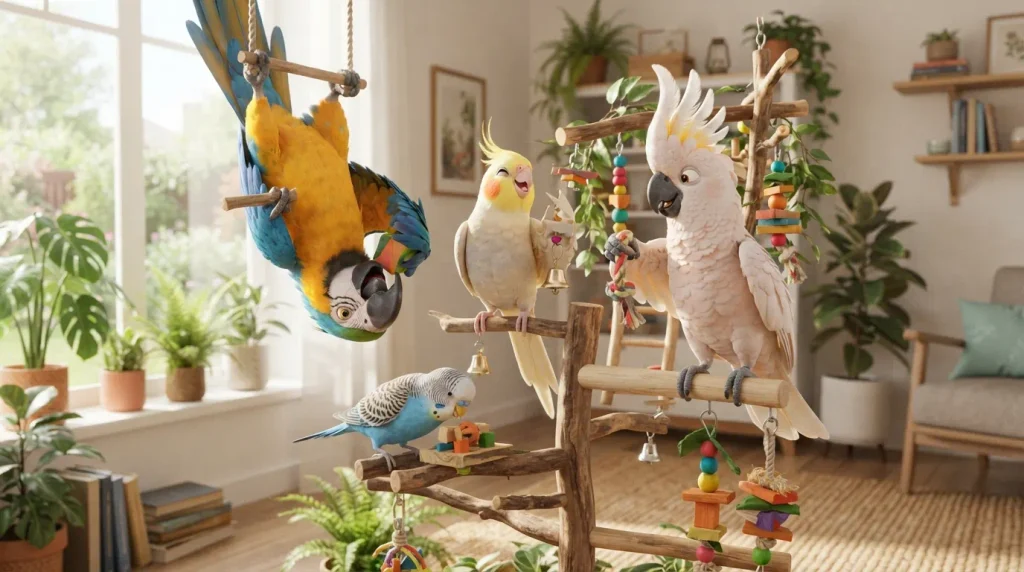
If you want to bring joyful avian energy directly into your home, several domesticated species make wonderful companion pets. However, each species brings its own distinct personality, care requirements, and quirky habits to the table.
Choosing the right feathered friend requires matching their social needs with your daily home lifestyle. Let us explore the most popular domestic choices for prospective owners.
Budgerigars: Compact Energy and Quick Wit
Commonly known as budgies or parakeets, these small Australian natives pack immense personality into a tiny, colorful package. They are incredibly social, energetic, and eager to learn simple tricks, whistle melodies, or chatter with human family members.
Because of their compact size, budgies adapt well to various living arrangements while offering big entertainment value. With gentle daily training, many budgies even learn to repeat dozens of words clearly.
Cockatiels: Gentle Whistlers and Crest Communicators
Cockatiels are famous for their expressive yellow head crests, bright orange cheek patches, and affectionate personalities. Instead of loud screaming, male cockatiels prefer to whistle intricate tunes, imitate household appliances, and serenade their favorite humans.
Furthermore, you can easily read a cockatiel’s emotional state by watching its crest feathers. A fully erect crest signals curiosity or excitement, while a flattened crest means the bird feels cautious or startled.
Lovebirds: Fearless Pocket-Sized Characters
Despite their small size, lovebirds possess giant, bold personalities that keep their owners constantly entertained. They love exploring cardboard mazes, playing with bell toys, and snuggling inside cozy shirt pockets during movie nights.
Conures: Big Parrot Attitude in a Medium Frame
For owners seeking a larger-than-life personality without the massive space requirements of a Macaw, conures are exceptional choices. Species like the Sun Conure and Green-Cheeked Conure are famous for lying on their backs to play with foot toys like playful kittens.
They form intense emotional bonds with their owners and love participating in daily household activities like preparing food or watching television. However, prospective owners should note that conures can express their joy with surprisingly loud, high-pitched calls.
How Avian Intelligence Drives Playful Behaviors
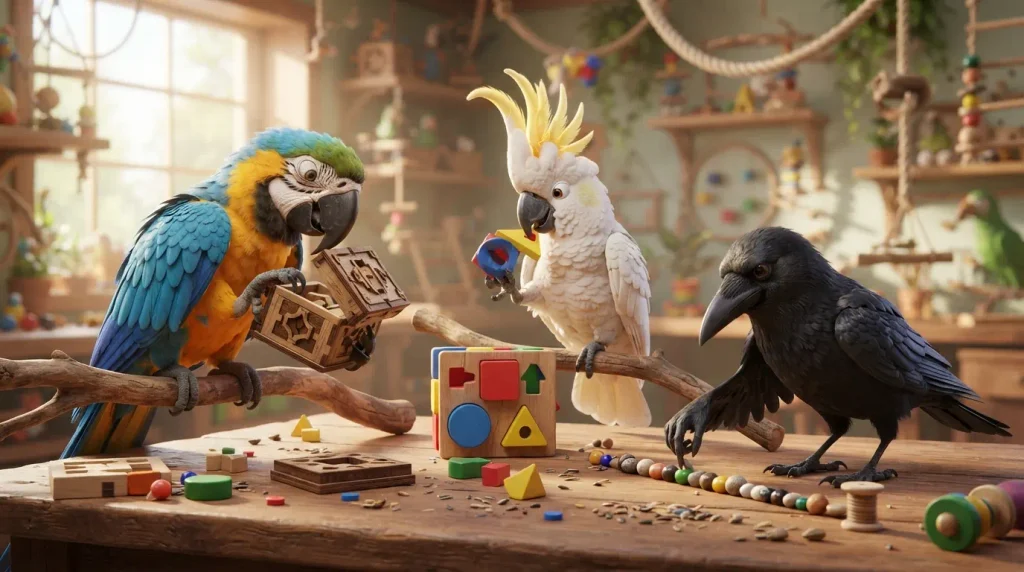
The playful actions that make us laugh are actually visible demonstrations of high-level intelligence and mental processing. Understanding how their brains work gives us a deeper respect for these remarkable creatures.
Scientists have studied avian brain structure for decades, discovering surprising similarities to human cognitive development. Let us break down the core mental mechanics behind their behavior.
Mirror Neurons and Vocal Imitation
Parrots and songbirds possess specialized brain regions called song nuclei that process auditory information with extreme speed and accuracy. This allows them to listen to complex sounds, break them down into vocal components, and reproduce them accurately using their syrinx.
Additionally, social species use mirror neurons to copy the actions of flock members and human caretakers. This explains why your pet parrot might try to dip a cracker into water after watching you dunk a cookie into coffee!
Spatial Memory and Cache Games
Members of the corvid family, such as jays and nutcrackers, possess an astonishing spatial memory that helps them hide thousands of seeds across hundreds of square miles. To keep track of their hidden food supplies, their brains maintain a highly accurate mental map of the terrain.
In captivity, this incredible memory translates into fun foraging games where birds hide shiny objects inside couch cushions or toy boxes. They remember exact hiding spots weeks later, proving their remarkable mental capacity.
Object Permanence in Feathered Brains
Object permanence is the mental understanding that an item still exists even when it is hidden from direct sight. Many smart avian species pass object permanence tests with ease, enjoying games of peek-a-boo just like human toddlers do.
Creating an Enriching Home Environment for Pets
If you share your living space with a feathered companion, providing daily mental stimulation is essential for their overall health and happiness. Boredom leads to stress, excessive vocal screaming, and unwanted feather-plucking behaviors.
Transforming a simple cage setup into a dynamic playground keeps your pet active, confident, and mentally sharp. Here are the best ways to build an enriching living environment.
Rotating Foraging Toys and Puzzles
In the wild, foraging for food occupies up to seventy percent of an avian species’ waking hours. Serving food in a simple open bowl robs them of this natural mental workout and leads to daytime sluggishness.
Instead, hide treats inside shreddable paper rolls, wooden puzzle boxes, or braided palm leaf toys. Making your pet chew, twist, or solve a puzzle to earn a nut keeps their mind engaged and simulates natural wild behaviors.
Safe Branch Selection and Perch Variety
Using uniform plastic perches in a cage damages an avian pet’s foot health over time by placing pressure on the exact same spots. Instead, provide a diverse assortment of natural wood branches with varying diameters, textures, and bends.
Safe wood choices include non-toxic trees like apple, willow, manzanita, and birch. Natural branches exercise foot muscles, trim nails naturally, and provide safe bark material for shredding fun.
Homemade DIY Enrichment Crafts
You do not need to spend a fortune at pet stores to keep your feathered friend entertained. Simple household items like unbleached paper cups, cardboard egg cartons, and stainless steel measuring spoons make safe, highly engaging DIY toys.
Designing a Dedicated Out-of-Cage Play Zone
Avian pets require several hours of supervised time outside their cages every single day to stretch their wings and explore. Building a tabletop play gym with climbing ladders, hanging ropes, and swing bridges creates a safe home base for out-of-cage fun.
Keep this play area away from open windows, ceiling fans, kitchen stoves, and toxic houseplants to ensure complete safety during playtime. Supervised freedom builds strong trust between you and your pet.
Attracting Vibrant and Playful Birds to Your Yard
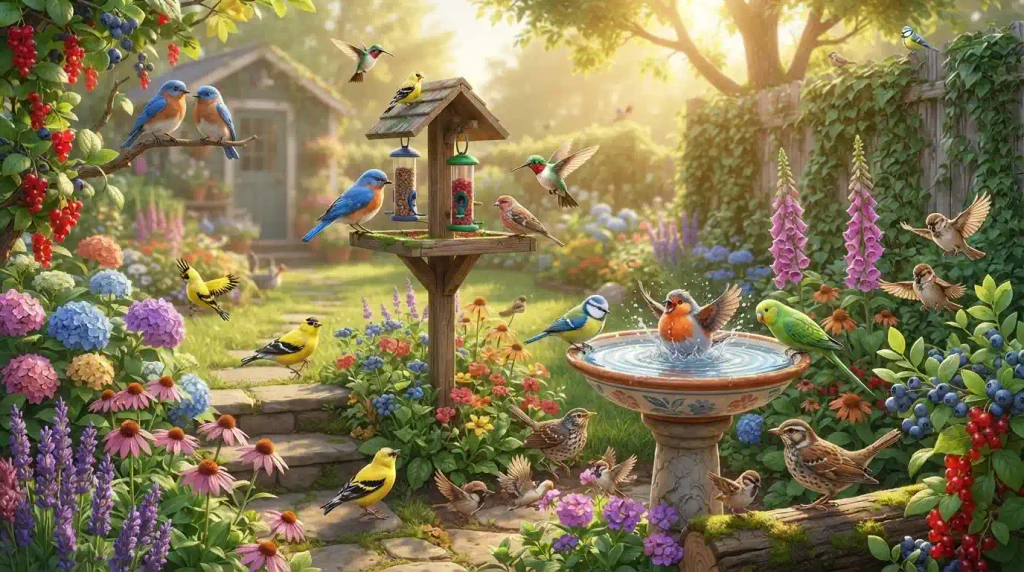
You do not need to own a pet to enjoy the hilarious antics of wild avian visitors every day. By transforming your backyard or balcony into a bird-friendly sanctuary, you can attract a colorful variety of local species.
Creating a welcoming ecosystem provides vital food and shelter for native wildlife while offering you front-row seats to nature’s daily show. Here is how to get started.
Choosing the Right Feeder Styles and Seeds
Different species prefer different feeding setups and food types, so offering variety attracts a wider range of visitors. Tube feeders filled with black oil sunflower seeds appeal to finches, chickadees, and nuthatches.
Meanwhile, suet cages attract acrobatic woodpeckers that hang upside down to eat, providing fantastic entertainment. Suet provides essential fats that keep wild birds energetic during chilly winter months.
Providing Fresh Moving Water Features
While seed feeders are great, adding a clean water source is the absolute fastest way to attract diverse species to your yard. Birds need water for drinking and daily feather maintenance to stay warm and fly efficiently.
Furthermore, adding a solar-powered water fountain or dripper to your bath creates gentle ripples that catch the eye of flying birds from far away. Watching songbirds splash enthusiastically in a shallow water bath is guaranteed to brighten your morning.
Landscaping with Native Plants
Planting native berry bushes like serviceberry, elderberry, or coneflowers provides natural shelter and seasonal food sources. Native plants also support local insect populations, which parent birds rely on to feed their hungry nestlings during spring.
Decoding Silly Avian Behaviors and Body Language
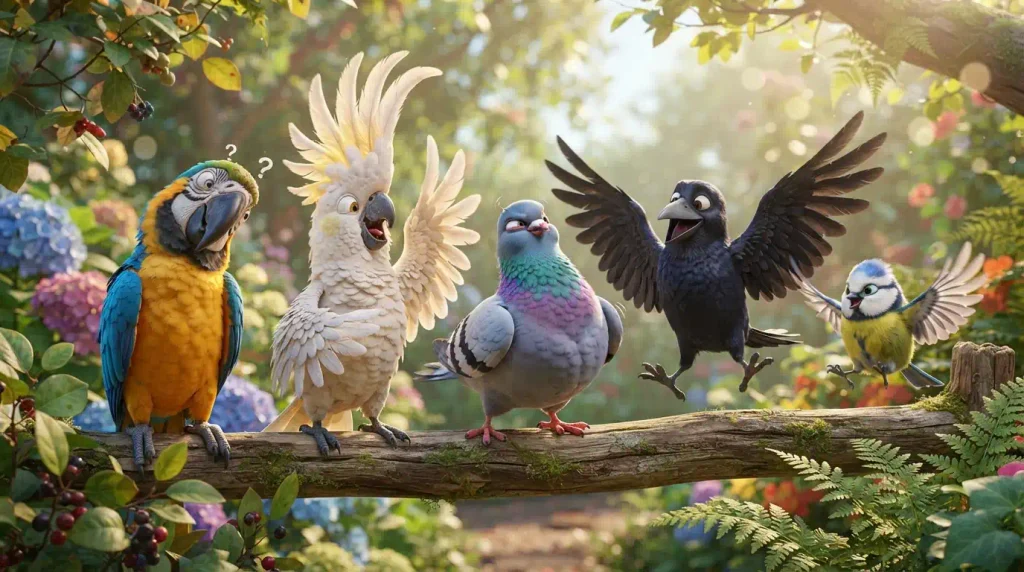
Understanding what your wild visitors or pet companions are trying to communicate through their body movements enhances your viewing experience. Feathered creatures communicate constantly through subtle head tilts, tail wiggles, and wing flaps.
Learning to read these visual cues helps you bond with your pet and understand wild interactions better. Let us examine common physical signals and what they mean.
The Happy Head Bob and Beak Grinding
When a parrot or budgie bobs its head rhythmically while looking at you, it is displaying pure excitement, affection, or a desire to interact. It is an energetic, friendly greeting that shows your pet feels happy and secure in your presence.
Similarly, hearing a soft grinding sound from your bird’s beak as it settles down for sleep is a fantastic sign. Beak grinding indicates complete contentment, relaxation, and physical comfort before naptime.
Wing Flipping vs Full Body Stretching
A quick, repeated flipping of the wings often signals impatience, minor annoyance, or a demand for attention from an owner. On the other hand, a slow, deliberate stretch where a bird extends one wing and one leg backward simultaneously is just like a human morning stretch!
Tail Fanning and Pinning Pupils
Rapidly expanding and contracting eye pupils (known as pinning) combined with a fanned tail indicates intense mental stimulation or arousal. Pay close attention to the context, as pinning can mean either overwhelming joy or defensive frustration depending on the situation.
Crest Movements in Cockatoos and Cockatiels
Head crests serve as built-in emotional barometers for species like cockatiels and cockatoos. A slicked-down crest flattened against the skull signals fear, anger, or aggression, warning you to give the bird space.
Conversely, a gently curved crest sitting at a relaxed forty-five-degree angle means the bird feels calm, comfortable, and friendly. A fully raised, flared crest indicates curiosity, surprise, or high excitement.
Comparing Popular Companion Species
Selecting the right companion requires evaluating noise levels, lifespans, and space needs. The table below compares four popular pet species to help you find your ideal match.
Evaluating Long-Term Time Commitments
Adopting a feathered companion is a long-term commitment that often spans decades. Larger parrot species like African Greys or Amazon Parrots can easily live for fifty years or more in healthy home environments.
Therefore, prospective owners must plan for long-term care, including veterinary expenses, dietary supplies, and daily socialization time. Ensuring you can meet these long-term needs guarantees a happy relationship for both you and your pet.
Balancing Noise Levels with Living Spaces
If you live in an apartment with shared walls, noise levels are a critical factor to consider before adopting. Species like conures or larger cockatoos possess loud flock calls that travel easily through walls and disturb neighbors.
In contrast, quieter species like budgies, cockatiels, or finches produce softer vocalizations that fit apartment living comfortably. Matching a species’ voice to your housing situation prevents unnecessary stress for everyone involved.
Dietary Needs Beyond Simple Seed Mixes
Feeding a pet bird an all-seed diet is equivalent to feeding a human child fast food every single day. Seeds are extremely high in fats and lack critical vitamins like Vitamin A, leading to severe health issues over time.
Instead, a healthy diet consists of seventy percent formulated nutrition pellets complemented by fresh leafy greens, vegetables, and fruit slices. Offering fresh, varied meals keeps your pet energetic, colorful, and healthy for life.
Practice Exercise
Test your understanding of avian species, behaviors, and care requirements with these 10 multiple-choice questions:
Question 1
Avian Intelligence
Which bird species is famous for using cars on pedestrian crosswalks to crack open hard nuts?
A. House Sparrow
B. Urban Crow
C. Mallard Duck
D. Rock Pigeon
Question 2
Wild Species Traits
Where is the mischievous, alpine-dwelling Kea parrot naturally found in the wild?
A. Australian Outback
B. New Zealand Mountains
C. Brazilian Rainforest
D. Rocky Mountains of Canada
Question 3
Vocal Capabilities
What unique physical capability allows the Australian Lyrebird to imitate artificial noises like chainsaws?
A. Highly specialized syrinx vocal organ
B. Extra-large beak structure
C. Double air sac chambers
D. Extended tongue length
Question 4
Domestic Pet Care
Why are uniform plastic perches bad for a pet bird’s feet inside a cage setup?
A. They taste bad to birds
B. They create pressure spots that cause foot sores
C. They turn yellow in sunlight
D. They make toys fall over easily
Question 5
Behavior Identification
What emotional state does soft beak grinding usually indicate in a pet parrot settling down for sleep?
A. Extreme anger and aggression
B. Severe physical pain
C. Complete comfort and contentment
D. Intense hunger
Question 6
Backyard Birding
Which type of bird seed is best for attracting a wide variety of songbirds like finches and chickadees?
A. Whole kernel corn
B. Raw white rice
C. Black oil sunflower seeds
D. Dried wheat stalks
Question 7
Health & Nutrition
Why is an all-seed diet dangerous for pet parrots when fed over long periods?
A. Seeds make birds fly too fast
B. Seeds lack key vitamins and are too high in fat
C. Seeds cause feathers to turn completely white
D. Seeds make birds sleep all day long
Question 8
Physical Communication
What does a fully flattened, slicked-down crest indicate on a cockatiel’s head?
A. Curiosity and playfulness
B. High excitement
C. Fear, caution, or anger
D. Sleepiness
Question 9
Enrichment Strategies
What is the primary benefit of giving pet birds foraging toys instead of open food dishes?
A. It keeps the cage cleaner
B. It provides mental stimulation by mimicking natural hunting
C. It stops birds from drinking water
D. It makes food last for months
Question 10
Species Lifespans
What is the typical average lifespan of a healthy African Grey Parrot kept in a home setting?
A. 2 to 5 years
B. 5 to 10 years
C. 10 to 15 years
D. 40 to 60 years
Answer Key
1. B | 2. B | 3. A | 4. B | 5. C | 6. C | 7. B | 8. C | 9. B | 10. D
FAQs
Why do some birds dance when they hear music?
Parrots dance because their vocal learning brain centers are connected to their motor control systems. Consequently, when they hear a rhythmic beat, their brain naturally prompts them to bob their heads or move their feet in time with the music.
Are wild birds safe to feed in my backyard?
Yes, feeding wild birds is safe as long as you keep your feeders clean and dry. Regularly washing seed hoppers and water baths with mild soap prevents the spread of avian diseases among local flock visitors.
How can I teach my pet bird to talk?
Start by repeating short, clear words in an enthusiastic voice during daily interactions with your pet. Pair the words with actions or treats, such as saying “Hello!” every time you enter the room, to build clear associations.
Why does my parrot destroy wooden toys so quickly?
Chewing is an instinct that birds use to keep their beaks trimmed, exercise jaw muscles, and relieve stress. Providing shreddable wood, paper, and palm toys allows them to satisfy this urge safely without damaging household furniture.
Can different bird species live together in the same cage?
Generally, you should not house different species in the same cage due to territorial aggression and size differences. Even small size discrepancies can lead to serious injuries if a fight breaks out over food or perches.
What should I do if a wild bird hits my window?
Place the stunned bird inside a dark, quiet cardboard box lined with a soft towel to rest undisturbed. If the bird does not recover and fly away within an hour, contact a licensed local wildlife rehabilitator immediately.
Conclusion
Exploring the world of fun birds reveals an endless array of intelligent behaviors, vibrant colors, and pure entertainment. Whether you are observing clever wild crows in your neighborhood, watching courtship dancers on wildlife documentaries, or sharing your home with a whistling cockatiel, these creatures enrich our lives in countless ways.
By providing proper mental enrichment, nutritious diets, and safe habitats, we can support both domestic pets and wild populations effectively. Taking time to appreciate their unique behaviors fosters a deeper connection with the natural world around us.
Now is the perfect moment to step outside with a pair of binoculars or set up a simple backyard feeder. Embrace the joy of watching fun birds, and discover just how fascinating your local feathered neighbors can be!

Ghzala Rani is the creator and writer behind Funzonest.com, a website dedicated to making everyday topics more enjoyable, interesting, and easy to understand. With a passion for engaging content, Ghzala focuses on creating helpful articles that inform, entertain, and provide readers with useful ideas and insights.
Through Funzonest.com, Ghzala Rani aims to build a friendly online space where readers can discover fresh content and explore topics presented in a simple and enjoyable way. Her writing style focuses on clarity, originality, and reader value. She is committed to publishing well-researched and engaging content that keeps visitors informed while making their time on the website enjoyable.